CALL US 770-248-9089

2026 Top PVC Factory Types for Global Buyers?

Global buyers entering the 2026 PVC market need more than a low factory quotation. They need evidence of process control, product consistency, and responsible sourcing. The right Pvc Factory may be an integrated chlor-alkali producer, a suspension PVC resin plant, an emulsion PVC facility, or a downstream compounding factory.

Each type serves a different purchasing reality. Integrated plants can control chlorine, ethylene, and vinyl chloride inputs. Resin producers offer scale for pipes, profiles, cables, and flooring. Emulsion PVC factories support coatings, artificial leather, and specialty pastes. Compounding factories add stabilizers, impact modifiers, pigments, and fillers for finished applications. The label matters.

Grand View Research valued the global PVC market at approximately USD 45.7 billion in 2023. Its industry outlook projects continued growth through 2030, supported by construction, infrastructure, and electrical applications. Mordor Intelligence also identifies Asia-Pacific as the dominant regional market, with China and India shaping production capacity and demand. These figures are useful, but they do not replace factory-level verification.

Ned Monroe, former president of the Vinyl Institute, described PVC as “a versatile, durable, and cost-effective material.” That statement explains its popularity, but not every factory deserves equal trust. Buyers should inspect batch records, laboratory equipment, recycling practices, and certificates before signing supply contracts. A clean production floor helps. It is not proof.

In 2026, stronger factories will combine automated dosing, traceable raw materials, energy monitoring, and practical quality assurance. Some smaller plants may still compete successfully through flexibility and technical service. That possibility is easy to overlook. This guide compares major PVC Factory types, their advantages, limitations, and suitability for global buyers. Forecasts can change. Careful verification remains essential.
2026 Top PVC Factory Types for Global Buyers?

PVC Market Baseline: About 50 Million Tonnes of Global Annual Demand

In 2026, global PVC demand is expected to remain near 50 million tonnes annually.

This figure gives buyers a practical market baseline. It also shows why factory selection requires more than comparing quoted prices. Demand comes from pipes, profiles, flooring, cable insulation, medical products, and packaging. Each application needs different resin performance, processing behavior, and quality controls.

PVC factories generally serve buyers through suspension, emulsion, or specialty compounding operations. Suspension PVC supports high-volume pipe and construction production. Emulsion PVC suits coatings, flooring, and flexible applications.

Compounding factories blend resin with stabilizers, plasticizers, pigments, and impact modifiers. During supplier audits, buyers should inspect reactor records, laboratory testing, warehouse conditions, and batch traceability. A reliable factory can explain its process clearly.

Not every tonne is equal.

A large annual capacity may hide inconsistent particle size or moisture control. I have seen purchasing teams focus on production volume and overlook loading conditions. That mistake can create blocked feeding systems, damaged bags, or delayed customs clearance.

Buyers should request recent test reports, retained samples, and realistic lead times. They should also compare energy use, recycled-content claims, and compliance documents against independent evidence. Even careful assessments can miss regional risks. Port congestion, seasonal electricity limits, and changing construction demand still affect delivery planning.

Integrated Chlor-Alkali PVC Plants: Comparing Scale, Feedstock, and Energy Costs

2026 Top PVC Factory Types for Global Buyers?

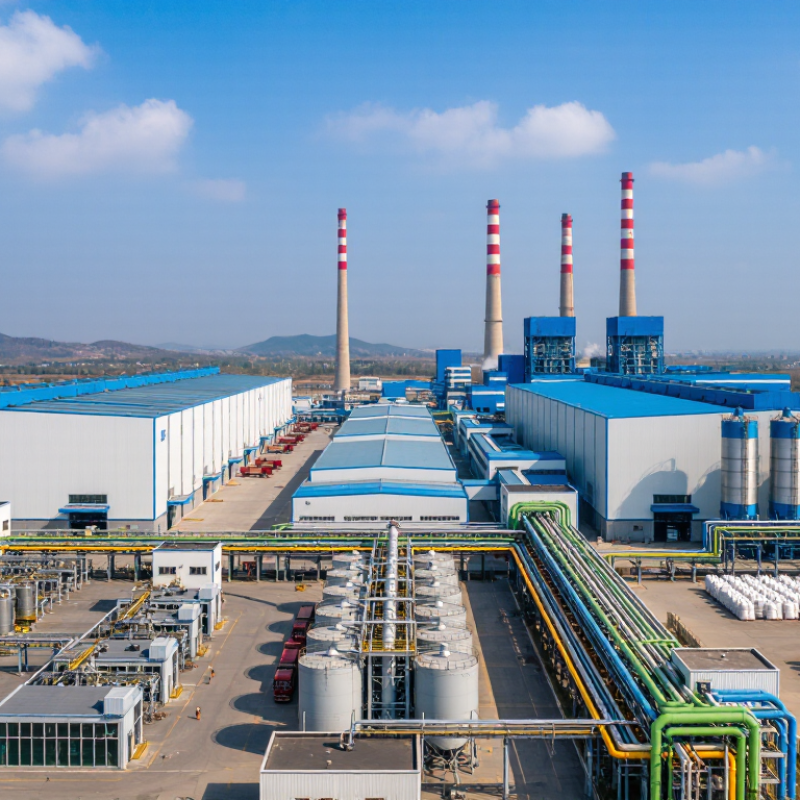
Integrated chlor-alkali PVC plants deserve close attention in 2026. They produce chlorine and caustic soda from salt electrolysis, then convert chlorine into key PVC intermediates. This integration can reduce transport exposure and improve supply coordination. It also creates a heavy electricity burden. A single energy contract may influence resin costs more than factory size.

Large plants usually spread maintenance, laboratory, and wastewater costs across higher output. Their scale can support steadier deliveries and stronger technical teams. However, a large site is not automatically cheaper. Older equipment, low capacity utilization, or unstable power can erase the advantage quickly. Buyers should request monthly utilization data, not only annual nameplate capacity.

Feedstock distance matters too. Ethylene-based routes may offer different cost patterns from carbide-based routes, depending on local fuel and raw material prices. Ask how salt, ethylene, chlorine, and power reach the production lines. Look for covered storage, backup systems, and clear quality records.

In practical audits, small details matter: a warm compressor room, repeated shutdown notes, or delayed maintenance can reveal hidden costs. Energy consumption per tonne should be checked against recent production, because one published figure may reflect ideal conditions. My view is imperfect here: scale remains useful, but reliable operations often matter more than impressive capacity.

Suspension PVC Resin Factories: K-Values, Grades, and Capacity Above 1 Million Tonnes

2026 Top PVC Factory Types for Global Buyers?

Suspension PVC Resin Factories: K-Values, Grades, and Capacity Above 1 Million Tonnes

For global buyers, a suspension PVC resin factory should be judged beyond its headline capacity. A capacity above one million tonnes suggests strong infrastructure, but actual output matters more. Ask for operating rates, maintenance records, and recent shipment data. Headline figures can mislead. A modern site should show stable feedstock handling, enclosed conveying, and effective dust controls. I also check whether production lines can switch grades without long cleaning delays.

K-value is a practical starting point for grade selection. Lower K-values often suit rigid profiles, pipes, and injection applications. Higher K-values may support tougher films, flexible products, and selected processing routes. The right choice depends on viscosity, fusion behavior, particle size, and customer equipment. Do not trust one certificate. Request recent COA data and compare results across at least three production lots. Small shifts can change melt flow and processing temperature. This is where factory experience becomes visible.

Reliable factories publish clear grade ranges and explain their testing methods. They should discuss porosity control, residual VCM testing, packaging options, and storage protection. A credible technical team can also handle bulk bags, 25-kilogram sacks, loading checks, and traceability records. For large contracts, ask for monthly allocation plans and emergency stock. Capacity alone does not guarantee delivery. Some plants look impressive but respond slowly to complaints. That weakness matters. Trial quantities remain useful when equipment, climate, or storage conditions differ.

2026 Top PVC Factory Types for Global Buyers? – Suspension PVC Resin Factories: K-Values, Grades, and Capacity Above 1 Million Tonnes
Factory Type Typical Installed PVC Capacity Main Process Route Common K-Value Grades Typical Particle Profile Primary Product Applications Global Buyer Advantages Key Qualification Checks
Integrated Ethylene-Based Mega-Site 1.20–2.00 million tonnes/year Ethylene to ethylene dichloride, vinyl chloride monomer, and suspension PVC resin; integrated chlorine and caustic soda facilities are commonly included. K-57 to K-60
K-65 to K-67
K-70 to K-74
Controlled porous particles, normally supplied in standard suspension-resin powder form; bulk density and porosity are adjusted for processing performance. General-purpose pipes, fittings, profiles, siding, rigid sheets, injection-moulded parts, wire and cable compounds, and selected flexible formulations. Large and stable supply base, broad grade portfolio, strong process integration, and better continuity for annual or multi-year contracts. Confirm ethylene or acetylene feedstock route, suspension-polymerization capacity, residual VCM control, lot-to-lot consistency, and loading-port options.
Integrated Carbide-Based Industrial Complex 1.00–1.80 million tonnes/year Calcium carbide to acetylene, vinyl chloride monomer, and suspension PVC resin; typically supported by captive power, chlorine, and carbide production. K-57 to K-60
K-65 to K-67
K-70
Medium-to-high porosity resin designed for efficient plasticizer absorption and reliable fusion in conventional PVC processing. Pressure pipes, drainage pipes, conduit, window profiles, flooring, artificial leather, coated fabrics, and general rigid products. Strong access to domestic coal, limestone, power, and chlorine resources; suitable for high-volume standard grades and regional export programs. Review energy source, environmental permits, mercury-management practices where applicable, acetylene-process controls, VCM limits, and product documentation.
Multi-Line Suspension PVC Export Hub 1.10–1.60 million tonnes/year Several independent suspension-polymerization lines with shared VCM storage, drying, screening, packing, and export logistics. K-57 to K-60
K-65 to K-67
K-68 to K-70
Multiple particle-size distributions and porosity levels; grades can be selected for extrusion, injection moulding, or calendering. Rigid pipes and profiles, injection products, packaging sheets, flooring, cable insulation, hoses, and other high-volume applications. Flexible production scheduling, improved availability of several grades, easier container or bulk-vessel planning, and reduced dependence on one production line. Check line-by-line capacity, approved equivalent grades, minimum order quantity, packaging choices, shipment frequency, and changeover controls.
High-K-Value Specialty Suspension Plant 1.00–1.30 million tonnes/year Suspension polymerization with tighter control of molecular weight, porosity, particle-size distribution, and fusion behavior. K-67 to K-70
K-70 to K-74
Selected K-75 grades
Higher molecular-weight resin with controlled absorption and fusion characteristics; commonly offered in narrow and consistent particle-size ranges. High-strength pressure pipes, technical profiles, rigid sheets, automotive components, transparent or semi-transparent products, and specialty compounds. Better performance in applications requiring strength, impact balance, heat resistance, or controlled melt behavior. Request tensile strength, impact performance, Vicat softening data, fusion time, residual VCM, sieve analysis, bulk density, and processing trials.
Low-to-Medium K-Value General-Purpose Plant 1.00–1.50 million tonnes/year High-throughput suspension polymerization optimized for standard resin grades and efficient drying, screening, and automated packing. K-57 to K-60
K-61 to K-64
Free-flowing powder with balanced particle size, moderate porosity, and consistent bulk density for high-speed processing. Rigid pipes, conduit, profiles, injection moulding, packaging components, bottles, and general-purpose PVC products. Competitive production economics, broad availability, predictable processing, and suitability for large-volume standard-grade purchasing. Verify apparent bulk density, sieve residue, moisture, fish-eye count, thermal stability, whiteness, residual VCM, and batch traceability.
Flexible-Application Suspension Resin Complex 1.05–1.40 million tonnes/year Suspension PVC production with grades selected for plasticizer absorption, gelation speed, flexibility, and surface finish. K-65 to K-67
K-68 to K-70
Selected K-72 grades
Porous particles with controlled plasticizer uptake and fusion characteristics for calendering, coating, and flexible-compound production. Flooring, synthetic leather, coated fabrics, flexible sheets, hoses, gaskets, footwear components, and cable insulation. Improved formulation flexibility, consistent plasticizer absorption, and access to grades for both flexible and semi-rigid applications. Evaluate plasticizer absorption, plastisol viscosity where relevant, fusion profile, surface finish, thermal stability, and compatibility with the buyer’s additives.
Regional Integrated PVC and Chlor-Alkali Cluster 1.00–1.25 million tonnes/year Integrated chlorine production combined with VCM and suspension PVC units; product is distributed through regional terminals and export warehouses. K-57 to K-60
K-65 to K-67
K-70
Standard commercial powder grades with controlled moisture, bulk density, and particle-size distribution for regular industrial processing. Construction pipes, profiles, wire and cable, flooring, rigid sheets, injection products, and municipal infrastructure materials. Shorter regional delivery times, access to local technical support, and lower inland logistics exposure for nearby importing markets. Check export authorization, port and warehouse capacity, regional certificates, incoterms, supply continuity during maintenance, and emergency stock policy.
Technical note: K-value is an intrinsic-viscosity-based indicator commonly used to classify PVC molecular-weight level. Approximate commercial ranges include K-57–60 for lower molecular-weight general-purpose grades, K-65–67 for widely used balanced grades, and K-70–75 for higher molecular-weight applications. Capacity figures are representative installed-capacity bands for large industrial factory types and should be verified against current plant, line, and operating-status information before procurement.

PVC Compound and Profile Plants: Serving Pipes, Windows, Films, and Cables

2026 Top PVC Factory Types for Global Buyers?

PVC compound and profile plants remain central to products that move through homes, factories, and utility networks.

A compound plant blends resin with stabilizers, plasticizers, pigments, and impact modifiers. Twin-screw extrusion then produces consistent pellets for pipes, films, and cable insulation. Grand View Research valued the global PVC market at about USD 45 billion in 2023. It also projects steady growth through 2030, supported by construction and electrical demand.

A profile plant uses calibrated extrusion lines to make window frames, doors, gutters, and technical sections. The details matter. Buyers should inspect melt temperature control, vacuum calibration, cooling tanks, and dimensional testing. A window profile may look clean but still warp during installation. That is a costly weakness.

For rigid pipes, pressure resistance and wall thickness require regular sampling. For films, stable plasticizer dispersion affects flexibility and surface quality. Cable compounds need controlled insulation performance and traceable batch records.

MarketsandMarkets projects the PVC market to reach roughly USD 71 billion by 2028, although research scopes differ between reports. This difference deserves attention. Global buyers should compare capacity by product type, not only by annual tonnage.

Ask for test data, formulation control, recycled-content records, and production tolerances. ISO-based quality systems help, but certificates cannot replace factory audits. A reliable plant should show retained samples, calibration logs, and corrective-action records without hesitation. More automation helps, yet experienced operators still matter.

Global Buyer Scorecard: ISO 9001, REACH Compliance, and Supply-Risk Data

Choosing among 2026 PVC factory types requires more than comparing price and equipment. A practical buyer scorecard starts with ISO 9001 evidence. Check the certificate scope, audit date, corrective-action records, and production traceability. A certificate alone proves little if batch labels cannot follow resin from storage to finished profiles.

REACH compliance also needs careful review. Ask for current substance declarations, testing methods, and a responsible contact for regulatory updates. PVC products may contain additives that require closer examination. Documents should match the exact grade, color, and application. They should not describe a different product. Small mismatch, big concern. An experienced buyer should request sample records and verify them against incoming inspection data.

Supply-risk data makes the scorecard more realistic. Review monthly capacity, average lead times, resin sourcing, port exposure, backup utilities, and inventory policies. Request delivery performance for the previous twelve months, not only promised figures. A factory with two production lines may still depend on one critical supplier. That weakness is easy to miss. I have also seen detailed risk spreadsheets fail during sudden energy or transport disruptions. Data must be updated and challenged during site audits. A simple scoring model can rank quality systems, compliance evidence, and continuity controls, but it cannot remove uncertainty. Human judgment still matters.

2026 Top PVC Factory Types for Global Buyers

Global Buyer Scorecard: ISO 9001, REACH Compliance, and Supply-Risk Data

The scorecard uses a normalized 100-point buyer-evaluation model across common PVC factory types. ISO 9001 represents documented quality-management controls, REACH represents evidence supporting EU chemical compliance, and supply-risk data covers origin concentration, lead-time history, capacity continuity, and contingency planning. Scores are benchmark assumptions for procurement screening rather than claims about any specific company.

Article Source: