
CALL US 770-248-9089

3 Best 318 x 230 Thermal Paper Rolls for Global Buyers

Choosing the right thermal roll can affect print clarity, machine reliability, and daily operating costs. This guide examines the 3 Best 318 x 230 Thermal Paper Rolls for Global Buyers, focusing on practical purchasing details rather than attractive packaging alone. The dimensions suit selected POS systems, ticket printers, kiosks, and compact receipt machines. Yet, size alone does not guarantee compatibility.

A dependable 3 1 8 x 230 thermal paper roll should feed smoothly and produce sharp text under busy conditions. Look for consistent width, accurate roll length, a suitable core, and clean edge cutting. Coating quality also matters. It influences image contrast, resistance to fading, and printer-head cleanliness. From hands-on purchasing experience, poorly wound rolls often create curling, paper jams, or uneven printing. Small defects become expensive during peak hours.

These recommendations compare roll construction, print performance, storage needs, and supplier reliability. They also consider packaging for international shipping, where moisture and heat can damage sensitive paper. Buyers should request samples before placing large orders. This step is easy to overlook. It can prevent costly compatibility problems.

Material compliance deserves careful attention. Requirements differ between markets, especially for thermal chemicals, recycling labels, and packaging information. Buyers should confirm current regional rules with suppliers and qualified professionals. No product is perfect. A roll that performs well in a dry warehouse may fade faster in a hot vehicle. The best choice balances printer specifications, working conditions, documentation, and total cost—not simply the lowest quoted price.
3 Best 318 x 230 Thermal Paper Rolls for Global Buyers

Understanding 318 x 230 Thermal Paper Roll Specifications

3 Best 318 x 230 Thermal Paper Rolls for Global Buyers

Understanding 318 x 230 Thermal Paper Roll Specifications

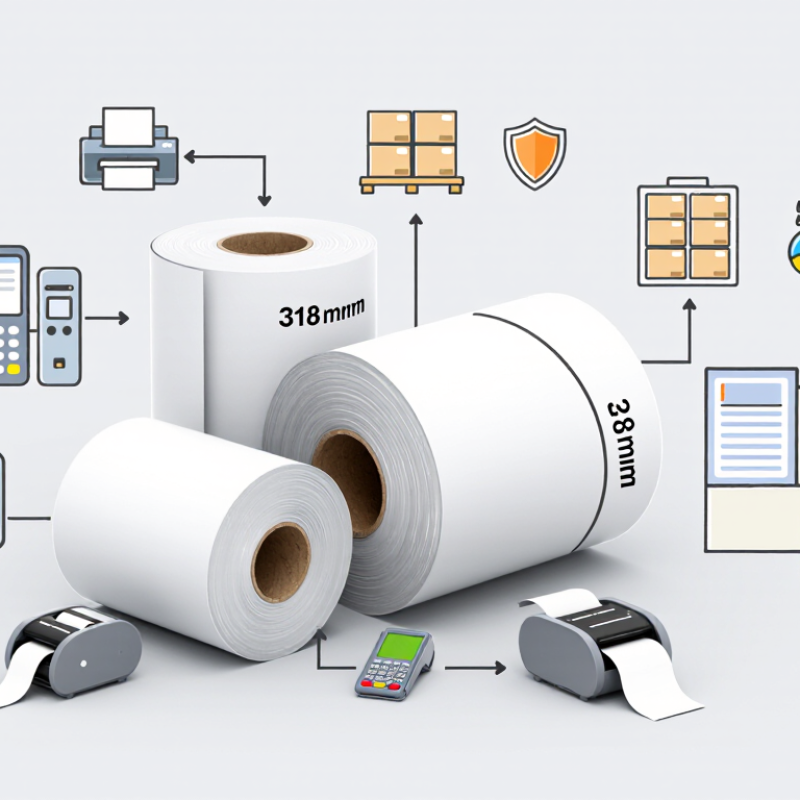
In many supplier catalogs, 318 x 230 means a 318 mm width and a 230 mm outer diameter. Confirm the unit before ordering. Some listings omit millimeters, creating expensive misunderstandings. The outer diameter shows the roll’s maximum size, while the usable length depends on paper thickness and winding tightness. A thinner grade may provide more meters, but it can feel less rigid during handling.

The core diameter matters just as much. Check whether the printer accepts a 76 mm, 80 mm, or another core size. Also verify the roll direction, thermal sensitivity, and surface smoothness. A practical test involves printing small text, barcodes, and dense black areas. Fading may appear later, not immediately. That is easy to miss. Ask for a technical data sheet, sample rolls, and storage guidance before approving bulk production. I would also confirm whether the quoted dimensions include normal manufacturing tolerance.

Tips: Measure the printer chamber, shaft, and side clearance. Compare actual roll length, not only outside diameter. Store rolls away from heat, moisture, sunlight, oils, and plasticizers. Request test results for image durability and chemical compliance. Do not assume every 318 x 230 roll fits the same equipment. A five-minute fit test can prevent a costly shipment problem.

Comparing the Three Best Thermal Paper Roll Options

Comparing the Three Best Thermal Paper Roll Options

For global buyers, a 318 x 230 thermal paper roll should be judged beyond price.

The first option is premium BPA- and BPS-free paper. It suits receipts, transport labels, and long storage, with cleaner handling and stronger compliance confidence.

The second is standard phenol-free paper. It usually costs less and prints sharply, but image durability can vary under heat, light, and plastic contact.

The third is a recycled-core roll. Its reduced packaging impact helps high-volume operations, although core strength and winding accuracy require closer inspection.

Grand View Research valued the global thermal paper market at approximately USD 4.2 billion in 2023 and expects continued growth through 2030. That demand reflects retail, healthcare, logistics, and ticketing applications.

The European Union has restricted BPA in thermal paper to 0.02% by weight since January 2020, according to Commission Regulation (EU) 2016/2235. Compliance is not optional.

Still, “phenol-free” claims need verification because formulations differ between suppliers. A laboratory certificate remains more reliable than a sales sheet.

Tips:

Confirm whether 318 x 230 means width and roll length, then check core diameter, winding direction, coating side, and printer tolerance. Ask for a sample roll. Test five consecutive prints after storage near a warm window. My practical preference is the premium phenol-free option for archived receipts, but field conditions can expose weaknesses that specifications miss. Cost comparisons also change when rejected rolls and printer cleaning are included.

Evaluating Print Quality, Durability, and Chemical Safety

For global buyers, the three strongest 318 x 230 thermal paper choices are phenol-free premium rolls, BPA-free standard rolls, and economy rolls with verified coating performance. The first option usually produces darker, sharper receipts. It suits barcode labels, medical records, and high-volume counters. Check print density at 150 millimetres per second. Faint edges often reveal poor coating consistency.

The second option balances cost and reliability. Select rolls with a smooth 65–75 gsm base and clear supplier test results. Industry testing commonly examines image density, heat resistance, humidity resistance, and blocking. These details matter during container transport. A receipt exposed to sunlight should not fade within days. However, “BPA-free” does not automatically mean chemical-free. Some alternatives may require separate safety evaluation.

The third option fits low-demand applications, but it needs stricter inspection. ECHA’s REACH restriction limits BPA in thermal paper to 0.02% by weight, effective from January 2020. Buyers should request declarations for BPA, BPS, phenols, and heavy metals. Independent laboratory reports are stronger than marketing claims. Ask for migration testing and a current safety data sheet. The European Chemicals Agency also warns that chemical substitution requires careful assessment, not simple replacement. A practical weakness remains: suppliers may provide outdated documents. Test a sample after heat, moisture, and friction exposure. No roll is perfect.

Choosing the Right Roll for Global Business Applications

3 Best 318 x 230 Thermal Paper Rolls for Global Buyers

Choosing the right 318 x 230 thermal roll requires more than matching dimensions. Confirm whether 318 mm means width or roll length. Supplier conventions can differ. The first option is standard direct-thermal paper for retail counters and payment receipts. It offers sharp black images and efficient printing. Grand View Research valued the global thermal paper market at approximately USD 4.2 billion in 2023. This indicates continuing demand across transaction-heavy industries.

The second option is top-coated thermal paper for warehouses, transport desks, and outdoor kiosks. Its coating improves resistance to moisture, friction, and brief heat exposure.

The third is phenol-free or BPA-free thermal paper for healthcare, food service, and customer-facing documents. The European Chemicals Agency has restricted BPA in thermal paper, making chemical compliance an important purchasing check.

Packaging should also confirm core size, winding direction, roll count, and printer compatibility. A low-cost roll can create jams, faded text, or unreadable barcodes. That mistake is more expensive than expected.

Tips: Request a physical sample before ordering internationally. Test it through the actual printer, especially at high speed. Check barcode readability after storage in light and humidity. ISO 15416 testing can support verification. Do not rely only on a supplier’s “premium” label. I would also question recycled content claims without documentation. Sometimes, the greener-looking choice performs poorly. A documented balance is better.

Checking Compatibility, Packaging, and International Shipping Needs

3 Best 318 x 230 Thermal Paper Rolls for Global Buyers

The best 318 x 230 rolls depend on storage, printer design, and shipping conditions. A standard coated roll suits short-term receipts and high-volume retail use. A top-coated, BPA- and BPS-free option fits records needing clearer image stability. For logistics labels, choose stronger cores and moisture-resistant packaging. Confirm width, core diameter, winding direction, and maximum roll diameter before ordering. A correct width alone is not enough.

Grand View Research valued the global thermal paper market at about USD 4.56 billion in 2023. Its report also expects continued growth through 2030. This growth increases pressure on suppliers to improve coating consistency and responsible material selection.

The World Bank’s 2023 Logistics Performance Index covered 139 economies. Its findings underline the importance of predictable customs handling and shipment visibility. Export cartons should include product dimensions, roll quantity, gross weight, and country-of-origin information. Small omissions can delay clearance.

Tips: Request one sample carton before placing a full order. Test it in the actual printer, including low-temperature and fast-feed settings. Use sealed inner bags, corner protection, and moisture indicators for ocean freight. Ask for a packaging drop-test record when available. I would not rely only on a supplier’s datasheet; carton compression and humidity performance still need checking. A cheaper roll may create waste through jams, faded images, or damaged cores.