7 Best Blueberry Flavored Ice Cream Powders for Buyers
Blueberry-Flavored Ice Cream Powder gives manufacturers and food-service buyers a practical way to add berry flavor without handling fresh fruit. But choosing a powder is not just a flavor decision. Color, sweetness, acidity, solubility, and performance in a frozen mix can all affect the finished scoop. A sample may smell vivid in the bag, then taste faint after freezing. Details matter.
The broader category is commercially significant. Grand View Research’s Ice Cream Market Size, Share & Trends Analysis Report estimated the global ice cream market at approximately USD 76.11 billion in 2023 and projected continued growth through 2030. That figure covers ice cream overall, not blueberry powders specifically, so it should not be treated as a measure of ingredient demand. Still, it helps explain why consistent, easy-to-use flavor systems matter to producers competing on product quality and production efficiency.
This guide reviews seven options for buyers, focusing on practical comparison points: ingredient transparency, blueberry character, sweetness balance, mixing behavior, and suitability for different applications. Check the technical sheet, then test the powder in your own base. A quick spoon test can miss issues that appear after freezing or storage. Some products may also rely more on added flavoring than actual blueberry ingredients; the label deserves a careful read. There is no single best choice for every recipe, but a clear evaluation can help narrow the shortlist.
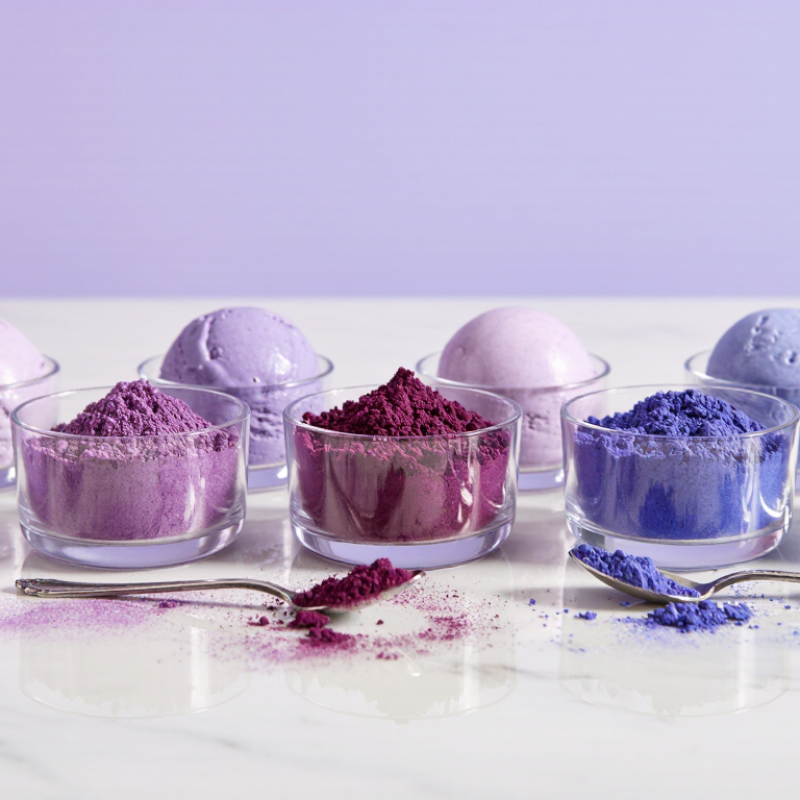
Define Blueberry Ice Cream Powders and the FDA’s 10% Milkfat Standard
Blueberry ice cream powder is a dry mix intended to be combined with liquid, then churned or frozen. It may contain milk powder, sugar, stabilizers, and blueberry flavor from fruit powder, concentrate, or added flavoring. Formulas vary. A blue-purple color alone does not confirm how much real blueberry the mix contains, so buyers should check the ingredient list and preparation directions. The powder itself is not necessarily “ice cream” under the FDA’s standard of identity; the prepared product and its labeling matter.
Under 21 CFR § 135.110, ice cream generally must contain at least 10% milkfat by weight. That threshold applies to the standardized finished food, not simply to a scoop of dry mix. Check the supplier’s reconstitution instructions and nutrition data before comparing products.
There is a practical wrinkle: added fruit or other ingredients can affect the final composition, so a powder’s stated fat level may not tell the whole story. The USDA National Agricultural Statistics Service’s 2023 Dairy Products report recorded roughly 1.3 billion gallons of U.S. ice cream production, showing the scale of the category—but not the quality of any individual mix. Small distinction. For buyers, the useful questions are whether the powder contains dairy, how much blueberry ingredient it provides, and whether the prepared product meets the applicable identity standard.
Read Ingredients in Descending Order by Weight Under FDA Labeling Rules
When comparing blueberry-flavored ice cream powders, read the ingredient list from the first item downward. Under U.S. FDA labeling rules, ingredients are generally listed in descending order by weight when they are added during production. The first few entries therefore show what makes up most of the powder. A short label can be easier to scan, but it does not automatically mean better quality.
If sugar appears before blueberry ingredients, the powder contains more sugar by weight than each ingredient listed after it. That detail matters. “Blueberry flavor” on the front does not tell you how much blueberry is present. Check for blueberry fruit, juice, or puree powder, and note where each appears. Flavoring ingredients may contribute aroma without adding much fruit. Ingredient lists also do not reveal exact percentages, so avoid treating their order as a precise recipe.
I still find ingredient lists easy to misread when flavor components have unfamiliar names. Take a moment. Compare the first several ingredients across products, then check the serving directions and the prepared taste description. A powder mixed into a dairy base may taste less sweet than a spoonful sampled dry. Small print counts. If the label’s wording is unclear, contact the seller or manufacturer for clarification rather than guessing.
Compare 7 Powders by Blueberry Source, Flavor, Solubility, and Color
The best blueberry ice cream powder depends on its fruit source and how it behaves in a cold dairy mix. Freeze-dried whole-berry powder gives a ripe, slightly tart taste, but its fiber can leave fine specks. Juice powder with a carrier often disperses more evenly and tastes sweeter. Check the label. A concentrate-based powder may deliver a deeper fruit note, though its color can shift between batches.
Wild-blueberry powder tends to taste sharper and more complex than powder made from cultivated berries, which is often milder. Neither is automatically better; match the flavor to the recipe. A natural blueberry-flavor blend can provide a clear, familiar taste with fewer visible fruit particles. Its profile may feel less fresh. A skin-rich powder may add a stronger purple-blue hue, but color alone does not indicate blueberry intensity.
For a softer flavor, consider a blend of blueberry juice powder and dairy-compatible ingredients. A seventh option is a powder combining berry solids with natural flavor, which can balance aroma, color, and mixability. Test each sample in the same base, not in water alone. Cold fat can mute fruit notes, and some powders clump if added too quickly. Record the dose, whisking time, and color after freezing; small differences become obvious in the scoop.
7 Blueberry-Flavored Ice Cream Powder Types: Buyer Comparison
Indicative 1–5 screening scores for typical ingredient formats. Higher scores mean stronger flavor impact, easier dispersibility, or more intense natural color potential. These are qualitative comparisons, not lab-tested results; actual performance varies by formulation and supplier.
Buyer note: Check the ingredient list for fruit content, carriers, added colors, and recommended use level. “Solubility” is shown as practical dispersibility in an ice-cream mix; fruit solids may remain suspended rather than dissolve completely.
Calculate Mix Yield and Cost per Serving Before Choosing a Bulk Size
When comparing blueberry-flavored ice cream powders, look beyond the price per bag. Check the supplier’s dosage instructions: some powders need only water, while others require milk or a prepared base. If a 1-kilogram bag calls for 80 grams per liter, it yields about 12.5 liters of liquid mix. At the FDA’s 2/3-cup reference serving size, that is roughly 79 servings before production losses. Actual portions may vary.
Now calculate the full cost.
Divide the powder’s delivered price by usable servings, then add dairy, sweeteners, labor, and expected waste.
For example, a $36 bag yields a powder cost of about 46 cents per serving at 79 servings; that is not the finished product cost.
IDFA’s 2023 U.S. Dairy Facts reports that U.S. ice cream production exceeded 1.3 billion gallons in 2022, illustrating the value of consistent batch planning at scale. Still, a small test batch matters. Measure the mix before freezing, record the finished volume, and check whether the blueberry flavor holds after storage.
A yield estimate can look tidy on paper. Real batches are messier.
Check Allergen Declarations, Storage Instructions, and Shelf Life on Labels
When comparing blueberry-flavored ice cream powders, read the allergen statement rather than relying on the front label. Check for milk, soy, or other declared allergens, and look for warnings about possible cross-contact. This matters when serving people with allergies. If the wording is unclear, ask the supplier for current product documentation before buying.
Storage directions can affect flavor and texture. Some powders need a cool, dry cupboard; others may require tighter protection from humidity after opening. I would keep the original label and reseal the pouch firmly, then use a clean, dry scoop. Even a damp spoon can leave small clumps. Not ideal. Avoid assuming that refrigeration is safer, since condensation may introduce moisture when a cold package is opened.
Check both the printed best-before date and any guidance for use after opening. The unopened date does not necessarily describe how long an opened pouch stays at its best. Record when you break the seal, and inspect the powder for unusual odor, discoloration, or persistent caking. A fading berry aroma may signal quality loss, but appearance alone cannot confirm safety. If the label gives no clear storage or opened-use guidance, request clarification before choosing it for regular production.