
Who Is the Best Digital Printer Manufacturer in China?
Choosing the best Digital Printer manufacturer in China depends on more than price or impressive product photos. Buyers need equipment that performs reliably across real production demands, from daily output to changing media requirements. A machine may look ideal in a showroom. The sample tells more.
This guide explains how to compare manufacturers using practical evidence. It considers print quality, production speed, supported materials, ink options, maintenance needs, and technical support. Request recent samples printed on materials similar to your own, and ask how the manufacturer checks color consistency between jobs. Small details matter, including spare-part availability and the clarity of setup instructions.
There is no single supplier that suits every business. A packaging workshop, sign maker, and textile printer may value different features. Claims about speed or resolution also need context; operating conditions can affect actual results. That part is easy to overlook.
The sections ahead outline questions to ask, documents to review, and common points buyers should verify before making a decision. Where possible, compare test prints, written specifications, warranty terms, and service response arrangements rather than relying on broad promises. This is not a perfect formula, and a polished brochure cannot replace a careful trial. Still, a consistent evaluation can help businesses identify a capable Chinese manufacturer and choose equipment that fits their production needs.
What Defines a Leading Digital Printer Manufacturer in China?
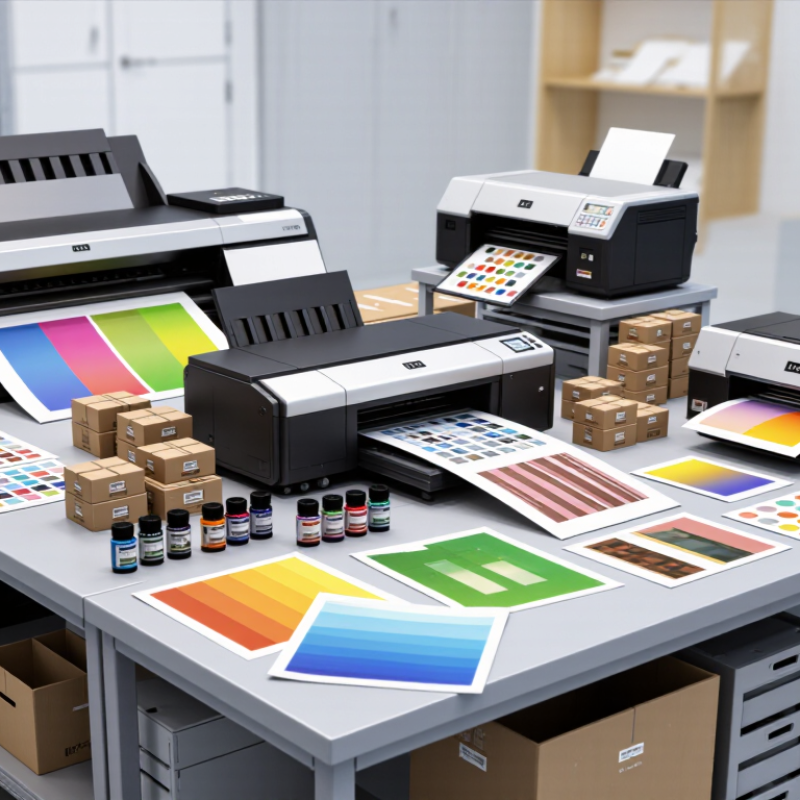
A leading digital printer manufacturer in China is defined by repeatable performance, not a polished showroom sample. Smithers’ The Future of Digital Printing to 2032 valued global digital print output at about US$167.5 billion in 2022 and projected growth to US$251.1 billion by 2032. That expanding market raises the bar for equipment makers. Buyers need clear evidence of print quality, production speed, and operating costs under realistic conditions. Ask for test sheets on your own media, not just coated stock. Check fine text, gradients, registration, and color consistency across repeated runs. Small defects show quickly under bright inspection lights.
Technical support matters just as much as the machine. A capable manufacturer should explain printhead maintenance, ink compatibility, spare-part availability, and expected service intervals in plain language. Request documented test methods and a written warranty, then verify response times with existing customers. Look for quality checks at assembly and before shipment. Useful checks include nozzle performance, alignment, and stable output during a continuous run. No factory is flawless; what matters is whether it records failures and corrects them. Smithers’ figures describe the wider market, not any single supplier, so independent sample testing remains essential.
Who Is the Best Digital Printer Manufacturer in China? - What Defines a Leading Digital Printer Manufacturer in China?
| Evaluation Dimension | What to Assess | Evidence to Request | Why It Matters |
|---|---|---|---|
| Application fit | Printer type, substrate compatibility, working width, and intended production use. | A written specification confirming supported materials, thickness or weight limits, and intended applications. | A suitable printer depends on the job; one configuration may not suit every material or workflow. |
| Print quality | Output consistency, fine-detail reproduction, color control, and print quality across the usable width. | Production samples made on the buyer’s material, plus stated print mode and color-management details. | A resolution figure alone does not establish real-world image quality or consistency. |
| Productivity | Output speed in the required quality mode, setup time, and practical uptime. | A test report stating print mode, pass count where applicable, substrate, and whether the figure is a maximum or sustained rate. | Speed claims are meaningful only when the operating conditions are clearly specified. |
| Ink and operating costs | Ink consumption, maintenance supplies, energy use, and routine service requirements. | A cost estimate based on a defined image, coverage, substrate, and production volume. | Purchase price alone does not show the total cost of operating a printer. |
| Mechanical design and safety | Frame and motion-system construction, material handling, guarding, and applicable electrical safety provisions. | Technical drawings, user and maintenance manuals, and applicable conformity documentation for the destination market. | Sound construction and suitable safeguards support reliable operation and workplace safety. |
| Software and workflow | RIP software compatibility, supported file formats, color-management workflow, and user access or licensing terms. | A live workflow demonstration using the buyer’s files and a written list of included software and licenses. | Software compatibility affects job preparation, repeatability, and integration with existing production systems. |
| Reliability and maintenance | Preventive-maintenance needs, service access, parts availability, and documented troubleshooting procedures. | Maintenance schedules, spare-parts lists, service procedures, and references for comparable installations where available. | Clear maintenance planning helps buyers assess downtime risk and ongoing support needs. |
| Warranty and technical support | Warranty scope, exclusions, response channels, training, and remote or on-site service availability. | A written warranty and service agreement specifying coverage, response process, and customer responsibilities. | Support quality and warranty terms vary, so buyers should compare the actual contract rather than assumptions. |
| Customization and integration | Options for feeding, take-up, drying or curing, color configurations, and factory workflow integration. | A configuration proposal identifying standard equipment, optional features, lead times, and acceptance criteria. | A well-matched configuration can reduce process bottlenecks and unnecessary equipment costs. |
| Verification before purchase | Whether the proposed machine can meet the buyer’s actual quality, material, and production requirements. | A sample run or factory acceptance test using agreed materials, files, print modes, and pass/fail criteria. | Testing against agreed requirements makes comparisons more objective than relying on general claims. |
The best manufacturer is the one whose documented capabilities, test results, support terms, and total operating costs match the buyer’s specific production needs.