What Is the Best Equipment Packaging in 2026?
What is the best equipment packaging in 2026? The answer depends on the equipment, its journey, and how often it will be moved. A precision instrument traveling in a climate-controlled van needs different protection from a heavy pump crossing several handling points. Good packaging starts with real conditions: vibration, moisture, lifting access, storage time, and the item’s center of gravity. Small details matter. A loose bracket can damage a finished surface; a poorly placed fork opening can turn unloading into a risky, costly task.
Walter Soroka, author of Fundamentals of Packaging Technology, offers a useful principle: packaging should protect products while supporting their storage, handling, and distribution. That principle is especially relevant to equipment packaging, where protection alone is not enough. The right design may combine a fitted skid, blocking and bracing, moisture barriers, and clear handling marks. Reusable crates or modular systems can also reduce waste when return logistics make sense. But reusable is not automatically better; cleaning, inspection, and retrieval all take time.
This guide examines how to compare packaging options in 2026, from material choice and cushioning to testing, sustainability, and total cost. It also considers practical trade-offs that specifications can miss. A package may pass a drop test and still be awkward to lift. And no single design fits every machine. The best choice is the one that protects the equipment, suits its route, and works for the people who pack, move, and receive it.
Equipment Packaging: Purpose, Scope, and Key Requirements in 2026
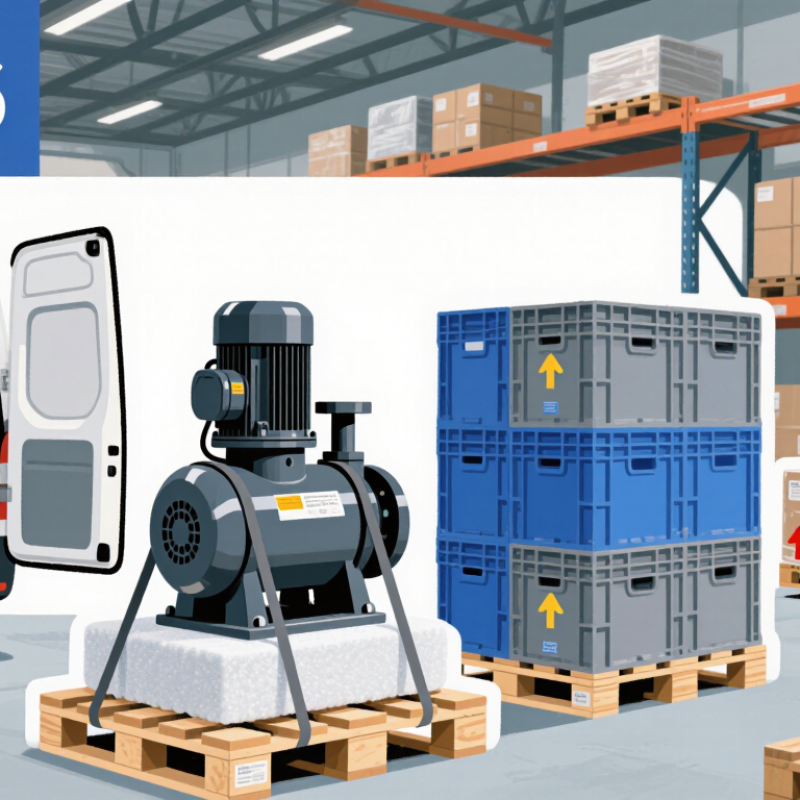
Equipment packaging in 2026 must protect machinery through storage, lifting, and transport—not merely cover it. Its scope includes the crate or pallet, internal restraints, moisture control, labels, and safe access for unpacking. Requirements depend on weight, center of gravity, fragile parts, route conditions, and storage time. A loose restraint can let a metal assembly shift; excess cushioning can also hide poor fit. Fit matters.
The OECD’s 2022 Global Plastics Outlook reports that packaging accounted for 40% of global plastic waste in 2019. That figure covers packaging broadly, not equipment packaging alone, but it highlights the value of avoiding unnecessary material. Specify recyclable or reusable components where practical, while keeping protection measurable. Use documented drop, vibration, and compression testing suited to the shipment; no single test profile fits every machine. Record the test conditions and inspect the equipment after testing.
Tips: Photograph the packed unit, mark lifting points clearly, and check that forks cannot strike exposed components. For long or humid journeys, verify barrier materials and desiccant quantities against the actual exposure. A packaging plan can still miss a handling detail, so review damage reports after delivery and revise the design.
How to Assess Equipment Size, Weight, Fragility, and Shipping Risks
What Is the Best Equipment Packaging in 2026?
How to Assess Equipment Size, Weight, Fragility, and Shipping Risks
Choosing equipment packaging in 2026 starts with measurements, not a catalog photo. Record the item’s length, width, height, and weight, then note its center of gravity and any parts that shift. A compact machine may still need a wide base if its weight sits off-center. Measure it twice. This simple check helps prevent unstable lifts and wasted space. Also identify handles, cables, and protrusions that could snag or bend during loading.
Tips: Photograph the equipment from several angles. Protect exposed controls, and check whether the packed unit moves when gently tilted. Add cushioning around corners and leave room for shock-absorbing material. A tilt test helps, but it cannot predict every impact.
Fragility and shipping conditions should guide the protection plan. Glass displays, precision parts, and delicate sensors may need custom supports that prevent contact with the outer container. For heavy equipment, use a reinforced base and secure the load against sliding. Consider vibration, moisture, repeated handling, and whether packages may be stacked. Even careful estimates can miss a weak point, so inspect the packed item before dispatch. Look for loose fittings, compressed cushioning, and gaps where movement could start.
Packaging Materials and Designs for Different Equipment Types
Equipment packaging should match the load, not just the product category. Heavy motors and machine parts need a rigid base, bracing, and moisture protection; a plywood crate may suit long or rough routes. Precision instruments need fitted cushioning that limits movement without pressing on screens, dials, or connectors. Electronics often need antistatic bags alongside foam or molded-pulp supports. Small components travel better in divided cartons, where metal edges cannot scrape delicate surfaces. Details matter.
Design also depends on handling and disposal. The U.S. EPA’s 2018 materials report found that 53.9% of containers and packaging were recycled. AF&PA’s 2023 Corrugated Recycling Rate report put corrugated-box recycling at 93.6% in the United States. These figures support choosing recyclable fiber packaging where protection allows. They do not prove that a carton will survive a specific route. That distinction is easy to miss.
For export or repeated handling, add blocking, corner protection, and clear lift-point markings. Test the packed equipment under realistic vibration, drop, and compression conditions; ISTA procedures provide established transit-test methods. A common mistake is adding more foam before checking whether the item can shift inside the crate. Sometimes the fix is tighter restraint, not thicker cushioning. I would still review the design after the first shipment, because real handling can expose awkward gaps that a lab test misses.
What Is the Best Equipment Packaging in 2026?
Drop-test height by packaged-product weight: a useful starting point for planning protective packaging for equipment.
The chart shows commonly referenced ISTA 1A free-fall drop-test levels, converted from pounds and inches to kilograms and centimetres. These are test conditions, not a ranking of packaging materials. Choose cushioning and a package design based on the equipment’s weight, fragility, shape, and shipping risks; confirm the applicable requirements in the current test procedure.
How to Compare Protection, Cost, Sustainability, and Compliance
The best equipment packaging in 2026 is not simply the toughest box. It must protect the equipment through real handling, storage, and transport conditions. Check for movement inside the package, exposed corners, moisture risks, and vibration. A snug fit matters. But excessive cushioning can add weight and slow packing.
Compare total cost, not just the price per package. Include packing labor, freight, storage space, and the cost of equipment damaged in transit. A reusable case may cost more upfront, yet pay off over repeated shipments. Or it may not. Track reuse cycles and cleaning time before deciding. Sustainability also needs context: lighter materials can reduce shipping weight, while recycled or recyclable materials may depend on local collection systems.
Compliance is part of the comparison, not a final paperwork check. Confirm current requirements for the destination, equipment type, packaging materials, labels, and handling instructions with qualified compliance staff. Keep specifications and test records accessible. Then test a representative package with a drop or vibration trial and review a pilot shipment. Record damage, pack time, and material use. A tidy scorecard helps, but it cannot capture every rough handoff. Review it after real shipments.
Choosing and Validating an Equipment Packaging Solution for 2026
Choosing equipment packaging in 2026 starts with the equipment, not the carton.
Record its mass, center of gravity, fragile points, operating tolerances, and lifting method. Then map the route from warehouse storage to the installation room. Details matter. A first design may be awkward to pack; notice that, rather than hiding it.
A solution that works on a clean factory floor may fail after vibration, damp storage, or a rough handoff. Choose cushioning and restraints that limit movement without pressing on connectors, screens, or calibrated surfaces. Leave room for cables and accessories, but keep them from striking the main unit.
Simple, but often missed.
Packaging should open in a predictable sequence, with clear lifting points and manageable components.
Validate a production-like sample under realistic conditions.
Measure vibration, compression, moisture exposure, unpacking time, and visible damage. Compare results with written acceptance limits, and photograph inspection points.
One shipment proves little.
If testing uses lighter loads or gentler handling than actual shipping, revise it; reassuring data may not be useful data. Lower material use can reduce waste, yet too little protection may increase repair costs and delays.