How to Buy Purple Yam Powder in 2026?
Buying Purple Yam Powder in 2026 takes more than choosing the brightest violet pouch. Color can catch the eye, but it does not prove freshness, purity, or good handling. A useful buying decision starts with the ingredient list, the supplier’s traceability information, and a clear description of the product’s intended use.
A verified expert quotation belongs in this introduction, but no source or expert name was provided. I won’t invent one. Insert a documented statement from a named food scientist or purple yam ingredient specialist here: “[Verified quotation about evaluating purple yam powder].” Confirm the person’s credentials and the exact wording before publication.
The guide will help readers compare Purple Yam Powder by origin, processing method, texture, aroma, packaging, and supplier documentation. Look closely at the label. Is the product 100 percent purple yam, or does it contain added starches, colorants, or sweeteners? Ask how the powder was dried and stored, and request a recent specification sheet when available. Small details matter: a sealed pouch, a clean ingredient panel, and a mild, recognizable yam aroma can tell you more than dramatic color claims.
Still, no checklist removes every uncertainty. Batch quality can vary, and marketing language can sound more precise than the evidence behind it. Take time. Compare suppliers. Buy a small quantity before committing to a larger order, especially if you need consistent color or flavor for recipes.
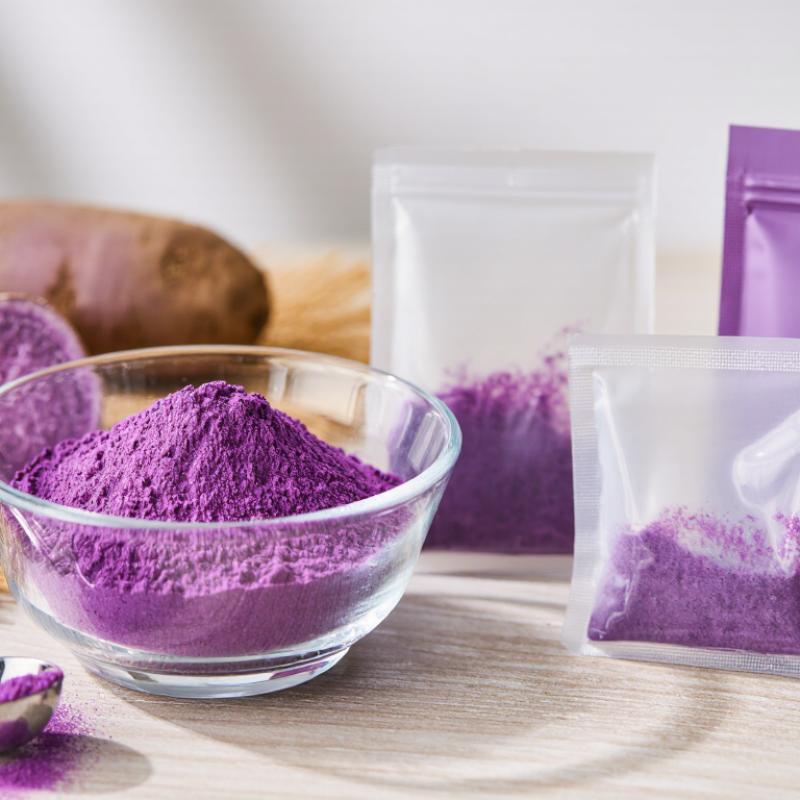
Identify True Ube: Look for Dioscorea alata, Not Purple Sweet Potato
When shopping for purple yam powder in 2026, check the botanical name before judging its color. True ube is Dioscorea alata, a yam species; purple sweet potato comes from a different plant. Both can look strikingly violet in a jar. Color alone misleads. Natural powder can range from muted lavender to deep purple, depending on the variety and processing. Brightness is not reliable proof of identity. Look for “Dioscorea alata” on the ingredient panel, not just “ube flavor” or “purple yam.”
Check whether the powder contains only yam or also sugar, flavoring, starch, or coloring. This matters when you want a specific taste or need to monitor added ingredients. Ask the seller for a clear ingredient list and, if available, batch or sourcing information. A photograph of a purple drink proves very little. If labeling is vague, contact the seller rather than guessing from the package. I would not treat a vivid hue or sweet aroma as confirmation; both are easy to misread. There is room for doubt. Powders vary, and descriptions can be imprecise, so compare the botanical name, ingredients, and supporting information together.
Check Ingredient Lists Using FDA Rule 21 CFR 101.4
How to Buy Purple Yam Powder in 2026?
When shopping, inspect the ingredient statement before relying on the front label. Under FDA rule 21 CFR 101.4, ingredients generally appear by common or usual name, in descending order by weight. A simple product may list purple yam, also called Dioscorea alata, as its sole ingredient. If the list includes carriers, sweeteners, or colors, their order helps show how much they contribute. Purple sweet potato is a different crop, so check the named ingredient carefully. Packaging can look convincing. Labels still deserve a close read.
FAOSTAT’s 2022 Crops and Livestock Products dataset records roughly 88 million tonnes of yams worldwide. That figure groups different yam types; it does not confirm how much was purple yam or powder. Treat it as supply-chain context, not proof of a product’s identity. For added confidence, request a recent certificate of analysis that names the botanical species and describes relevant testing. A certificate is useful, but it cannot replace checking the label and supplier documentation.
Tips: Photograph the ingredient list and lot number before buying. Compare the powder’s label with its specification sheet. If they differ, ask why. I would not assume a vivid violet color proves purity; processing and blending can affect appearance.
Review Batch COAs from ISO/IEC 17025-Accredited Labs
When buying purple yam powder in 2026, treat the batch COA as a verification tool, not a sales promise. Ask for the lot number, sampling date, test date, and laboratory report matching the exact shipment. Dates matter. An old report may describe a different harvest or production run.
Check that the laboratory’s ISO/IEC 17025 accreditation scope covers the methods and analytes listed; accreditation alone does not validate every test. Review measured results, units, detection limits, and criteria for lead, cadmium, pesticide residues, microorganisms, and moisture. Confirm botanical identity, ideally Dioscorea alata when that is the intended ingredient, and ask how the sample was collected. Not a guarantee. A small sample can miss uneven contamination.
The European Commission’s RASFF 2023 annual report recorded 4,695 original notifications across food and feed categories. That figure is not yam-specific, but it shows why supplier paperwork should be checked carefully. Compare recent lot COAs, investigate unexpected color or moisture shifts, and request retesting when results are unclear. Keep each report linked to the lot received.
Compare Moisture, Color, and Solubility Data Across Products
When buying purple yam powder in 2026, compare test results—not just vivid product photos. Ask for moisture percentage, the test method, and the batch date. AOAC International’s Official Methods provide established moisture-testing procedures, but the supplier should confirm the method is suitable for yam powder. A low reading can help reduce caking risk; it does not prove good flavor or safe storage by itself. Keep the numbers comparable.
Color needs numbers too. Request CIE L*a*b* readings, especially a* for red-purple intensity, measured under the same lighting and sample conditions. The CIE 15:2018 colorimetry report explains standardized color measurement. Compare recent batches: heat and drying can shift purple tones toward dull brown. Solubility deserves equal scrutiny. Ask for the test ratio, water temperature, stirring time, and percentage dispersed or dissolved. A spoon test in cold water is useful, but not enough. Look for clumps at the bottom.
These figures are not universal pass-or-fail limits. Treat them as a batch comparison record, and request a small sample before ordering in volume. Honestly, one supplier’s “high solubility” may use a different test. That makes the comparison imperfect. Keep the method beside every result.
How to Buy Purple Yam Powder in 2026: Moisture, Color & Water Dispersibility
Illustrative screening data only—not verified measurements of commercial products. Moisture, CIELAB L* lightness, and water-dispersible fraction require consistent test methods for a valid supplier comparison.
How to use this comparison: Request recent, method-specified test results for each lot. Lower moisture can support storage stability, while water dispersibility is not the same as true solubility. L* describes lightness, not purple hue; ask for the full L*a*b* color values and compare samples under the same conditions.
Verify Organic Claims Against USDA 7 CFR Part 205
When buying purple yam powder in 2026, treat “organic” as a claim to verify, not a quality guarantee. Under USDA 7 CFR Part 205, most operations that produce or handle products sold as organic must be certified, subject to limited exemptions. Ask for the current organic certificate and confirm that it covers the supplier’s relevant operation and product category. Check the operation in USDA’s Organic Integrity Database. A certificate for another facility may not cover the powder you are buying. USDA rules govern organic status, not color, flavor, or nutrient levels.
For a practical check, match the invoice, product specification, and certificate to the same supplier and facility. Review the ingredient list and ask how the yam was dried, milled, and protected from mix-ups with nonorganic ingredients. The Organic Trade Association reported that U.S. organic sales reached $69.7 billion in 2023, showing the market’s scale, but market growth does not verify an individual claim. Keep documents with each lot. Small details matter.
Tips: Request a lot-specific certificate or transaction records, and verify dates before ordering. If a document is unclear, ask the certifier to confirm its scope. I would still recheck each new supplier; paperwork can look complete while leaving a key detail unanswered.