
Why Choose a Child Proof Metal Box for Secure Storage?
A Child Proof Metal Box can add a sturdy, lockable layer between children and household items that need secure storage. Its cool metal surface, firm lid, and carefully designed latch offer practical advantages over a thin container. Still, “child-resistant” does not mean impossible for a child to open. Small details matter.
The CDC’s PROTECT Initiative has cited an estimated 50,000 annual U.S. emergency department visits involving children under five who find and ingest medicines. That figure makes secure storage more than a packaging preference. The U.S. Consumer Product Safety Commission’s child-resistant packaging requirements also provide a useful benchmark: packaging should resist opening by young children while remaining accessible to adults. A metal box should complement attentive storage habits, not replace them.
For accuracy, this introduction does not assign a quotation to a named Child Proof Metal Box expert: no verifiable expert statement or source was provided. Inventing one would undermine trust. Buyers should instead look for clear information about the latch, hinge strength, intended use, and any relevant testing. A heavy box can feel reassuring. That alone proves little. Check how it closes, where it will sit, and whether an adult can operate it consistently. No container is foolproof, and real-world use deserves honest evaluation.
What Defines a Child-Proof Metal Storage Box?
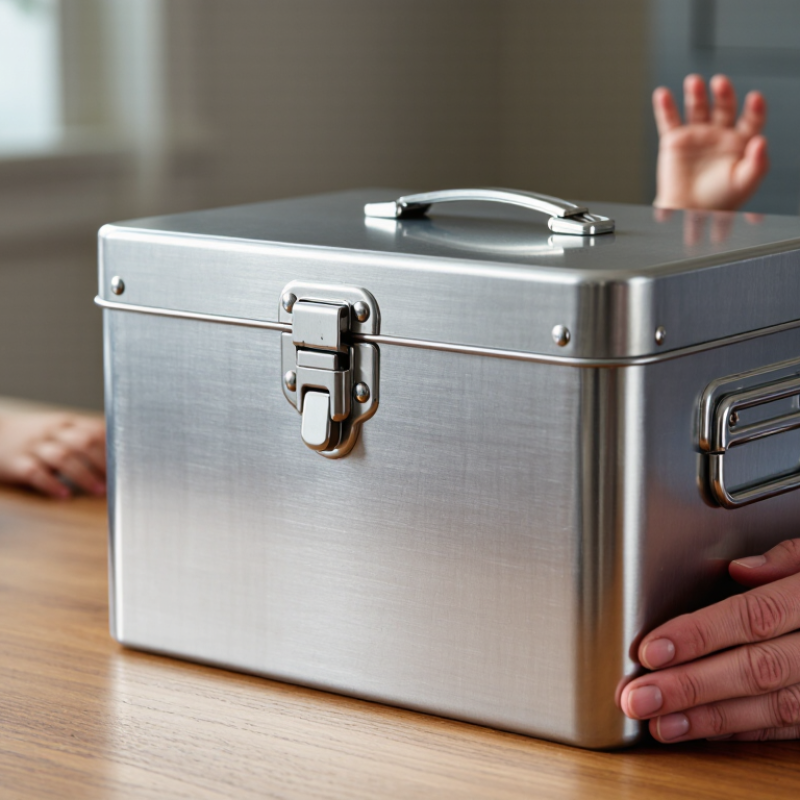
A child-proof metal storage box is designed to make access harder for young children, not impossible. Its definition depends on both the container and its locking mechanism. A sturdy metal body resists crushing and casual prying, while a latch may require a deliberate sequence, such as pressing and sliding two parts together. The action should be manageable for an adult but difficult for a small child’s hands to repeat.
That distinction matters.
Look closely at the details. The lid should sit evenly, hinges should not wobble, and edges should feel smooth rather than sharp. A lock is only useful when it closes fully and stays engaged during ordinary handling. Test it with the box empty, then check again after adding contents; a packed lid can sometimes prevent proper closure.
Not foolproof.
A child-proof label is not a guarantee, and no box replaces attentive supervision. Keep any key or access code out of children’s reach, and place the closed box somewhere stable, away from climbing surfaces. In practical use, these small checks reveal more than appearance alone.
A metal box can be solid and still have a weak latch.
How Its Locking Mechanism Helps Prevent Accidental Access
Why Choose a Child Proof Metal Box for Secure Storage?
A child-resistant metal box adds a firm barrier between curious children and household items that should stay out of reach. Its rigid walls resist casual prying, while a lid that closes fully helps prevent contents from spilling if the box is bumped. Small hands explore. A well-fitted lock can make accidental access less likely, but it cannot make storage risk-free.
Locking mechanisms work best when they are simple for adults to use and consistently secured after each opening. A key lock requires the key to be stored separately; a combination lock avoids a loose key but depends on adults keeping the code private.
The CDC’s Up and Away medication-safety guidance reports that about 60,000 young children visit emergency departments each year after getting into medicines. That figure is a sobering reminder: a locked box is one useful layer, not a substitute for supervision or safe handling. Even a good routine can slip when someone is in a hurry.
Tips: Keep the box on a high, stable shelf, lock it immediately after use, and check that the latch catches. Store the key or code away from children. Test the lock occasionally; a loose hinge can quietly weaken the whole setup.
Which Items Benefit from Secure, Child-Resistant Storage?
Medicines and supplements are among the most important items to store securely. A locked metal box can add another barrier when bottles are kept in their original packaging. This matters for daily tablets, liquid medicine, and vitamins left on a bedside table or kitchen counter. Small hands reach. Store the box somewhere cool and dry, and keep the key or combination inaccessible to children.
Small batteries, magnets, craft blades, and sewing needles also benefit from controlled storage. These items can be easy to overlook: a button battery beside a remote, or a needle tucked into a loose sewing kit. A sturdy box helps keep them together and out of reach. Use separate containers inside it so sharp points and tiny pieces do not spill when the lid opens.
A metal box is useful, but it is not a substitute for supervision or safe habits. Check that the latch engages each time, and inspect the box for damage or rust. Not every item belongs inside one; products that need ventilation or special temperature control may require different storage. I would not rely on a lock alone. Keep hazardous household products in their labeled containers, and follow the storage directions on the label.
How to Choose a Box for Your Storage Needs
Choose a box around what you actually store, not the largest model on the shelf. Measure containers and leave room for fingers to lift them without scraping the lid. CDC reports that about 60,000 young children visit emergency departments each year after getting into medicines left within reach. That figure makes access control worth considering, but a locked box is only one layer of prevention.
Check the latch for smooth closure and resistance to casual tugging. Fit matters. A heavy steel shell can feel reassuring, yet weight alone does not show how well its hinge or lock performs. Look for clear test information, sturdy mounting points, and rounded edges if the box will sit in a shared room. For humid spaces, ask about corrosion protection; bare metal can age badly near sinks or garages.
Consider who needs access and how often. A key can be misplaced, while a combination may be easier for approved adults to share. Test the chosen mechanism before filling the box. Does it open reliably? Does the lid stay aligned? A child-resistant description is not the same as a guarantee, and storage practices still matter. CDC’s child-safety guidance recommends keeping medicines up and away, out of sight, and secured. (CDC, PROTECT Initiative)
Why Choose a Child Proof Metal Box for Secure Storage? — How to Choose a Box for Your Storage Needs
| Storage Need | Suitable Box Features | Potential Advantages | Things to Check |
|---|---|---|---|
| Small household items or medicines | Compact metal body; secure latch; key or combination lock | Helps keep contents together and adds a physical access barrier. | Check internal dimensions, hinge strength, and whether the lock is difficult for a child to operate. Keep medicines in their original packaging and follow storage instructions. |
| Documents, keys, or personal keepsakes | Rigid steel construction; full-length hinge or reinforced corners; keyed or combination locking | A sturdy enclosure can help protect contents from everyday handling and casual access. | Confirm the box fits the contents and can be secured to a stable surface if needed. A basic lock does not guarantee protection against forced entry. |
| Items used frequently by adults | Easy-to-operate combination lock or keyed lock with a designated key-storage plan | Balances convenient adult access with a barrier to unsupervised access. | Choose a locking method adults can use consistently. Do not leave keys or combinations accessible to children. |
| Items requiring restricted access | Locking metal box with a secure closure and limited access to keys or the combination | Can provide an additional layer of access control when used consistently. | Assess the box as one part of a broader safety plan. Store it out of reach when appropriate, and supervise children around hazardous items. |
| Storage in a damp area | Corrosion-resistant finish; close-fitting lid; protective lining if suitable for the contents | A suitable finish can help reduce surface corrosion during normal use. | Metal boxes are not automatically waterproof or airtight. Check the product’s stated environmental limits and keep moisture-sensitive contents in suitable packaging. |
| Portable storage | Manageable size and weight; secure lid; handle that does not interfere with the lock | Easier to move between rooms or storage locations. | Portability may make a box easier to remove. Consider whether a fixed or heavier option better suits the storage location. |
Selection note: “Child-proof” is not an absolute guarantee. A locked metal box can help deter access, but no container should replace adult supervision, safe placement, and product-specific storage guidance.
How to Use and Maintain the Box Safely
A child-resistant metal box can add a useful barrier, but it is not a substitute for supervision. Read the locking instructions before use, and test the latch with the lid fully closed. Store the box on a stable, high shelf, away from heat and moisture. Keep keys and access codes separate from the box. It is easy to assume a closed lid is secure; check that it has actually latched.
Tips: Choose a location children cannot reach or climb to. Close and lock the box after every use. Avoid placing heavy objects on top, and do not let children handle the key.
For routine care, wipe the exterior with a soft, dry cloth. If the box gets damp, dry it promptly to help prevent corrosion. Check the hinges, seams, and lock regularly for looseness, sharp edges, or sticking. Follow the maker’s care guidance, and do not force a jammed mechanism; that can damage the latch. A quick check takes little time. Still, it is easy to forget, so make it part of your regular home-safety routine.