China Top 10 Bulk Sack Suppliers for Global Buyers
Global buyers are reassessing Bulk Sack suppliers as logistics costs, product safety, and sustainability pressures increase. Grand View Research valued the global flexible intermediate bulk container market at approximately USD 5.3 billion in 2023. Its outlook indicates continued growth through 2030, supported by agriculture, chemicals, construction materials, and food processing.
Smithers’ flexible packaging research also highlights a practical shift toward lighter materials, improved barrier performance, and recyclable designs. These trends matter when a shipment includes fine powder, 1,000 kilograms of resin, or moisture-sensitive grain. A weak lifting loop can damage more than the product. It can disrupt an entire delivery schedule.
Professor Jay Singh, a packaging-technology specialist at Cal Poly, offers a useful principle: “Packaging must protect the product, the people, and the process.” That standard should guide any comparison of China’s leading Bulk Sack manufacturers.
This ranking focuses on manufacturing experience, fabric quality, load testing, customization, certification management, and export reliability. It also considers details buyers often overlook, including liner fitting, stitching consistency, pallet stability, and communication during peak seasons. ISO 21898 compliance is relevant, but certification alone cannot prove daily production discipline.
No supplier ranking is perfect. Factory audits, sample testing, and documented quality records remain necessary. Buyers should also confirm whether specifications match the actual filling method, discharge system, and transport environment. The companies introduced here represent strong candidates for global sourcing, but careful verification still belongs to the buyer. That is where practical judgment matters.
What Are Bulk Sacks and Why Choose Chinese Suppliers?
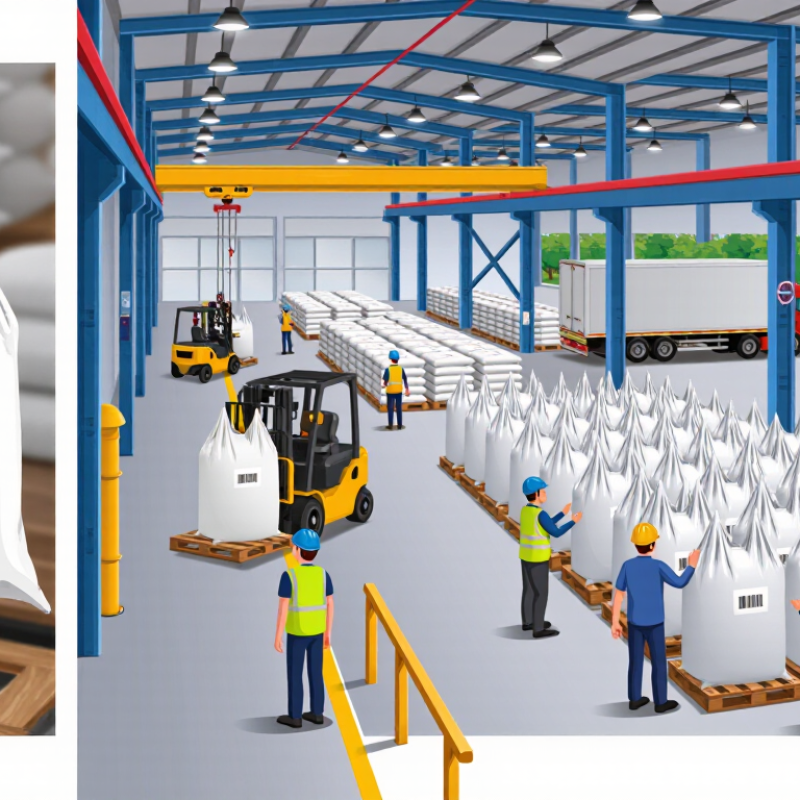
Bulk sacks, also called flexible intermediate bulk containers, are industrial bags made mainly from woven polypropylene.
They commonly hold 500 to 2,000 kilograms of powders, granules, or agricultural materials. Their lifting loops allow forklifts and cranes to move loaded bags safely.
A liner can improve moisture protection, while coated fabric helps reduce dust leakage. They are not simply oversized shopping bags.
IMARC Group estimated the global FIBC market at about USD 6.4 billion in 2023, showing strong demand for efficient bulk packaging. China has become a major sourcing base because its factories offer large production capacity, automated weaving, and flexible customization. Buyers can request different loop designs, discharge spouts, liners, printing, and fabric strengths. In practice, these details affect loading speed and product loss. Small differences matter.
A reliable Chinese supplier should provide batch records, fabric test results, and dimensional inspections. Buyers should also verify compliance with ISO 21898 and applicable food-contact or transport requirements. Independent testing is wise, especially for moisture-sensitive powders.
I have seen specifications look complete while omitting seam strength or liner thickness. That is an uncomfortable but useful warning.
Price alone cannot prove quality, and a cheaper sack may increase handling risks later.
How the Top 10 Chinese Bulk Sack Suppliers Are Selected
China Top 10 Bulk Sack Suppliers for Global Buyers
How the Top 10 Chinese Bulk Sack Suppliers Are Selected
Selecting the top ten suppliers requires more than comparing online prices. We examine manufacturing experience, product consistency, export records, and documented quality systems. A supplier should explain its fabric grade, stitching method, filling design, and safe working load clearly. Factory visits or verified audit records can reveal details that catalog pages often miss.
Performance testing matters. We review load-bearing results, seam strength, lifting-loop construction, and resistance to moisture during storage. Sample orders also help assess dimensions, printing accuracy, packaging, and delivery communication. Reliable suppliers provide traceable batch records and practical technical documents. They also follow the import, labeling, packaging, and workplace-safety requirements of the destination market. However, no ranking is flawless. Production changes, raw-material variation, and seasonal pressure may affect results.
Tips: Request samples from several suppliers. Test filled sacks under realistic warehouse conditions. Check whether the stated safe working load matches independent test evidence. Ask for recent inspection reports, not outdated certificates. Confirm lead times in writing, including sample approval and shipment preparation. A low quotation can hide weaker fabric, limited traceability, or costly rework. Clear communication remains essential, especially when specifications involve liners, discharge openings, or pallet dimensions.
How the Top 10 Chinese Bulk Sack Suppliers Are Selected
Transparent selection framework for global buyers based on the procurement factors most relevant to FIBC and bulk sack sourcing.
Evaluation weights represent a practical buyer-focused methodology: product quality and compliance receive the highest emphasis, followed by manufacturing capability, customization, export experience, delivery reliability, and commercial competitiveness.
How to Compare Products, Certifications, Prices, and Services
When comparing China’s top ten bulk sack suppliers, start with the load, not the catalogue. Request SWL, safety factor, fabric weight, dimensions, liner type, and seam construction. A 1,000-kilogram sack can fail when filling, lifting, or discharge conditions differ. Ask for recent test records, not only a certificate scan. ISO 21898 covers flexible intermediate bulk containers for non-dangerous goods. Its requirements help buyers compare design and performance consistently. Food, pharmaceutical, and agricultural cargoes may need additional market-specific controls. Check traceability from yarn and fabric to final inspection. Small detail. Big consequence.
The World Bank’s 2023 Logistics Performance Index assessed 139 economies and highlighted customs, tracking, and timeliness. These factors can turn a low factory price into a higher landed cost. Compare quotations using the same Incoterm, quantity, print coverage, liner specification, and delivery window. Include sampling, third-party inspection, tooling, port charges, and replacement terms. A cheaper sack is not cheaper when a wet container delays production. Request price levels for 500, 5,000, and 20,000 units. Confirm whether testing and recycled-content claims are included. They often are not.
The World Bank’s 2023 Logistics Performance Index assessed 139 economies and highlighted customs, tracking, and timeliness.
Service quality deserves equal weight. Ask for a named quality contact, pre-shipment photos, corrective-action reports, and a realistic complaint timetable. Review production capacity during peak months. Verify audit scope, certificate validity, factory address, and authorized signatory. Do not treat online reviews as proof. A supplier should explain failed tests openly and document the fix. I would also score communication, sample accuracy, and response time. My scoring model is imperfect; freight volatility can distort it. Still, a written matrix makes ten suppliers genuinely comparable.
How Global Buyers Can Verify and Order from Chinese Suppliers
China’s bulk sack market offers many capable suppliers, but a polished website proves little. Global buyers should request the Chinese business license, export history, factory address, and product certificates. Check whether the bank account matches the registered company name. A live video tour can show sewing lines, fabric rolls, and finished sacks. Still, video evidence is not enough. Ask for recent production photos, sample records, and two independent trade references.
Define every requirement in writing before ordering. Include sack dimensions, fabric weight, safe working load, safety factor, liner type, stitching pattern, printing, packaging, and acceptable tolerances. Request a physical sample and test it under realistic handling conditions. A small pilot order is safer than committing to a full container. The purchase contract should identify specifications, inspection timing, delivery terms, payment milestones, and remedies for defects. An independent inspection before loading can reveal weak seams or incorrect labels.
Reliable communication is practical evidence. Ask for weekly production updates, carton photos, loading records, and the container seal number. Keep approvals in email, not only in chat messages. Cheap quotes may hide thinner fabric or unclear testing standards. I have found that assumptions cause more trouble than high prices. Some buyers also overlook time-zone delays and translation gaps. Leave room for correction, and verify every critical detail twice.