China Top 10 Canned Pork Manufacturers for Global Buyers
China is an important sourcing market for Canned Pork, with manufacturers serving retail, food-service, and institutional buyers. This guide introduces ten Chinese manufacturers for global buyers to evaluate. It is a practical starting point, not an automatic endorsement or a guarantee of product quality.
Supplier selection takes more than comparing prices. Buyers should review product specifications, ingredient lists, nutritional information, and packaging options. A close look at the can matters: check its size, seam integrity, and storage instructions. Labels matter, too. Export documents and market-specific requirements should be confirmed with the supplier and relevant authorities before an order is placed. Details can vary.
The profiles focus on factors that support informed inquiries, such as product range, production capabilities, quality-control practices, and export experience, where information is available. Ask for current certifications and supporting records, then verify them independently. Request samples when practical. Test the texture, flavor, and consistency after heating, not only straight from the can. A polished brochure is not proof. Even a careful review may leave unanswered questions, so buyers should clarify production capacity, lead times, and complaint procedures directly. Use this list to build a shortlist and compare suppliers against your own market needs.
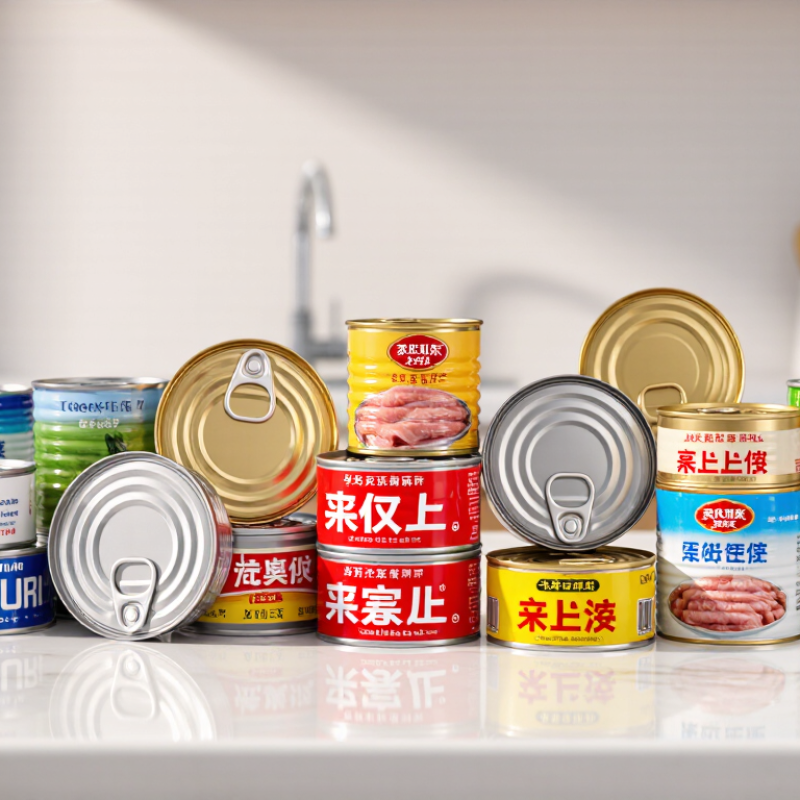
China’s Canned Pork Industry and Its Role in Global Trade
China’s canned pork industry connects domestic meat processing with buyers seeking shelf-stable protein. Canning allows products to travel without a chilled supply chain, which can simplify storage in ports, warehouses, and retail backrooms. A case of tins still depends on careful handling. Dented cans, unclear labels, or weak lot records can create problems long after production.
For global trade, reliable supply matters as much as price. Buyers typically assess processing controls, ingredient specifications, packaging strength, and the exporter’s ability to provide consistent documentation. Requirements differ by destination, so importers should verify current rules with qualified local professionals. A sample can also reveal practical details: meat texture, salt level, opening ease, and how much liquid remains in the tin. Small differences matter. They shape repeat orders.
Trade stories often make scale sound effortless. It isn’t. Shipping schedules shift, raw material costs change, and a product that suits one market may not suit another. Buyers can reduce uncertainty through factory assessments, clear written specifications, and checks on production batches. There is also room for improvement: packaging waste and nutrition expectations deserve more attention, not just low costs and long shelf life. A trusted supply relationship grows through steady checks, not promises alone.
How to Evaluate Chinese Canned Pork Manufacturers
How to Evaluate Chinese Canned Pork Manufacturers
A capable manufacturer should explain its process clearly, from incoming pork inspection to canning and final release. Ask how batches are identified and whether records connect each canning date with its raw material lots. Details matter. Request current product specifications, ingredient declarations, and test reports for the products you plan to buy. Check that the stated net weight, drained weight, and packing format match your requirements.
Food safety controls deserve careful review. Ask how thermal processing is validated and monitored, and what happens when a recorded result falls outside the approved range. Ask for evidence. Review sample batch records, inspection procedures, and the method used to check seams and can integrity. A factory visit can reveal practical details, such as clean work areas and orderly storage, but a polished tour alone proves little. Independent audits and traceable documents provide stronger context.
Test samples before discussing large volumes. Compare texture, salt level, fat distribution, and consistency across more than one batch. Confirm shelf-life conditions, storage guidance, production capacity, minimum order quantities, and lead times in writing. Check whether export documents can be prepared for your destination market, then have qualified local specialists review applicable requirements. A small point is easy to overlook: agree on how defects, delays, and specification changes will be handled. No checklist removes every uncertainty; keep a record of unanswered questions and revisit them before signing.
Profiles of 10 Chinese Canned Pork Manufacturers
China’s scale makes supplier screening essential. FAOSTAT’s Crops and Livestock Products dataset records roughly 55 million tonnes of pig meat produced in China in 2022. That figure describes the wider pork sector, not canned output. Buyers should assess each factory’s canning capacity separately. Details matter.
The ten profiles distinguish different operating strengths: an integrated hog-to-can processor, a coastal export-focused plant, an inland low-cost producer, a private-label specialist, a plant with small-format cans, a high-volume line, a flexible batch producer, a facility emphasizing traceability, a supplier with varied seasoning options, and a processor experienced in long-shelf-life products. These are useful comparison categories, not proof of performance. Not interchangeable.
For each manufacturer, buyers should verify production audits, lot-level traceability, can seam inspection, thermal-processing records, and stated shelf life. USDA Foreign Agricultural Service livestock reporting provides market context, while factory documents are needed to confirm product-specific claims. Request recent test records and sample cans; inspect the meat-to-fat ratio, texture, liquid level, and label accuracy. Ask for proof. A polished sample can hide uneven batches, and supplier questionnaires alone may leave gaps. Independent checks are worth the time.
China Canned Pork Manufacturers: A Food-Safety Reference for Global Buyers
FDA classification threshold for low-acid canned foods. The chart shows a regulatory boundary, not test results for any manufacturer or product.
Under U.S. FDA regulations, low-acid canned foods have a finished equilibrium pH above 4.6 and water activity above 0.85. Buyers should request product-specific process and compliance documentation; this threshold alone does not establish product safety.
Source: 21 CFR § 113.3
Export Standards, Certifications, and Market Requirements
Global buyers assess canned pork through process control, documentation, and destination-market fit. FAO’s November 2024 Food Outlook estimated global meat production at about 365 million tonnes in 2024, highlighting the scale of supply chains buyers must verify. For low-acid canned foods, Codex CXC 23-1979 provides guidance on thermal processing and commercial sterility. Exporters should retain validated process schedules, retort records, seal checks, and batch codes. Small details matter: a dented seam or an incomplete retort chart can trigger extra scrutiny. Paperwork matters.
Certification supports, but does not replace, legal compliance. A food safety management certificate under a scheme recognized by the Global Food Safety Initiative may help buyers assess controls, while each importing market sets its own rules. Buyers should confirm plant approval, health certificates, import notifications, and label language before shipment. Labels commonly need ingredients, allergen details where relevant, net weight, origin, lot identification, and storage instructions. Keep traceability links from incoming pork to finished-can codes. A certificate alone cannot prove that every production shift followed the validated process. In practice, teams sometimes treat it as the finish line; it is only a snapshot.
Comparing Suppliers for Quality, Capacity, and Logistics
For global buyers, a canned pork supplier should be judged on more than quoted price. Compare product specifications, production capacity, and shipment reliability side by side. Request recent batch records, net-weight checks, seam-inspection results, and sterilization documentation. Ask how the supplier handles production peaks and rejects inconsistent lots. Small details matter.
Capacity claims need evidence. Compare monthly output with your forecast, then confirm lead times for samples, repeat orders, and peak-season bookings. The World Bank’s Logistics Performance Index 2023 assessed 139 economies across six dimensions, including tracking and timeliness. These measures offer useful context, but they cannot replace a supplier’s own shipment history. A spreadsheet is not a factory audit.
Logistics can change the real cost. UNCTAD’s Review of Maritime Transport 2024 reports that over 80% of world trade by volume moves by sea. Buyers should therefore check port options, pallet patterns, container loading plans, and contingency arrangements. Request examples of shipment documents and ask how delays are communicated. That is not enough. Verify packaging condition and label accuracy on arrival, too. One imperfect point: published capacity may not reflect usable output after maintenance, so confirm it against recent production and dispatch records.