How to Choose the Best Bakery Packaging Machine
Choosing a bakery packaging machine is not simply a matter of buying the fastest line. A soft brioche bun, a crisp cracker, and a frosted cake each need different handling, sealing, and protection. The wrong setup can crush delicate crusts, leave crumbs near the seal, or slow changeovers when product sizes shift. The UNEP Food Waste Index Report 2024 estimates that 1.05 billion tonnes of food were wasted worldwide in 2022, equal to 19% of food available to consumers. Packaging equipment cannot solve food waste alone, but reliable portioning, sealing, and pack integrity can help protect products through distribution.
Food-packaging specialist Gordon L. Robertson’s book, Food Packaging: Principles and Practice, emphasizes matching packaging to the food’s protection needs. Put simply, as a paraphrase of that principle: protect product quality before optimizing line speed. Use this as a starting point, not a machine specification. For a bakery, compare the equipment’s performance with actual products, packaging materials, daily output, and cleaning routines. Ask suppliers to demonstrate changeovers and sealing on your own samples. Inspect the finished packs for crushed edges, loose seals, and trapped crumbs. Also review the manufacturer’s technical documentation and service support; a polished demonstration is not proof of dependable production. A compact machine may suit a small range, while a high-volume line may need automated feeding and inspection. There is no universal best choice. Even a promising specification deserves a practical trial.
Define Your Bakery’s Packaging Needs
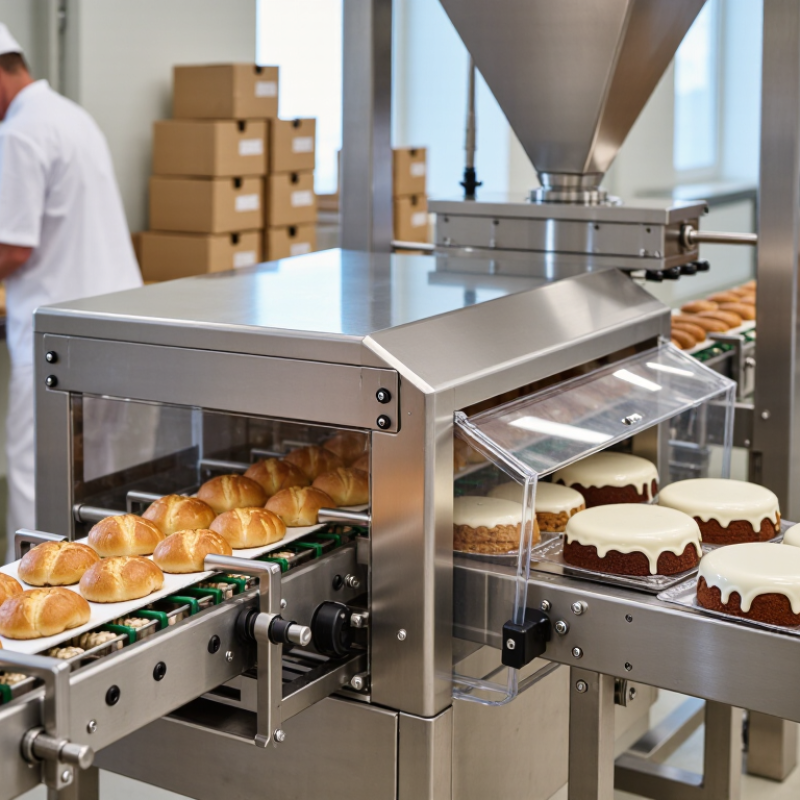
Before comparing bakery packaging machines, define what your products need to survive. List each item, from crusty sourdough loaves to iced pastries and delicate cookies. Their shapes, textures, and shelf-life targets affect the packaging method. A soft bun may need gentle handling, while a crisp tart needs protection from crushing and moisture. Start with real samples.
Measure typical and peak daily output, not just an ideal production run. Record package dimensions, preferred materials, and how often staff switch between products. If trays, bags, or cartons vary widely, note the largest and smallest formats. This is easy to underestimate. A machine that handles one package perfectly may slow down during frequent changeovers.
Consider who will operate the equipment and how much floor space is available. Check whether the line must connect to existing conveyors, scales, or date coders. Ask operators to describe current bottlenecks, such as hand-loading fragile items or clearing jams near the sealing area. Leave room to adjust. Your first estimates may be imperfect, so verify them with a short production trial and samples from several shifts. These details help turn a broad equipment search into practical requirements.
| Bakery Product | Typical Packaging Format | Key Packaging Needs | Suitable Machine Type | Planning Speed Range | Important Selection Checks |
|---|---|---|---|---|---|
| Sliced bread and sandwich loaves | Preformed or bagged package, often with a clip or heat seal | Protect the loaf from drying out and contamination; handle soft slices gently | Automatic bread bagger with a bag-closing unit | Approximately 10–60 loaves per minute | Confirm loaf dimensions, bag opening size, closure method, and whether the line includes slicing and bag loading. |
| Cookies and biscuits | Flow-wrapped packs, pillow bags, or trays inside a sealed outer pack | Limit breakage and maintain a consistent count or weight per pack | Horizontal flow wrapper; add a feeder or counting system for automated loading | Approximately 30–200 packs per minute | Check product fragility, pack length, required count, film type, and whether products arrive in a single lane or multiple lanes. |
| Muffins and cupcakes | Individual film wrap, tray pack, or carton | Prevent crushing and preserve decoration; allow space for toppings | Flow wrapper or tray-loading and carton-packing system | Approximately 15–100 packs per minute | Measure product height and diameter, including icing; assess whether products need trays or gentle pick-and-place handling. |
| Croissants and pastries | Flow-wrapped individual packs or grouped packs in a bag or carton | Protect delicate layers and shape while allowing suitable freshness protection | Horizontal flow wrapper with gentle product infeed | Approximately 20–120 packs per minute | Test product orientation, spacing, crumb shedding, seal location, and the packaging material’s performance on greasy products. |
| Bagels and rolls | Preformed bags, clipped bags, or sealed film packs | Accommodate variable product counts and reduce handling damage | Bagging machine or flow wrapper, depending on pack style | Approximately 10–80 packs per minute | Specify pieces per pack, product size range, bag dimensions, and whether manual or automatic product grouping is required. |
| Cakes and whole celebration cakes | Rigid tray and carton, cake box, or protective clamshell | Protect shape, height, toppings, and presentation during transport | Carton erector and closing system, or a dedicated cake-box handling setup | Approximately 3–30 packs per minute | Allow for cake-board size and decoration height; prioritize box fit, product access, and careful manual or robotic placement. |
| Frozen dough and par-baked goods | Sealed bags, pouches, or cartons with an inner bag | Provide a reliable seal and packaging suited to frozen storage and distribution | Vertical form-fill-seal or pre-made pouch machine; carton packing may be added | Approximately 10–80 packs per minute | Confirm target pack weight, product temperature, seal requirements, moisture control, and compatibility with the planned storage conditions. |
| Assorted bakery multipacks | Counted or weighed groups in a bag, tray, or carton | Combine different products accurately while keeping them separated or protected | Multi-lane feeder with flow wrapper, bagger, or carton-packing equipment | Approximately 10–100 packs per minute | Define the product mix, pack count, changeover frequency, and whether weighing, counting, or visual inspection is needed. |
| Planning note: Speed ranges are indicative starting points, not guaranteed machine outputs. Actual throughput depends on product size and fragility, pack format, operator input, feeding method, film or bag characteristics, and required changeovers. Confirm performance using representative products and packaging materials before selecting equipment. | |||||
Related Posts
-

Unlocking the Advantages of Bakery Packaging Machines for Global Buyers
-
What Is In Pack Machinery and How Does It Work?
-
Leading the World with Quality Chinese Food Packaging Solutions
-

5 Amazing Features of the Best Cardboard Box Machine You Need to Know
-
Revolutionizing Packaging: The Future of Cartoning Machines in Modern Manufacturing
-
2026 Top Doy Pack Machine Types for Global Buyers?