CALL US 770-248-9089

How to Choose the Right Food Packaging Machine for Your Business?

Choosing the right food packaging machine is crucial for any business. A suitable machine impacts your product's quality and shelf life. It can also affect your production efficiency and overall costs.

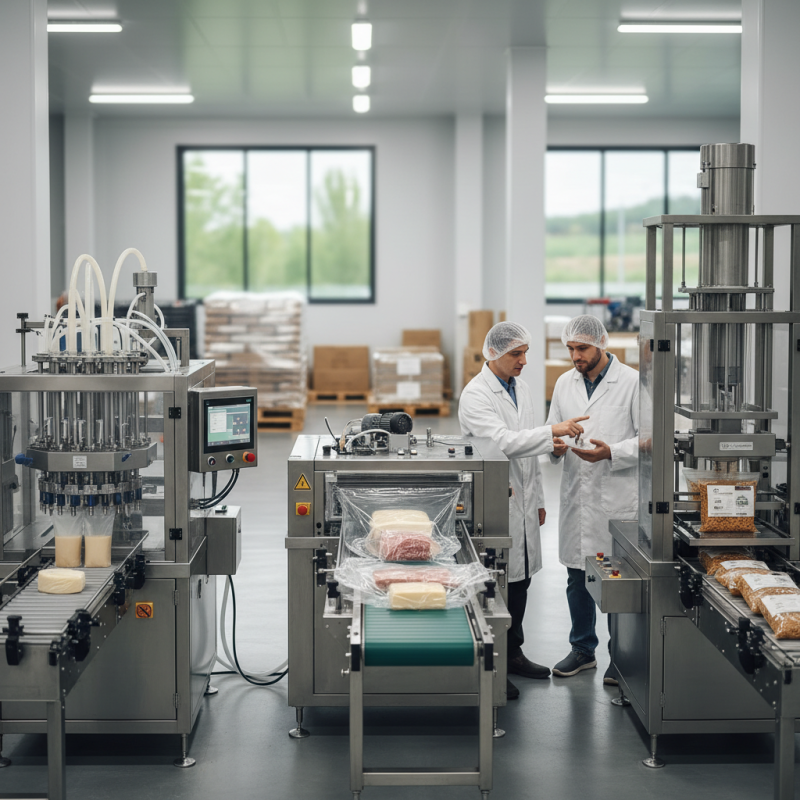
Consider the specific needs of your products. Different food types require unique packaging methods. For instance, liquids may need filling machines, while solids could use vacuum sealers. This requires a thorough understanding of equipment features and specifications.

Many businesses face challenges choosing the ideal food packaging machine. Research can be overwhelming with so many options available. It is essential to evaluate your production scale and budget. Gathering insights from industry experts can help in making an informed decision. Understanding these factors will lead you to a smart investment in your future.
How to Choose the Right Food Packaging Machine for Your Business?

Understanding the Importance of Food Packaging Machines for Your Business
How to Choose the Right Food Packaging Machine for Your Business?

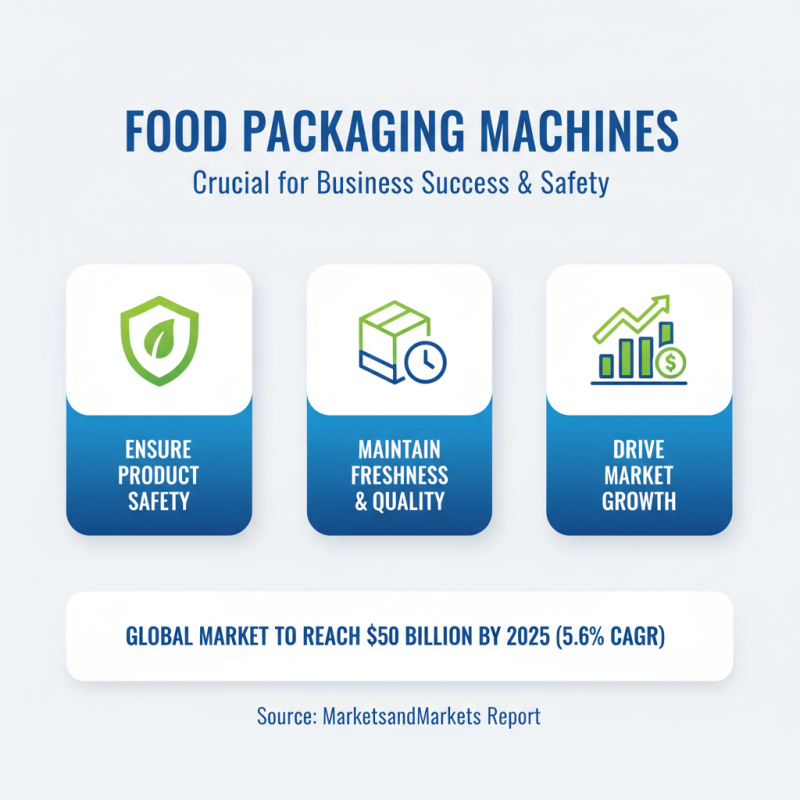
Food packaging machines play a crucial role in the food industry. They ensure safety and help maintain product freshness. According to a report by MarketsandMarkets, the global food packaging equipment market is projected to reach $50 billion by 2025, growing at a CAGR of 5.6%. This highlights how important efficient packaging is in today’s market.

Selecting the right machine can significantly impact product quality. Many businesses overlook the maintenance and reliability of machinery. A faulty machine can lead to waste and compromised safety standards. The FDA emphasizes that over 30% of food recalls are due to improper packaging. This statistic reminds us that a reliable packaging solution is essential not just for compliance, but also for protecting your brand's reputation.

In the pursuit of efficiency, some companies may rush their decisions. It's vital to assess your specific needs thoroughly. Are you focusing on mass production or smaller batches? A one-size-fits-all approach may lead to over-investment or underperformance. Engaging industry experts can provide insights tailored to your business type. Their knowledge can help avoid the pitfalls that could negate your investment in packaging technology.
Identifying Your Business Needs and Requirements for Food Packaging

Choosing the right food packaging machine is essential for maximizing efficiency and maintaining product quality. To start, it’s crucial to identify your specific business needs. This includes the type of food products you package, production volume, and shelf life requirements. According to a recent industry report, nearly 75% of companies prioritize packaging for preservation and promotion. Understanding these factors influences machine selection.

Consider the automation level your operation requires. A report from the Food Packaging Analysis Group noted that 68% of food manufacturers increased automation to boost productivity. Evaluate if your business benefits from semi-automated systems or fully automated lines. Additionally, the machine's flexibility can be vital. Can it handle different product sizes? Flexibility could save you costs in the long term.

Assessing the regulatory environment is another critical factor. Compliance standards vary widely. Inadequate attention to these requirements could lead to costly fines or recalls. Be cautious of machines that seem cost-effective but may not meet necessary safety and quality standards. Doing thorough research ensures your equipment meets industry expectations, ultimately safeguarding your business’s reputation. Every detail counts in food packaging.

Choosing the Right Food Packaging Machine: Key Requirements

Exploring Different Types of Food Packaging Machines Available

When selecting a food packaging machine, understanding the types on the market is crucial. There are several categories, each designed for specific needs. For instance, vertical form-fill-seal machines are popular for packaging granulated products. These machines can package items like rice and sugar with speeds exceeding 100 packs per minute. According to a recent industry report, the demand for such machines is expected to grow by 5.4% annually.

Another significant type is the horizontal flow wrapper. This machine is ideal for packaging baked goods, snacks, and other solid items. It can operate at speeds of up to 200 packets per minute. Businesses must assess product size and material compatibility when considering a flow wrapper. Additionally, continuous advancements in technology introduce new features. Automated functions can reduce labor costs but may present a learning curve for operators.

Choosing the right machine also involves looking at production volume. High-demand products necessitate machines with higher output capabilities. However, this can lead to increased maintenance needs and missed production insights if not properly monitored. Evaluating these factors, while acknowledging potential pitfalls, will guide businesses in making informed decisions.

Evaluating Key Features and Technologies in Packaging Machines

Choosing the right food packaging machine involves assessing various features and technologies. The market is filled with options, so making an informed choice is essential. According to a recent report from the Packaging Machinery Manufacturers Institute, the industry is expected to grow at a CAGR of 6.8% through 2025. This growth underlines the importance of evaluating the right packaging solution for your needs.

One critical factor to consider is the type of packaging technology. For instance, vacuum sealing offers extended shelf life, while modified atmosphere packaging helps maintain freshness. An analysis by Research and Markets indicates that businesses using advanced technology can reduce spoilage by up to 30%. However, integrating these technologies can be complex and costly initially. It's crucial to weigh the benefits against your budget and operational capacity.

Moreover, ease of use and maintenance are vital aspects. Machines that are difficult to operate may increase downtime and training costs. A study from Allied Market Research highlights that over 40% of food processors report unexpected machine failures. These interruptions can harm your production efficiency. So, assess the user-friendliness and support availability of any equipment you consider. Reflect on these factors carefully; they will significantly impact your business's operational success.

How to Choose the Right Food Packaging Machine for Your Business?

Feature Description Benefits
Machine Type Vertical Form Fill Seal (VFFS) Efficient for packaging granules and powder.
Speed Up to 100 packs per minute Increases production capacity and reduces labor costs.
Material Compatibility Films, Foils and Paper Versatile for different products and applications.
Automation Level Fully Automated Reduces manual handling and increases efficiency.
Size Options Compact and Large Scale Suitable for any business size.
Maintenance Low Maintenance Requirement Saves time and costs on maintenance.
Cost Mid-range Pricing Balance between features and affordability.

Budgeting and Cost Considerations for Purchasing Food Packaging Machines

How to Choose the Right Food Packaging Machine for Your Business?

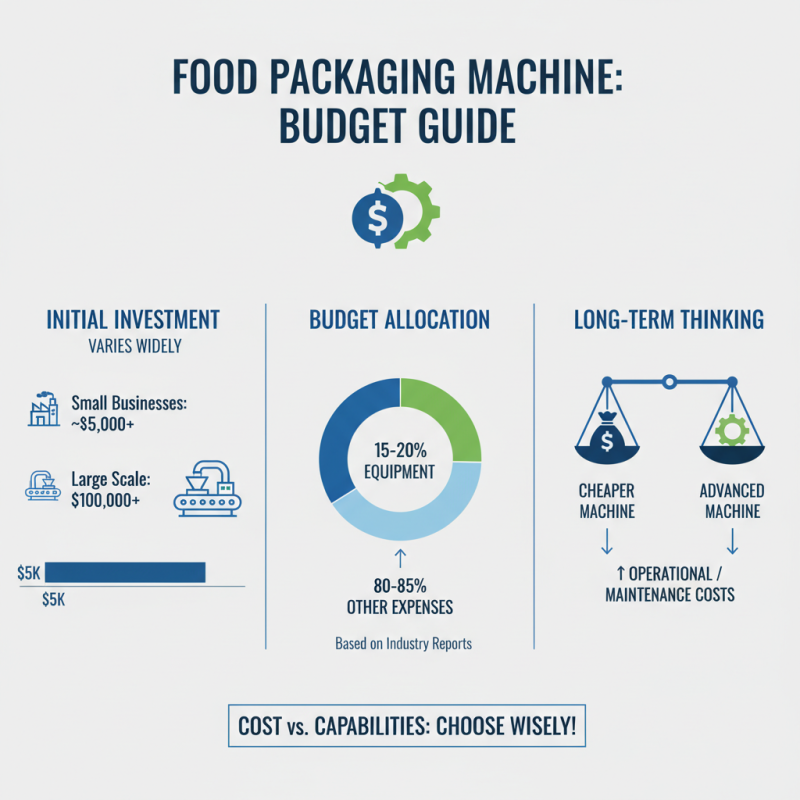
When considering the purchase of a food packaging machine, budgeting is essential. The initial cost can vary significantly. For small businesses, prices often start around $5,000. Larger, more advanced machines can exceed $100,000. According to industry reports, businesses allocate about 15-20% of their total budget to equipment, including packaging machines. It’s crucial to compare costs versus capabilities, as a cheaper machine might lead to higher operational expenses in the long run.

Maintenance costs are another factor. Regular upkeep is necessary to prevent downtime. Studies indicate that maintenance can account for 10% of annual operational costs. It's important to consider warranties and service options when budgeting. A reliable machine may cost more upfront but save on repairs and replacements. Additionally, newer technologies often improve efficiency, impacting overall costs positively. This transition can be challenging, especially for businesses with tight budgets.

Hidden costs can also arise. Training staff on new machines can be overlooked. This additional expense must be factored in. Moreover, energy consumption can vary between models. Data shows that energy-efficient machines can reduce operational costs by up to 30%. Understanding these factors aids in making an informed decision, ensuring the selected packaging machine aligns both with the business's short-term and long-term financial goals.