7 Tips for Choosing Private Label Lip Gloss Tubes
Choosing Private Label Lip Gloss Tubes is more complicated than selecting a beautiful color and logo. The tube must protect the formula, support clean application, and survive filling, shipping, and daily handling. A soft-touch tube may feel luxurious in a customer’s hand. It may also show fingerprints, scratches, and oil marks quickly. Small details matter.
Dieter Rams, the respected industrial designer, said, “Good design is as little design as possible.” That principle applies well to cosmetic packaging. The best tube does not compete with the gloss. It makes the product easier to use and easier to trust. This guide explores seven practical tips, including material compatibility, applicator performance, closure security, decoration quality, minimum order quantities, supplier reliability, and sample testing. Each choice should connect with your formula, target customer, and production budget.
A reliable supplier should explain resin options, provide clear specifications, and offer production samples before bulk manufacturing. Check the cap fit. Turn the filled tube upside down. Press it gently. Look for leaks, color transfer, uneven printing, or a wobbly applicator. These checks are simple, but they are often skipped when deadlines feel urgent. That is a mistake worth admitting.
The lowest quotation is not always the lowest cost. Rejected packaging, delayed launches, and damaged products can quickly erase a small saving. Strong decisions come from evidence, not attractive mockups alone. With the right questions, Private Label Lip Gloss Tubes can support a polished brand experience without sacrificing practicality, consistency, or customer confidence.
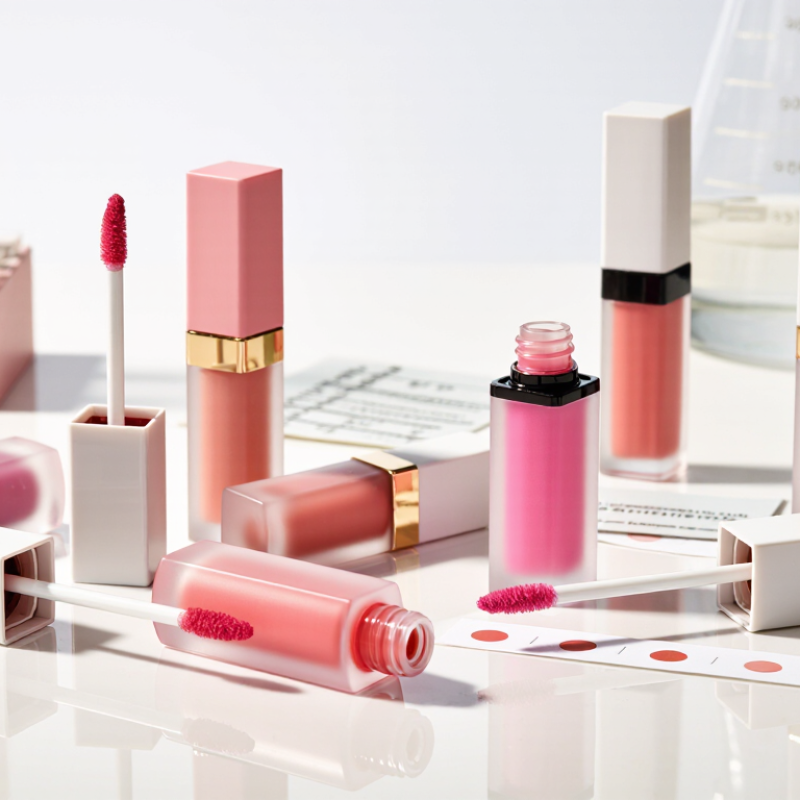
Define Your Lip Gloss Formula and Packaging Requirements
7 Tips for Choosing Private Label Lip Gloss Tubes
Define your lip gloss formula before selecting private label lip gloss tubes. Viscosity, oils, pigments, glitter, and active ingredients can affect packaging performance. A thick gloss may need a wider opening and a stronger applicator stem. A fluid formula usually requires a tighter wiper to control product flow. Small changes matter.
I have learned this through product development: an attractive tube is not always a suitable tube. Test the formula inside the actual tube, wiper, stopper, and wand combination. Check for leakage, swelling, odor changes, color transfer, and applicator breakage. Store samples under normal and warm conditions. Then inspect them after several weeks. This step often reveals problems that a quick visual check misses.
Define practical packaging requirements as well. Confirm the tube volume, neck size, closure strength, decoration area, filling method, and expected production quantity. Ask suppliers for material specifications, compatibility information, and quality inspection records. A clear tube may show glitter beautifully, but it can also expose settling or uneven filling. A soft tube may feel comfortable, yet excessive squeezing can cause messy dispensing. I would also leave room for improvement, because the first sample is rarely perfect. Revise the wiper, wand length, or opening when user testing shows poor control. Reliable packaging protects the formula and creates a consistent experience from the first application to the last.
Review Customization Options for Your Private Label Brand
Choosing private label lip gloss tubes requires more than matching a trendy color. The package must support your formula, positioning, and daily customer use. Grand View Research valued the global lip care products market at approximately $4.57 billion in 2023. That growth increases competition on crowded retail shelves. Start by comparing tube materials, wall thickness, applicator shapes, cap finishes, and decoration methods. Soft-touch coatings feel premium, but they can collect dust. Clear tubes show shade accurately, though some formulas may change appearance under strong light.
Customization should also reflect practical performance. Request samples with your actual gloss, not only water or a substitute liquid. Check leakage after standing upside down, repeated opening, and temperature changes. Test the stopper, wiper, and doe-foot applicator separately. A narrow applicator can improve precision, while a larger one may deliver faster coverage. Consider screen printing, hot stamping, labels, or colored components. According to Smithers, sustainable packaging demand continues to influence beauty purchasing and product development. Therefore, ask suppliers about recycled content, component separation, and realistic recycling guidance.
Do not overlook production details. Confirm minimum order quantities, color tolerances, mold charges, lead times, and quality inspection records. A custom cap may look excellent in a digital rendering but feel unstable in hand. That happened in one of my early packaging reviews. The design was attractive, yet the closure needed redesigning. Keep a signed sample for future comparison. Also review fill compatibility and transportation testing before approval. Perfect customization is rarely achieved in one round. Careful revision usually creates the more reliable tube.
Verify Product Quality, Safety, and Regulatory Compliance
7 Tips for Choosing Private Label Lip Gloss Tubes
Verify product quality before discussing unit price. Grand View Research estimated the global lip care market at USD 4.57 billion in 2023. That scale increases pressure on packaging consistency. Request production samples from different batches. Inspect the tube wall, cap threads, applicator stem, and wiper fit. Inspect the neck. A loose wiper can cause leakage, contamination, and uneven product pickup. Test drop resistance, squeeze recovery, torque strength, and temperature stability. Keep records.
Ask for material declarations and migration test reports. Cosmetic packaging should not release harmful substances into the formula. Check compatibility with oils, pigments, fragrances, and preservatives. Odor transfer matters too. Ask whether the applicator adhesive contacts the gloss. It may. Require lot codes, traceability, and documented corrective actions. ISO 22716 provides widely recognized cosmetic GMP guidance, but certification alone does not prove every tube is safe.
Regulatory checks must match the selling market. In the United States, FDA guidance under MoCRA requires serious cosmetic adverse events to be reported within 15 business days. Facilities also face registration and product-listing duties. In the European Union, packaging supports compliance with Regulation (EC) No 1223/2009 and the product safety assessment. Request test dates, laboratory accreditation, and complete technical files. Do not guess. A supplier may pass one audit and still miss a small but costly defect. Recheck documents when materials, molds, or factories change.
Compare Suppliers, Minimum Orders, Lead Times, and Total Costs
Choosing private label lip gloss tubes requires more than comparing unit prices. The supplier’s consistency matters just as much. Request material specifications, closure samples, decoration proofs, and recent quality records. Check whether the applicator fits tightly and dispenses gloss evenly. Small defects become expensive when thousands of tubes arrive.
Minimum order quantities can shape your launch strategy. A low MOQ may cost more per tube, but it reduces leftover packaging and cash pressure. Ask whether the quoted MOQ applies to each color, finish, or decoration method. Some suppliers combine designs within one production run. Confirm this in writing. Do not rely on a casual message.
Lead times need practical details. Separate sample approval, production, inspection, and shipping times. A supplier promising ten days may exclude decoration or port delays. Build a buffer. Delays happen. I have seen buyers focus on factory prices, then overlook freight, molds, customs charges, cartons, and rejected units. Calculate the landed cost per usable tube, not the catalog price. Compare at least three quotations using identical specifications. A spreadsheet helps, although it will not fix unclear assumptions. Test a small batch before committing to a larger order, especially when the tube uses unusual finishes or custom components.
7 Tips for Choosing Private Label Lip Gloss Tubes - Compare Suppliers, Minimum Orders, Lead Times, and Total Costs
| Tip | Comparison Dimension | Supplier Profile | Typical MOQ | Sample Lead Time | Bulk Lead Time | Tube Cost* | Decoration Cost* | Estimated Total Cost* | Best Fit |
| 1 | Confirm material and compatibility | Standard cosmetic-packaging supplier | 1,000–5,000 pcs | 5–10 business days | 20–35 business days | US$0.12–0.28 | US$0.03–0.12 | US$0.18–0.48 | Basic gloss formulas and standard applicators |
| 2 | Compare standard versus custom molds | Stock-shape packaging supplier | 500–2,000 pcs | 3–7 business days | 15–25 business days | US$0.10–0.22 | US$0.02–0.08 | US$0.15–0.38 | Startups seeking lower tooling and inventory risk |
| 3 | Evaluate printing and decoration options | Supplier offering screen printing | 2,000–5,000 pcs | 7–12 business days | 25–40 business days | US$0.14–0.30 | US$0.05–0.15 | US$0.22–0.55 | One- or two-color logos and text |
| 4 | Check premium finishes and surface quality | Supplier offering metallic coating or hot stamping | 3,000–10,000 pcs | 10–15 business days | 30–45 business days | US$0.20–0.42 | US$0.10–0.25 | US$0.35–0.82 | Premium collections and retail-ready presentation |
| 5 | Verify applicator and leak performance | Supplier with assembly and quality testing | 5,000–10,000 pcs | 10–18 business days | 35–50 business days | US$0.18–0.38 | US$0.04–0.14 | US$0.28–0.68 | Products requiring consistent wipers, stoppers, and caps |
| 6 | Calculate freight and landed cost | Export-capable supplier with consolidated shipping | 1,000–5,000 pcs | 5–10 business days | 20–40 business days | US$0.12–0.30 | US$0.03–0.12 | US$0.25–0.70 | Importers comparing EXW, FOB, and delivered prices |
| 7 | Review quality documents and reorder support | Supplier providing inspection records and batch control | 3,000–10,000 pcs | 7–14 business days | 25–45 business days | US$0.15–0.35 | US$0.03–0.12 | US$0.24–0.62 | Brands prioritizing repeatability and long-term supply |
Cost assumptions: Indicative ranges are per empty lip gloss tube set, including the tube, cap, stopper, and standard applicator. Decoration, tooling, freight, taxes, testing, and fulfillment may be quoted separately. Final pricing depends on material, capacity, order quantity, decoration method, packaging configuration, destination, and trade terms.