How to Choose the Right Wrapping Machine for Your Business?
Choosing the right wrapping machine is crucial for any business aiming to streamline packaging operations. As industry expert John Smith once stated, “A well-chosen wrapping machine can enhance efficiency and reduce costs.” This underscores the importance of selecting the right equipment for your specific needs.
Investing in a wrapping machine requires careful consideration of various factors. Different machines cater to different products. For instance, fragile items need a more delicate approach, while bulkier products may require heavy-duty solutions. Understanding your product characteristics is essential.
Moreover, the market offers numerous options, each with distinct features and price points. Not all wrapping machines provide the same level of reliability. Some may fail under high volumes, leading to potential downtime. It's vital to research specific models and manufacturers. This decision directly impacts overall business performance. Evaluating available options can feel overwhelming. Yet, taking this time can yield benefits like increased productivity and customer satisfaction.
Identify the Specific Needs of Your Business for Wrapping Machines
When selecting a wrapping machine, it's essential to assess the unique requirements of your business.
Consider the types of products you package. Are they delicate or robust? Lightweight or heavy?
These factors significantly affect the type of wrapping machine needed.
For instance, fragile items may require gentle handling and specific materials to avoid damage.
On the other hand, heavier products might necessitate a more durable machine with stronger capabilities.
Another crucial aspect is the production volume. How much product do you need to wrap daily?
If volume is high, a fully automatic machine could be beneficial. It's faster and can improve efficiency.
However, this option may not suit smaller businesses. They might find a semi-automatic machine more practical.
Evaluating your production pace can lead to a more tailored solution.
Lastly, consider the space where the machine will be installed. A compact machine might suit a small workspace,
but larger operations may have more flexibility. Reflecting on these factors helps ensure your chosen wrapping machine
meets your business needs. Don't overlook the possibility of evolving requirements in the future.
The right machine should not only work today but also adapt as your business grows.
Understand Different Types of Wrapping Machines and Their Functions
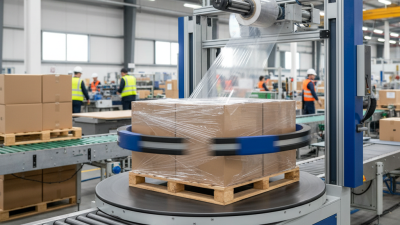
Choosing the right wrapping machine involves understanding various types available in the market. Each design serves specific functions. For instance, stretch wrap machines are popular for their efficiency in bundling products. According to a 2022 market analysis, these machines can reduce wrapping time by up to 40%. This speed can significantly improve productivity in packaging operations, making them a worthwhile investment.
Shrink wrapping machines, on the other hand, use heat to shrink film tightly around products. They provide additional protection during shipping and storage. Industry reports suggest that businesses employing these machines see a reduction in product damage rates by 30%. This figure highlights the evident importance of selecting the appropriate machine based on your product type and packaging needs.
When selecting a wrapping machine, consider your specific business requirements. Evaluate your production scale and the types of products you handle. Often, companies overlook maintenance and operational costs, which can impact long-term performance. It’s essential to reflect on these factors to avoid unexpected expenses. Investing in a machine that aligns with both short-term and long-term goals enhances reliability and efficiency.
How to Choose the Right Wrapping Machine for Your Business?
| Machine Type |
Function |
Best For |
Speed (Packages/hour) |
Cost Range |
| Automatic Wrapper |
Fully automated wrapping process, often with advanced features |
High-volume production |
120-200 |
$15,000 - $50,000 |
| Semi-Automatic Wrapper |
Requires some manual input or setup; offers more flexibility |
Medium-volume production |
60-120 |
$5,000 - $15,000 |
| Manual Wrapper |
Simple manual wrapping, often using a hand-held device |
Low-volume production |
20-60 |
$1,000 - $5,000 |
| Shrink Wrapper |
Uses heat to shrink wrap around products for a tight seal |
Various product types including food, electronics |
50-150 |
$3,000 - $20,000 |
| Stretch Wrapper |
Wraps products with stretch film for stability during transport |
Palletized loads |
30-100 |
$2,000 - $10,000 |
Evaluate Key Features to Consider When Choosing a Wrapping Machine
Choosing the right wrapping machine involves careful consideration of several key features. Production speed is essential. According to a recent industry report, businesses experience a 30% boost in efficiency with machines that operate at higher speeds. However, too high speeds can compromise packaging quality. It’s vital to find a balance between speed and thoroughness.
The type of materials your business uses is another crucial factor. Different machines cater to various wrapping materials, such as plastic film or paper. A report from the Packaging Machinery Manufacturers Institute indicates that choosing the wrong machine can lead to a 15% increase in material waste. Look for flexibility in material compatibility.
Durability is also important. An unreliable machine can lead to frequent downtimes. Studies show that companies lose significant revenue—up to $15,000 weekly—due to machine failures. Evaluating the machine’s build quality and maintenance needs can prevent these costly interruptions. In this way, investing in the right features ensures long-term reliability and efficiency for your business.
Key Features to Consider When Choosing a Wrapping Machine
Assess Your Budget and Return on Investment for Wrapping Equipment
When assessing your budget for wrapping machines, consider both initial costs and long-term savings. A higher upfront investment might seem daunting. However, more efficient machines can reduce labor costs and increase productivity. Calculate the total cost of ownership, including maintenance and potential downtime.
Compare different machines based on their capabilities. Look for features that align with your production needs. For instance, a machine capable of handling diverse product sizes can adapt as your business grows. This flexibility may be worth a higher price tag.
Tip: Research financing options. Leasing can lower initial costs while allowing you to invest in quality equipment.
Another factor to weigh is the return on investment (ROI). Estimate how quickly a new machine will pay for itself. Consider production speed and the volume of output. A machine that enhances efficiency can result in faster fulfillment and happier customers.
Tip: Track production metrics diligently. This will help you gauge performance and make informed adjustments.
Sometimes, it’s easy to overlook the importance of post-purchase evaluation. Gathering feedback from staff on the machine’s performance can lead to valuable insights. This can influence future purchases and potential upgrades. Your wrapping equipment should serve your business needs effectively.
Research and Compare Brands and Models for Quality and Reliability
When selecting a wrapping machine, brand and model comparison is essential. Recent industry reports indicate that businesses often overlook the quality and reliability of their chosen machines. According to a 2022 packaging machinery market analysis, nearly 30% of companies face unexpected downtime due to machinery failures. This demonstrates the critical importance of thorough research into various options.
Evaluating features and customer reviews is vital. Durability, speed, and versatility are key metrics that can impact your operations. An independent study revealed that 45% of packaging professionals consider machine speed a top priority. However, fast machines may sacrifice durability. Investigate user experiences to uncover potential long-term issues, as many businesses reported equipment failure within the first year due to insufficient research.
In addition, look into after-sales support and availability of spare parts. An estimated 40% of users expressed dissatisfaction with the service provided by some manufacturers. Reliability is not just about the machine's performance; it's also about the support system behind it. Understanding these factors will help streamline your decision-making process.