What is an Ev Wall Charger and How Does It Work?
Electric vehicles (EVs) are becoming increasingly popular as more people shift towards sustainable transportation. However, charging them can be challenging without the right setup. An Ev Wall Charger is a practical solution for home charging of electric vehicles. It provides a convenient and efficient way to recharge your EV, ensuring it's ready for use whenever you need it.
The EV Wall Charger operates by connecting directly to a home’s electrical supply. This device offers faster charging compared to standard outlets. Many users appreciate the convenience of plugging in their vehicle overnight and waking up to a fully charged battery. While it does require installation, the investment often pays off in time and efficiency.
Some find the installation process daunting, which can lead to delays in adopting EV technology. It’s important to consult professionals for proper installation and safety. Understanding how an EV Wall Charger works can help demystify the process. Overall, this technology represents a significant step towards making electric vehicles more accessible and user-friendly.
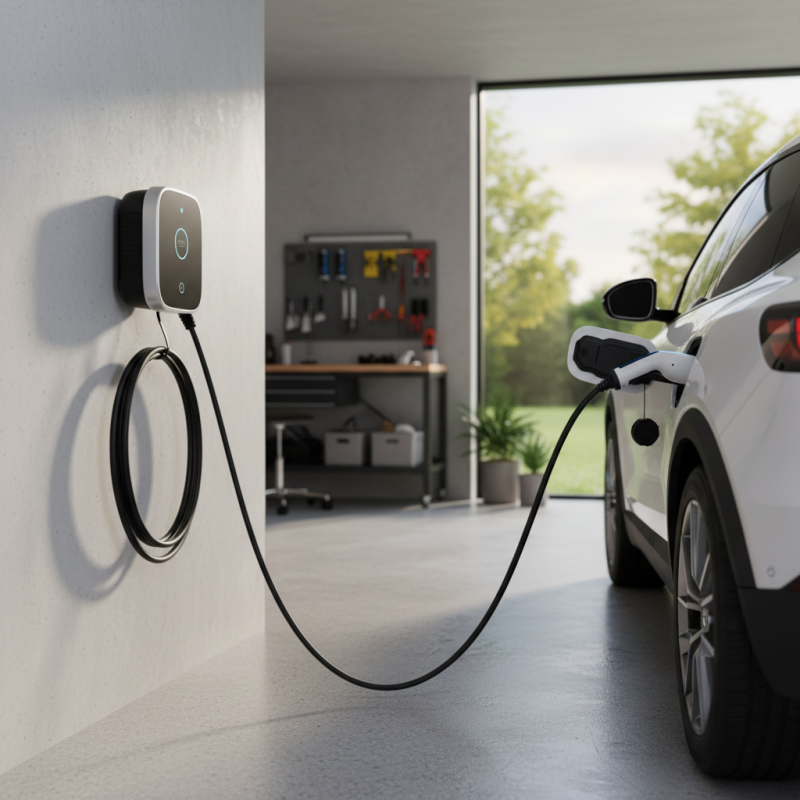
What is an EV Wall Charger?
An EV wall charger serves as a more efficient charging solution for electric vehicles (EVs). It is typically installed at home, providing a convenient way to charge your vehicle overnight. Unlike standard outlets, EV wall chargers deliver higher power levels, significantly reducing charging times. According to the U.S. Department of Energy, a Level 2 charger can fully charge an EV in about 4-8 hours, depending on the vehicle's battery size.
Many homeowners underestimate the importance of proper installation for their EV wall chargers. It's crucial to ensure that the circuit can handle the electrical load. Inadequate wiring can lead to overheating, which poses safety risks. A professional installation often complies with local codes and standards. The average cost of installation ranges from $500 to $2,000, yet it can add to your home’s value.
Tips: Always check for local incentives for EV charger installations. Many states offer rebates and tax credits that can alleviate some of the installation costs. Regular maintenance checks can also ensure the longevity and efficiency of your charger. Remember, it might be tempting to charge every night, but monitoring your charging habits can extend your battery's lifespan.
The Components of an EV Wall Charger Explained
An EV wall charger consists of several key components that work together to provide efficient charging. The primary component is the charging unit, which converts AC power from the grid to DC power for the vehicle. Depending on the vehicle and charger, power levels can range from Level 1 at 120 volts to Level 2 at 240 volts, allowing a charge time from several hours to as little as 30 minutes. According to a report by the International Energy Agency (IEA), the installation of home-based chargers is steadily increasing, showing a growth rate of over 20% annually.
Another critical component is the communication system. This system ensures that the charger and the electric vehicle communicate effectively. It helps to monitor battery status and optimize charging speed. The use of standardized communication protocols, such as Open Charge Point Protocol (OCPP), facilitates interoperability between various charger models. However, not all chargers support the same protocols, which can create confusion. Data from industry analyses show that around 30% of EV users have encountered issues related to compatibility when using public charging stations.
Additionally, safety features are paramount for EV wall chargers. Advanced safeguards, including ground fault protection and overload protection, prevent accidents during the charging process. A study by the U.S. National Renewable Energy Laboratory indicates that improper installation can lead to failures in around 15% of chargers. Awareness and training for installation personnel can significantly reduce this risk, highlighting an area that requires ongoing attention and improvement.
How Does an EV Wall Charger Work?
An EV wall charger is essential for electric vehicle owners. It provides a convenient and efficient way to charge your vehicle at home. Unlike traditional outlets, these chargers deliver higher power levels, which can significantly reduce charging time. Most home EV chargers operate at Level 2, providing up to 240 volts, allowing for charging speeds of 10 to 60 miles of range per hour, depending on the vehicle.
The operation of an EV wall charger involves several key components. First, it requires a dedicated circuit to accommodate its power demands. This can be a complex installation process that often needs professional help. The charger communicates with the vehicle to ensure safety and efficiency. It instructs the vehicle when to start or stop charging, based on the battery's current state. As of recent reports, the number of EV chargers is projected to double by 2025, highlighting the growing need for efficient charging infrastructure.
However, challenges remain. Not all homes have the electric capacity for a Level 2 charger, which can limit access for some users. Additionally, installation costs can be a barrier, with estimates ranging from $500 to $2,000 depending on circumstances. Understanding these elements is crucial for anyone considering switching to electric vehicles. The growth in EV adoption brings about critical questions regarding accessibility and energy consumption.
EV Wall Charger Charging Speed Comparison
This chart illustrates the charging speeds of various types of EV wall chargers, showcasing how different charging levels impact the range added per hour. Level 1 chargers are the slowest, while DC fast charging significantly speeds up the process.
Types of EV Wall Chargers Available Today
When it comes to EV wall chargers, several types cater to different needs and preferences. Level 1 chargers are the most basic. They typically use a standard 120-volt outlet. This type is slow, providing about 4 to 5 miles of range per hour. It is best for overnight charging at home and for those who drive shorter distances daily. Many find this type suitable, but it can be limiting for longer trips.
Level 2 chargers are more advanced. They operate at 240 volts, delivering 10 to 60 miles of range per hour. These chargers can be installed at home or public places. They are ideal for quick charging during work hours or while running errands. As cities develop, these chargers are becoming increasingly common. However, installation costs can be a hurdle. Users should consider their driving habits before opting for upgrades.
Dc Fast Chargers exist as well but are primarily found in commercial settings. They provide rapid charging, adding hundreds of miles of range in about 30 minutes. It's essential to note that not all EVs are compatible with this charging type. Yet, for long-distance travel, they offer unmatched convenience. It’s a balancing act; while fast charging saves time, the infrastructure needs further development to be universally accessible.
What is an Ev Wall Charger and How Does It Work? - Types of EV Wall Chargers Available Today
| Charger Type | Power Output | Charging Time | Installation Cost | Ideal Use Case |
| Level 1 Charger | 120 volts, 12-16 amps | 6-12 hours | $300 - $600 | Residential use, overnight charging |
| Level 2 Charger | 240 volts, 16-40 amps | 4-8 hours | $700 - $1,500 | Residential and commercial charging |
| DC Fast Charger | 480 volts, up to 300 amps | 30 minutes | $10,000 - $40,000 | High-traffic areas, quick stops |
| Wireless Charger | N/A | Varies | $2,500 - $5,000 | Futuristic installations, convenience |
Benefits of Using an EV Wall Charger at Home
Installing an EV wall charger at home is increasingly common among electric vehicle owners. A recent study by the International Energy Agency indicates that over 54% of EV owners charge their vehicles at home. This convenience can lead to significant savings in both time and money. Home charging eliminates the need for frequent trips to public charging stations, which can often be crowded or inconveniently located.
Charging at home offers another major advantage: cost-effectiveness. By using a wall charger, users can take advantage of lower electricity rates during off-peak hours. According to the U.S. Department of Energy, charging at home can cost less than half compared to using public chargers in some cases. However, proper installation and a compatible electrical system are crucial. A poorly installed charger can lead to inefficiency or, worse, safety hazards.
Nevertheless, while benefiting from this technology, it’s essential to remember that not all EV wall chargers are created equal. Users must choose chargers that match their EV’s requirements. Additionally, upgrading home electrical systems may incur costs. Addressing these factors can promote a better charging experience.