CALL US 770-248-9089

10 Juice Bag Buying Tips for Global Buyers

A Juice Bag may look simple on a product page: a printed pouch, a spout, and a cap. The buying decision is less simple. Juice can be acidic, sensitive to oxygen, and vulnerable to heat during filling or storage. A small weakness in the seal may become a costly leak after shipment. That matters.

The Flexible Packaging Association’s 2023 State of the U.S. Flexible Packaging Industry reported $42.9 billion in U.S. flexible-packaging sales for 2022, representing about 21% of the packaging market. This is broad industry context, not juice-bag-specific evidence. Still, it shows why buyers should examine materials, converting quality, and supplier capability—not just unit price. Ask for the structure specification, barrier data, seal-test results, and documentation relevant to your destination market. Confirm that samples can run on your filling line, at realistic speeds and temperatures.

Small details count. Does the spout pour cleanly? Can the cap stay secure after repeated opening? Will the artwork remain legible across a curved, filled pouch? Request production samples, then inspect them after transport and storage. A glossy sample can still hide a weak seal. I would not treat one successful trial as proof.

These ten buying tips focus on practical checks: film structure, capacity, closures, printing, testing, minimum order quantities, lead times, quality control, sustainability claims, and supplier communication. Requirements differ by product and market, so verify claims against current technical documents and local guidance. Cheap can become expensive. A careful comparison now can prevent avoidable waste later.
10 Juice Bag Buying Tips for Global Buyers

Define Juice Bag Requirements for Your Target Market

Define the juice bag around the people, product, and route to market. Record serving size, expected shelf life, filling temperature, and whether customers drink directly from the pouch. A 200-millilitre school snack needs a different spout and grip from a one-litre family refill. Small details matter.

Check local shopping habits before fixing the format. Will bags sit unrefrigerated in corner shops, travel in hot delivery vans, or be sold chilled? Those conditions affect barrier needs, seal strength, and transport protection. Ask your filling partner to test the actual juice, not just water. Acidity and pulp can expose weak seals. Don’t assume one film structure fits every recipe.

End-of-life expectations need equal attention. The OECD’s Global Plastics Outlook (2022) estimates that only 9% of plastic waste worldwide was recycled in 2019. That global figure is not a local collection rate; verify what buyers can actually sort and recycle in each target market. A theoretically recyclable bag may still lack a practical route. Ask retailers and local waste operators about accepted materials, collection access, and clear disposal instructions. Then specify print language, required product information, and opening features for each market. A child-resistant cap may be unnecessary; a clean, easy-pour spout may not be. I would revisit that choice after user testing.

EU Nectar Requirements: Minimum Fruit Content by Fruit

Check the target market and product category before choosing juice-bag specifications and finalizing label claims.

EU rules set different minimum fruit juice or purée percentages for nectar, depending on the fruit. These figures apply to nectar—not to all juice products—and may affect product formulation and packaging information. Source: EU Directive 2001/112/EC, Annex IV.

Compare Bag Materials, Formats, and Filling Options

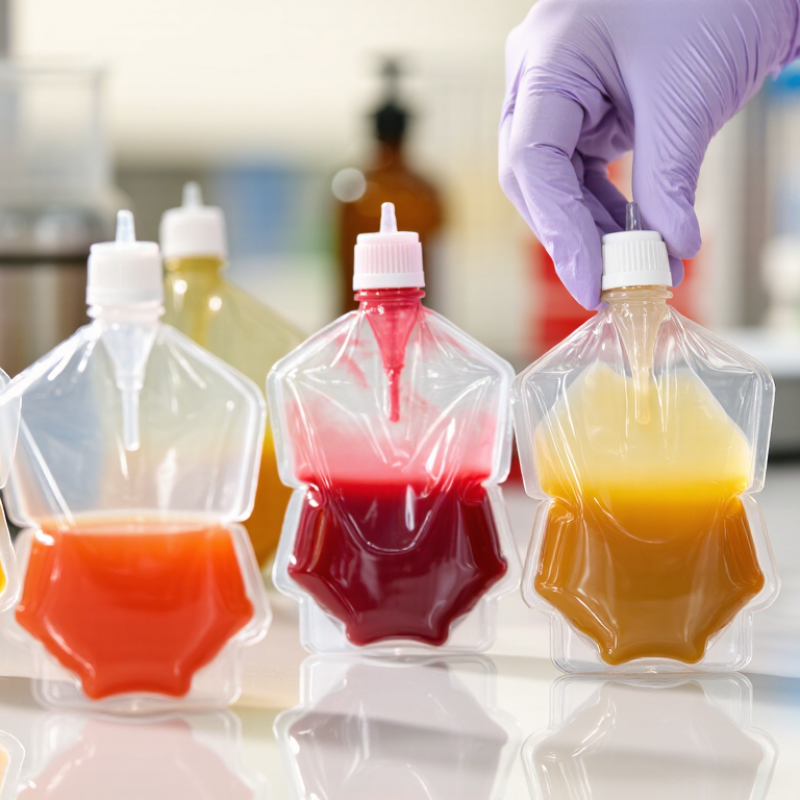
Juice bags differ in barrier performance, flexibility, and filling compatibility. A simple polyethylene structure may suit short shelf lives and controlled storage, while multilayer laminates can offer stronger protection from oxygen, moisture, and light. Ask suppliers for the full material structure, not just the outer-layer description. Check the seal.

Clear film makes juice color easy to see, but light may affect product quality during storage. Opaque or metallized layers can provide more shielding, though they prevent customers from seeing the contents. Paper-based outer layers can change the appearance, but the inner barrier still determines much of the package’s performance. Small details matter.

Choose a format that fits how people pour and store the juice. Stand-up pouches use shelf space efficiently; spouted bags can be easier to pour, especially for larger servings. Flat sachets may work for single portions, but they can be less convenient after opening. Filling method matters too. Confirm that the bag is designed for the intended process, such as cold filling or a validated hot-fill system, and check its temperature limits. Request sample bags for seal and leak testing on the actual filling line. A specification sheet helps, but it cannot catch every handling problem. I would not assume a popular format is automatically the best fit.

Check Supplier Capabilities and Product Certifications

For juice bags, supplier capability means more than attractive samples. Ask who makes the film, prints the artwork, forms the pouch, and performs final inspection. ISO’s 2022 Survey counted over 1.2 million ISO 9001 certificates worldwide, but a certificate alone does not verify a specific production line. FSSC 22000 Foundation’s 2023 annual report reported more than 30,000 certificates across over 175 countries. These figures show broad adoption, not automatic product approval.

Request current certificates and check the issuing body, expiry date, covered factory address, and scope. Confirm that the scope includes packaging materials intended for food contact, not just general manufacturing. Ask for recent test reports covering migration, seal strength, and barrier performance. Match the report’s material structure and thickness to the bag you are ordering. Check the factory floor. A polished PDF can still leave important details unclear.

Request a traceability example: can the supplier link a finished pouch batch to its film and ink records? Ask how rejected bags are isolated and how quickly a mock recall can be completed. Paperwork is not proof. A pre-production sample and a small production trial can reveal weak seals or inconsistent spouts. Some buyers, myself included, may overvalue certificates and under-check daily process controls. Verify both before placing a large order.

Assess Quality, Shipping, and Import Requirements

A juice bag can look sound on a sample table and still leak after filling. Check film thickness, seal strength, puncture resistance, and compatibility with your juice’s acidity and filling temperature. The Flexible Packaging Association’s 2023 industry report valued the U.S. flexible packaging market at $42.9 billion in 2022. That scale makes supplier quality systems worth checking, not assuming. Request recent test results, a production sample, and clear tolerances for seals and dimensions. Small details matter.

Tip: Test the seal. Fill sample bags, store them upright and on their sides, then inspect for leaks, swelling, or flavor changes. Ask for packaging that protects the product during its expected storage period. Shipping also deserves a cost check: UNCTAD reports that more than 80% of world trade by volume moves by sea. Compare quotes that include handling, documentation, and delivery to your facility, not just the ocean rate. I would allow extra time for delays; forecasts are not guarantees.

Before placing a large order, confirm food-contact requirements with the relevant destination-country authority or a qualified local importer. Ask the supplier for material specifications, migration-test documentation, and any required declarations. Check labeling rules, language, recycling marks, and importer records against current official guidance. Requirements differ by market and product, and a document accepted elsewhere may not be enough. Keep a small buffer for review. Shipping and compliance can be planned well, yet one missing paper can still hold up a shipment.

Compare Total Costs Before Choosing a Supplier

A low unit price can hide the real cost of a juice bag order. Compare landed cost, not just the first quotation. Ask each supplier to price the same bag dimensions, film structure, thickness, closure, print colors, and order quantity. Request separate charges for printing setup, samples, packing, freight, and estimated destination fees. Small fees matter.

Then compare delivery terms and production timing. A cheaper quote may require a larger minimum order, tying up cash in bags you will not use for months. Check how over- or under-delivery is handled, and ask whether inspection or replacement for confirmed defects is included. Request a physical sample and test it with your filling setup; a seal that looks neat on a desk may behave differently on a warm production line. Storage costs and slow-moving inventory are easy to overlook. No estimate will be exact: freight and exchange rates can change before shipment. Keep a cost sheet with assumptions, quote dates, and payment milestones, and ask suppliers to explain unclear charges before comparing totals.

10 Juice Bag Buying Tips for Global Buyers - Compare Total Costs Before Choosing a Supplier

# Buying tip What to compare Why it affects total cost Practical buyer action
1 Specify the pouch structure Layer materials, thickness, barrier needs, and whether a clear or foil-containing structure is suitable. Material choice affects unit price, protection from oxygen and light, and suitability for the product and storage conditions. Share the juice type, shelf-life target, filling process, and storage conditions; ask suppliers to quote the same specification.
2 Match capacity and dimensions Fill volume, pouch width and height, gusset, and usable filling space. An unsuitable size can cause filling issues, excess material use, or inefficient case packing and shipping. Confirm dimensions using a filled sample and check compatibility with the filling line and outer carton.
3 Compare spout and cap options Spout position, opening size, cap type, tamper evidence, and compatibility with filling equipment. Different closures can change component cost and may require different filling or handling arrangements. Request samples of the proposed closure and test filling, sealing, pouring, and leak resistance.
4 Review print and setup charges Printing method, number of colors, artwork or cylinder charges, proofing, and repeat-order setup costs. The quoted unit price may exclude one-time setup costs or other artwork-related charges. Ask for both the first-order total and repeat-order pricing, with setup fees listed separately.
5 Check minimum order quantities Minimum quantity by size, artwork, material, and production run; options for mixed designs or sizes. A lower unit price at a larger quantity can increase inventory, storage, and cash-flow costs. Compare the cost per usable pouch at realistic order quantities, including any unused or obsolete stock risk.
6 Include freight and packaging volume Carton dimensions, gross weight, shipment mode, origin and destination charges, and delivery terms. Freight is affected by shipment weight and volume, and a low product price may not mean a low delivered cost. Request carton dimensions and a like-for-like delivered freight estimate for each quoted quantity.
7 Confirm food-contact requirements Requirements in the destination market, intended use, declarations, and supporting material documentation. Required documentation and material suitability depend on the market and the product's intended conditions of use. Identify the destination market and request relevant documentation for the exact proposed structure; verify requirements with your compliance adviser.
8 Assess quality controls and testing Seal and leak testing, agreed acceptance criteria, inspection records, and sample or pre-shipment checks. Defects can lead to rejected stock, rework, product loss, or additional inspection and handling costs. Agree in writing on specifications, test methods, sampling, and how nonconforming goods will be handled.
9 Compare lead time and payment terms Sample and production schedules, transit time, payment milestones, and order-change conditions. Delays may require extra inventory or expedited transport, while payment timing affects working capital. Ask for a dated production and shipping schedule, and compare the full payment timeline before placing an order.
10 Calculate landed cost per usable pouch Product cost, setup, samples, freight, insurance where applicable, duties, taxes, inspection, and expected rejects. The purchase price alone excludes costs that may be payable before the pouches are ready for use. Use the same cost categories and order quantity for every quote, then divide the total by the number of usable pouches.
Total-cost check: Landed cost per usable pouch = (product and setup costs + freight and insurance where applicable + import charges + inspection and handling costs) ÷ usable quantity received. Confirm which charges are included in each supplier quotation.

Article Source: