What is a laboratory sample pulverizer and how does it work?
In modern laboratories, the laboratory sample pulverizer plays a crucial role in sample preparation. This device is essential for reducing materials to fine powders. It's widely used in various industries, including mining, pharmaceuticals, and materials testing. Reports indicate that the demand for efficient sample reduction equipment has surged by 15% over the last five years.
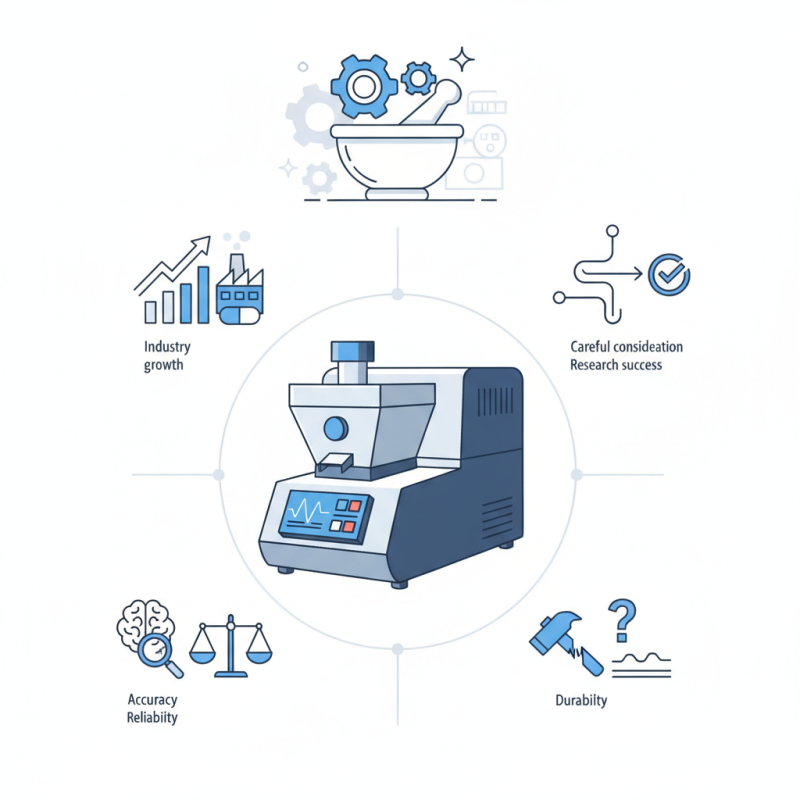
The laboratory sample pulverizer enhances the accuracy of analysis. By providing a homogeneous sample, it allows for more reliable results in testing. However, not every pulverizer is created equal. Some models struggle with durability issues or inconsistent outputs, prompting users to reconsider their choices.
Researchers often reflect on these challenges. Identifying the right laboratory sample pulverizer can make or break the success of an experiment. While there are many options available, careful consideration is necessary to avoid potential pitfalls. Ultimately, the effectiveness of this equipment significantly impacts the quality of scientific research.
What is a Laboratory Sample Pulverizer?
A laboratory sample pulverizer is an essential tool in various scientific fields. It is designed to reduce materials into fine powders. This equipment is crucial for analysis in laboratories, particularly in geology, mining, and material science. The pulverizer can effectively process different sample types, such as rocks, minerals, and even some metals.
How does it work? The machine typically employs a mechanical process. A grinding mechanism crushes the material into fine particles. As the sample moves through the machine, it encounters blades or grinding plates. The design varies, but the goal remains the same: achieving uniform particle size. Some machines use a series of sieves to classify the material based on size, which is important for accurate analysis.
While effective, some challenges arise in using a pulverizer. Overheating can be a concern, affecting sample integrity. Not all materials break down equally. Certain samples may require repeated grinding. This can be time-consuming and lead to inconsistencies. It's important to monitor the process closely to ensure quality results. Understanding the limitations helps in refining techniques for better outcomes.
Laboratory Sample Pulverizer Usage Statistics
Key Components of a Laboratory Sample Pulverizer
A laboratory sample pulverizer is a vital tool for material analysis. It is designed to grind samples into fine particles. This process is crucial for accurate testing. The key components of such a pulverizer include the grinding chamber, motor, and feeding system.
The grinding chamber is where the magic happens. It typically incorporates various types of mills, such as disc or hammer mills. These mills can achieve particle sizes down to a few microns. In a study published in the Journal of Materials Science, it was noted that a reduction in particle size can enhance the accuracy of chemical analyses by 30%. The motor drives the grinding mechanism, generating enough force to break down even the toughest samples. A powerful motor is essential for efficiency.
The feeding system ensures that material enters the grinding chamber consistently. A poorly designed feed might lead to uneven grinding. This inconsistency can compromise test results. Data from industry reports indicate that proper feed distribution can improve pulverization efficiency by 15%. It’s clear that each component plays a significant role in achieving reliable outcomes in laboratory analysis.
What is a laboratory sample pulverizer and how does it work? - Key Components of a Laboratory Sample Pulverizer
| Component | Description | Function |
| Grinding Chamber | A reinforced enclosure where the sample is crushed. | Contains and facilitates the grinding process. |
| Grinding Plates | Two plates used to grind the sample into a fine powder. | Creates the mechanical action needed to reduce particle size. |
| Motor | Electrical component that powers the pulverizer. | Generates motion to drive the grinding mechanisms. |
| Feeding Mechanism | Device used to introduce samples into the grinding chamber. | Ensures a consistent flow of material into the grinding area. |
| Dust Collection System | System designed to capture dust generated during grinding. | Maintains a clean working environment and prevents excessive exposure to dust. |
| Control Panel | Interface for operators to control machine settings. | Allows for adjustments in speed, duration, and other parameters related to grinding. |
How a Laboratory Sample Pulverizer Operates
A laboratory sample pulverizer is a vital tool for material processing. It reduces large samples into fine powders for analysis. This equipment is essential in various fields, such as geology and materials science. The pulverization process enhances the homogeneity of samples. Properly sized and homogenized samples yield more accurate test results. According to industry data, using a pulverizer can increase efficiency by up to 30%.
The operation of a laboratory sample pulverizer involves several steps. Initially, the sample is loaded into the chamber. Then it is subjected to mechanical forces like grinding or crushing. Many models use high-speed blades or an oscillating system for effective pulverization. This process often generates heat, which can affect sample integrity. Careful monitoring is essential to avoid temperature-induced changes. Although adjustable settings can mitigate this, achieving consistency remains a challenge.
In practice, results can vary. For instance, the size of the particles may not meet requirements. Additionally, some materials can be resistant to pulverization, leading to irregular particle sizes. These inconsistencies can hinder further analysis. Regular maintenance and calibration of the pulverizer is crucial for optimal performance. Ultimately, understanding these intricacies helps improve the reliability of laboratory results.
Applications of Laboratory Sample Pulverizers in Various Industries
Laboratory sample pulverizers play a vital role across various industries. In the mining sector, for example, they are essential for material characterization. According to the International Journal of Mining Science and Technology, around 80% of mineral samples require pulverization for accurate analysis. This step ensures that geologists can derive precise data from ore samples before exploration and processing.
In the pharmaceutical industry, consistency in particle size is crucial. A report published by the American Pharmaceutical Review states that uniformity can enhance drug efficacy. Laboratory pulverizers aid in achieving specific particle sizes, which can influence the bioavailability of medications. Inadequate size reduction can lead to product inconsistencies, raising questions about quality control.
Moreover, the food industry uses these devices for texture and flavor enhancement. Proper sample pulverization can improve the extraction of oils and nutrients. However, not all materials respond well to pulverization. This inconsistency can challenge researchers, as some samples may clump or produce heat, affecting the desired outcomes. They must continually refine their processes to avoid complications and ensure reliable results.
Maintenance and Care for Laboratory Sample Pulverizers
Laboratory sample pulverizers are essential for preparing samples in various industries. Proper maintenance and care are critical for their effective operation. Regular cleaning reduces cross-contamination risks. It is essential to ensure all components are free from residue. Neglecting this can compromise results and lead to inaccurate data.
Inspection is also vital. Check for wear and tear on blades and plates. Industry reports indicate that 30% of equipment failures are due to inadequate maintenance. Lubrication of moving parts prevents friction. This prolongs the lifespan of the pulverizer. Schedule periodic maintenance to identify issues before they escalate.
Additionally, operator training is crucial. Even experienced personnel may overlook small details. Misalignment can lead to inconsistent particle size. Sample preparation is sensitive work. Any lapse may affect the quality of results. Adopting a rigorous maintenance routine improves accuracy and reliability.