7 Tips for Buying Roll Thermal Paper
A receipt looks simple until the print fades, the paper jams, or the roll runs out during a busy checkout. Choosing Roll Thermal Paper involves more than comparing prices. Coating quality, roll width, core size, storage conditions, and printer compatibility all affect daily performance. Small details matter.
Grand View Research estimated the global thermal paper market at USD 4.4 billion in 2022 and projected a 5.2% compound annual growth rate from 2023 to 2030. These figures describe the broader market, not a guarantee of quality for any particular roll. Buyers still need to check specifications and test samples in their own printers. A roll that works well at a quiet service desk may disappoint in a high-volume point-of-sale system.
A practical buying rule is: “Choose for the printer and print conditions, not price alone.” This is editorial guidance, not a quotation from a named expert. The source material provided for this introduction contains no verifiable expert name or quotation, so inventing one would undermine trust. The tips ahead focus on checks buyers can verify: paper grade, dimensions, image durability, supplier consistency, and total operating cost. A short sample test can reveal problems before a full order arrives. And it is worth reviewing the choice over time; even a careful specification may miss a real-world issue.
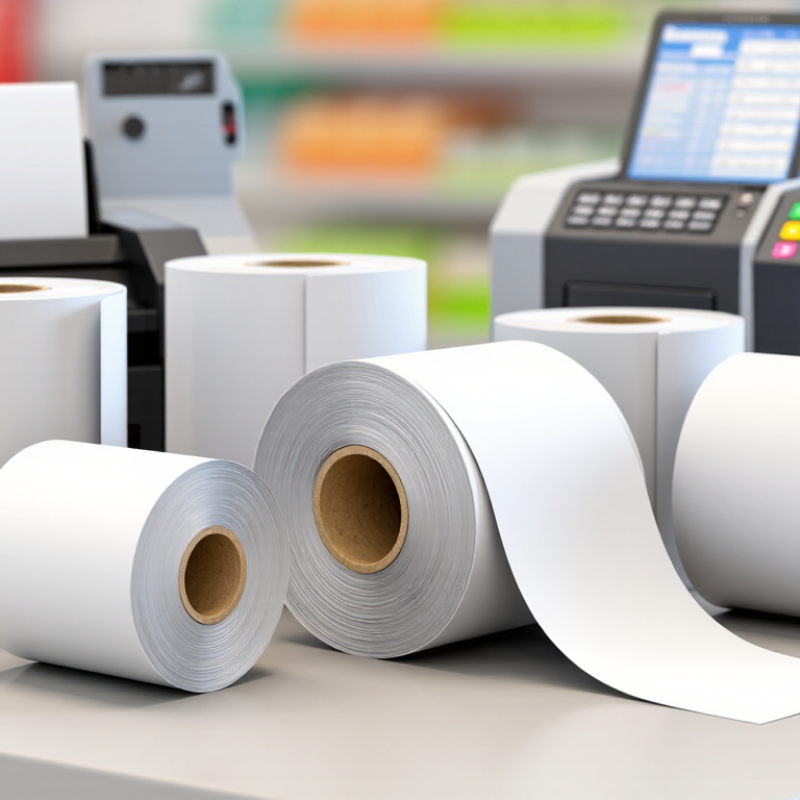
Identify the Thermal Paper Type and Intended Use
Before buying a roll, identify whether your printer uses direct thermal or thermal-transfer technology. Direct thermal paper darkens when heated, so it needs no ribbon. Thermal-transfer printing uses a ribbon and requires compatible label stock. Check the printer manual, then compare the roll width, core diameter, maximum roll diameter, and coating side. A receipt roll can fit the spindle yet still feed poorly if its width or winding direction is wrong. Small details matter. I still double-check the coating side.
The European Thermal Paper Association’s industry overview estimates Europe uses roughly 300,000 tonnes of thermal paper annually, much of it for everyday transaction and service records. That scale makes paper composition worth checking, not just price. For receipts handled often, ask for coating and chemical information; the European Chemicals Agency’s restriction assessment set a 0.02% weight limit for BPA in thermal paper placed on the EU market from 2020. “BPA-free” alone does not identify the printer type or prove every performance claim. Match the paper to its job: short-lived receipts, durable shipping labels, or graphics each need different image life and handling properties. My first specification check is sometimes incomplete; verifying a sample in the actual printer catches feed, darkness, and smudging issues.
Check Printer Compatibility and Roll Dimensions
Before ordering thermal paper, match the roll to the printer’s manual—not just the receipt width. Check the supported width, maximum roll diameter, core diameter, and loading direction. A roll can fit the paper path yet exceed the cover’s clearance. Measure an existing roll across its width and outer diameter, then compare the core opening. Small differences matter. NIST’s Guide for the Use of the International System of Units (SP 811) defines one inch as exactly 25.4 millimeters, which helps when specifications mix units. Convert carefully; rounding can hide a mismatch.
Paper thickness and weight also affect feeding and print results. ISO 534 describes a method for measuring paper thickness, while ISO 536 specifies how to determine grammage in grams per square meter. These are useful references when comparing supplier specifications, but they do not replace your printer’s limits. Test one roll before purchasing a case. Watch for slipping, skewed printing, or a lid that will not close smoothly. Keep a sample beside the printer; I once trusted a listing’s “standard size” and still had to return the rolls. Check the core, too.
Compare Paper Quality, Coating, and Print Clarity
Compare paper quality, coating, and print clarity before ordering a full case. A smooth, evenly coated roll helps produce crisp text and barcodes. Check the paper’s stated basis weight and roll dimensions against your printer’s requirements. A 2024 Grand View Research analysis estimated the global thermal paper market at about USD 4.1 billion in 2023. That scale makes consistent specifications worth checking, but market size alone says nothing about a roll’s performance.
Tip: Print a sample using your usual settings. Look closely at small numbers and barcode edges under ordinary lighting. Then scan it. Faint areas, gray backgrounds, or smudging after a light rub can signal uneven coating or poor print response. Compare samples from different lots when possible; one roll may look fine while the next does not. Printer settings can affect clarity too, so avoid judging paper from a single test.
For receipts exposed to sunlight or heat, ask for the supplier’s image-retention data and test a sample under realistic conditions. Thermal paper darkens with heat, and coatings vary in sensitivity. A darker print is not always a better one; excess darkness can blur fine detail. The trade-off is easy to miss. Keep notes on paper feel, print sharpness, and scan reliability before choosing.
Evaluate Supplier Reliability, Pricing, and Order Terms
A reliable thermal-paper supplier should provide consistent roll width, core diameter, winding direction, and coating performance. Request a recent sample and test it in your actual printer. Check whether text stays sharp after handling and whether the roll feeds without curling or slipping. Test a sample first. Ask for written specifications, batch traceability, and a clear process for reporting defects. A polished sales sheet is useful, but it cannot replace a real roll test.
Price each offer by usable metres, not just rolls or cartons. Compare freight, minimum order quantities, payment terms, and lead times alongside the quoted unit price. Grand View Research valued the global thermal paper market at USD 4.2 billion in 2022 and projected 5.2% annual growth from 2023 to 2030. That market outlook makes supplier capacity and replenishment planning worth checking, though it cannot guarantee any supplier’s performance. Ask how stock levels are managed and what happens when a shipment is delayed. Put price validity, delivery windows, replacement terms, and order changes in writing. A spreadsheet can still mislead. I would also review the agreement after the first shipment; early assumptions about freight or defects sometimes prove wrong.