Top Tips for Choosing the Right Cartoning Equipment?
Choosing the right cartoning equipment is crucial for businesses in the packaging industry. Expert Michael Johnson, a leading figure in packaging solutions, emphasizes, "Selecting the right equipment can streamline production and reduce costs." His insight underscores the importance of informed decision-making in this area.
When evaluating cartoning equipment, consider your specific needs. Factors such as product type, production volume, and automation level are essential. Make sure the equipment you choose can adapt to your changing requirements. Many companies overlook these details and end up with equipment that doesn’t meet their expectations.
Investing in cartoning equipment is not a small commitment. Therefore, it’s vital to conduct thorough research and consult experts. Identify reputable suppliers who offer reliable support. Remember that an ill-informed choice can lead to inefficiencies in your production line. This could ultimately affect your bottom line. Insightful guidance can lead to more successful outcomes in your cartoning processes.
Understanding Different Types of Cartoning Equipment Available in the Market
When considering cartoning equipment, it's crucial to understand the different types available. The landscape offers a variety of machines, including manual, semi-automatic, and fully automatic solutions. Manual machines are cost-effective but require more labor. Semi-automatic options provide balanced productivity and efficiency. Fully automatic systems are optimal for large-scale operations, boasting speed and reducing human error.
Data from the Packaging Machinery Manufacturers Institute (PMMI) indicates that the market for cartoning machinery is projected to grow by 4.1% annually. This growth highlights the increasing demand for efficient packaging solutions. Choosing the right type of equipment can significantly impact production quality and overall efficiency.
Tip: Assess your production volume and packaging needs first. This assessment guides your decision toward the appropriate machine type.
Moreover, consider equipment flexibility. Can it handle various package sizes and styles? Flexibility can save costs in the long run. Always remember, investing in technology is a substantial decision. Evaluate both current and future production needs. Upgrading later can be more costly.
Tip: Engage with industry experts. Their insights can reveal common pitfalls and help refine your selection process. Understanding the specifics of each machine type equips businesses to make informed choices.
Evaluating Production Speed and Efficiency Metrics for Cartoning Machines
Choosing the right cartoning equipment requires careful consideration of production speed and efficiency. An efficient cartoning machine significantly impacts your overall productivity and can influence the bottom line. When evaluating production speed, assess how many cartons the machine produces per minute. This metric will help you understand if the equipment meets your operational needs.
Look for machines that offer flexible speed settings. This allows you to adjust based on varying production demands. It is crucial to balance speed with reliability. A faster machine may increase throughput but could compromise quality.
To enhance efficiency, consider the machine's design and features. Automated processes reduce manual intervention. This not only speeds up production but also minimizes errors. Evaluate maintenance requirements, too. Machines that are easy to maintain can lead to less downtime.
Always remember, investing in the right equipment is essential and requires reflection. Seek feedback from teams who will operate the machines. Their insights can highlight practical efficiency issues that metrics alone may not reveal. Be prepared to adjust your choices based on this feedback.
Production Speed and Efficiency Metrics for Cartoning Machines
Assessing Compatibility with Existing Packaging Lines and Workflow
Choosing the right cartoning equipment requires careful consideration, especially in terms of compatibility with existing packaging lines. Many companies underestimate the importance of ensuring that new equipment can seamlessly integrate with current workflows. Reports indicate that 30% of packaging line downtime originates from equipment mismatches.
Compatibility means more than just fitting into the available space. It also includes evaluating the equipment's ability to handle specific product types and speeds. For instance, if a line processes 200 cartons per minute, the new equipment must match or exceed this speed. Failure to do so can lead to bottlenecks. Data suggests that optimizing workflow can improve overall efficiency by up to 25%.
Additionally, operators need to assess the learning curve associated with new machinery. A complex interface can hinder productivity. It's crucial that the new equipment fits well into the existing operational strategy. Without proper training and adjustment, even high-quality equipment might fail to yield expected outcomes. Implementing changes without properly addressing workflow can sometimes exacerbate existing issues, rather than solving them.
Analyzing the Total Cost of Ownership and Maintenance for Cartoning Equipment
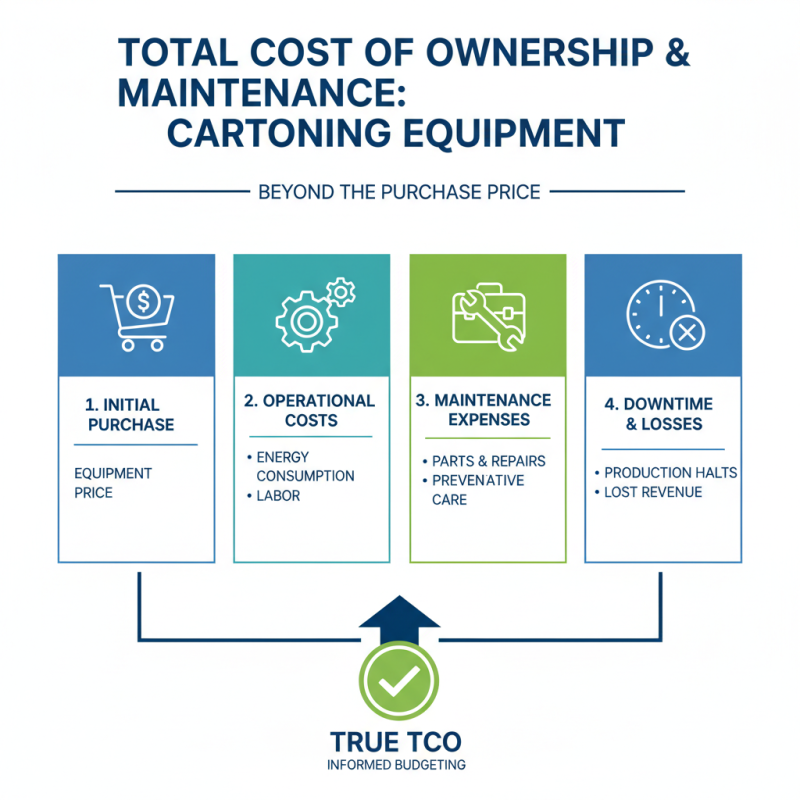
When selecting cartoning equipment, the total cost of ownership (TCO) is crucial. TCO includes more than just the initial purchase price. Consider maintenance expenses, operational costs, and potential downtime. Each of these elements can affect your overall budget significantly.
Regular maintenance can extend the life of your cartoning equipment. However, maintenance costs can also add up. Some equipment may require specialized technicians, increasing expenses. It's important to weigh the benefits of durability against potential repair costs. Companies often overlook this aspect, leading to unexpected financial burdens.
Operational efficiency should not be underestimated. High-quality equipment often operates faster and with fewer interruptions. Yet, more complex machinery can be challenging to operate and maintain. Think about your team's capabilities. Investing in user-friendly equipment may yield better long-term savings, reducing training costs and improving productivity. Understanding these nuances ensures you make a well-informed decision.
Identifying Key Industry Regulations and Standards for Cartoning Solutions
When selecting cartoning equipment, it's essential to consider industry regulations and standards. These regulations ensure safety, efficiency, and quality in packaging processes. In various sectors, such as food and pharmaceuticals, compliance with specific standards is mandatory. These standards can vary significantly from one region to another, reflecting local safety concerns.
Familiarizing yourself with guidelines from relevant authorities can be challenging. It's vital to understand the critical measures you must take. For instance, the design of the equipment should meet basic hygiene standards, especially in the food sector. This often means that materials need to be easy to clean and resistant to contamination. However, achieving compliance can sometimes be daunting. So, continuous evaluation of your chosen equipment's adherence to standards is essential. It’s not just about initial setups; regular updates may be necessary as regulations evolve.
Another aspect to consider is how these regulations affect the operational efficiency of your cartoning solutions. Meeting standards should not compromise speed and accuracy. Sometimes, manufacturers may prioritize compliance over functionality, leading to bottlenecks. Therefore, balancing compliance with operational needs is crucial. Remember, it's better to take the time to review processes thoroughly than rush and overlook critical regulations.
Top Tips for Choosing the Right Cartoning Equipment
| Dimension |
Description |
Industry Regulations |
Standards Compliance |
| Efficiency |
Optimal speed and capacity of cartoning |
FDA Regulations for food packaging |
ISO 9001 for quality management |
| Flexibility |
Ability to handle various sizes and types of cartons |
EU Packaging Directive |
ASTM Standards for packaging materials |
| Usability |
User-friendly interface for operators |
OSHA safety standards |
ISO 45001 for occupational health & safety |
| Maintenance |
Requirements for upkeep and servicing |
ANSI standards for equipment maintenance |
ISO 55001 for asset management |
| Cost-effectiveness |
Initial investment versus operational costs |
Environmental regulations for packaging waste |
ISO 14001 for environmental management |