China Top 10 Grain FIBC Bags Manufacturers 2026
China’s grain packaging market is becoming more technical, competitive, and quality-focused. Grain FIBC Bags now serve farms, grain processors, exporters, and storage facilities across many supply chains. A reliable bag must handle heavy filling, repeated movement, moisture exposure, and warehouse pressure. It should also support clean discharge and stable stacking.
Packaging author and bulk-materials specialist Walter Soroka has stated, “Packaging is part of the product’s quality system.” This principle matters for grain. A torn seam can scatter valuable kernels across a concrete floor. Poor fabric selection may allow dust, moisture, or contamination to affect stored grain. Small design decisions often create large operational costs.
This 2026 overview examines China’s top Grain FIBC Bags manufacturers through practical criteria. These include fabric strength, seam consistency, liner integration, printing accuracy, production capacity, inspection systems, and export experience. Supplier communication also deserves attention. Clear specifications reduce mistakes before production begins.
The ranking is not a perfect verdict. Factory capabilities can change, and published information may remain incomplete. Buyers should request current test reports, production samples, traceability records, and loading photographs. They should also confirm whether each bag suits the intended grain type and handling method.
Some manufacturers may offer lower prices. That does not always mean better value. A dependable supplier balances cost, safety, cleanliness, delivery reliability, and technical support. This guide aims to help readers compare those factors with practical judgment, rather than choosing from attractive claims alone.
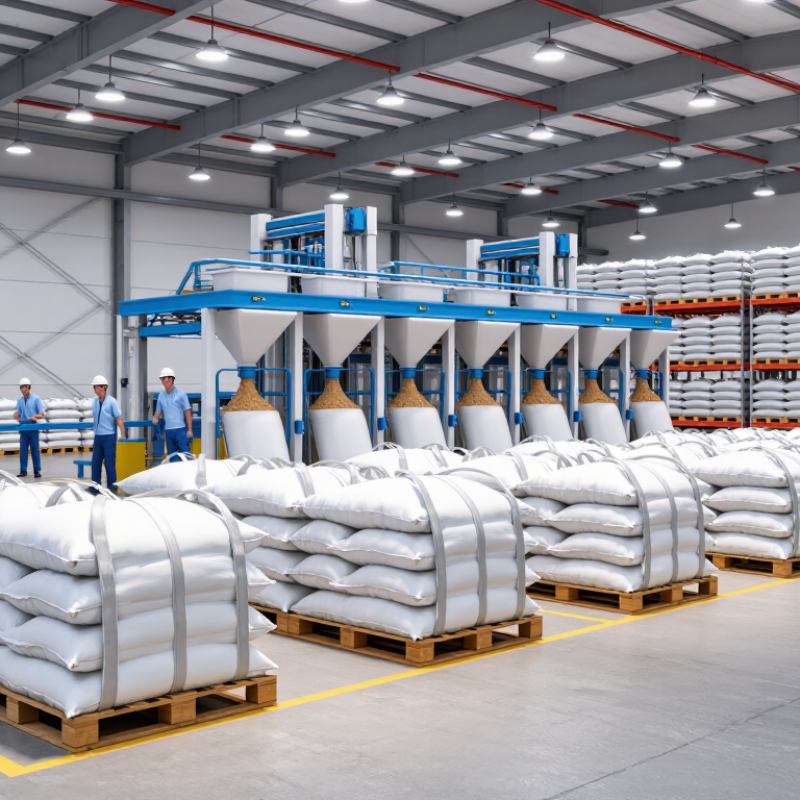
China Grain FIBC Bags Market Overview for 2026
China Top 10 Grain FIBC Bags Manufacturers 2026
China’s grain FIBC bags market is expanding with bulk rice, wheat, corn, and feed distribution. China reported a record grain harvest of about 706.5 million tonnes in 2024, according to the National Bureau of Statistics. This volume supports steady demand for one-tonne flexible intermediate bulk containers. Grand View Research estimates the global FIBC market will grow at roughly 5% annually through the decade. China remains a major production and export base.
Grain buyers now examine more than price. They request food-contact materials, clean stitching, low dust, stable lifting loops, and moisture-resistant liners. The Food and Agriculture Organization continues to highlight storage losses and supply-chain efficiency as important food-security issues. These concerns make bag design significant, especially during humid transport and long warehouse storage. A reliable supplier should provide batch records, load testing, woven-fabric specifications, and traceable inspection results.
However, the “top 10” ranking is not perfectly transparent. Public data often combines agricultural, chemical, and mineral packaging. Capacity figures may also reflect installed equipment, not actual grain-bag output. This is an area that deserves more caution. In 2026, competitive Chinese manufacturers are likely to differentiate through cleaner workshops, automated cutting, stronger quality control, and recyclable polypropylene structures. Buyers should compare verified test documents, production consistency, and delivery performance rather than relying only on online rankings.
Criteria for Ranking the Top 10 Chinese Manufacturers
China Top 10 Grain FIBC Bags Manufacturers 2026: Criteria for Ranking the Top 10 Chinese Manufacturers
The ranking starts with documented performance, not factory size or online visibility. FAO’s Food Outlook, June 2024, estimated global cereal production at about 2.85 billion tonnes. This scale increases demand for clean, durable bulk packaging. Each manufacturer is assessed against ISO 21898 requirements for flexible intermediate bulk containers. Food-contact declarations, factory hygiene, and batch traceability receive the highest weight.
The score allocates 30% to food-grade safety and traceability, 25% to product testing, and 20% to production consistency. Testing includes seam strength, lifting-loop safety, drop resistance, dust control, and safe working load verification. Export experience accounts for 15%, supported by inspection records and repeat-order evidence. Technical support and transparent pricing account for the remaining 10%. A 500-kilogram or 1,000-kilogram bag must perform consistently, not only look strong in photographs.
On-site audits should review woven fabric storage, stitching lines, liner fitting, and finished-goods protection. Independent laboratory reports add credibility, especially for odor, migration, and contamination risks. No ranking is perfect. Public data can be incomplete, and some factories report capacity without proving stable output. That weakness matters. A reliable assessment therefore combines certificates, sample testing, customer evidence, and direct production checks before assigning a final position.
Top 10 Grain FIBC Bags Manufacturers in China
Top 10 Grain FIBC Bags Manufacturers in China
China’s grain sector creates steady demand for reliable bulk packaging. The National Bureau of Statistics reported 706.5 million tonnes of grain output in 2024. That volume requires bags with stable seams, clean interiors, and predictable discharge performance. The top 10 grain FIBC bags manufacturers in China should therefore be assessed beyond factory size.
Food-contact material control matters. ISO 21898 provides a practical reference for flexible intermediate bulk containers. Strong manufacturers document fabric strength, lifting-loop performance, coating quality, and batch traceability. Many also use metal detectors and controlled packaging rooms.
Small details matter. A loose thread can damage handling efficiency. A dusty inner surface can create costly quality concerns.
Freedonia’s industrial bulk packaging research identifies food and agriculture as important FIBC end-use sectors. Its findings support stronger demand for durable, lightweight transport packaging. When comparing China’s top 10 suppliers, buyers should review test reports, production capacity, inspection records, and export experience. They should also confirm whether samples match mass production.
No ranking is perfect. Some suppliers communicate well but provide limited evidence. Others offer excellent testing yet need better delivery planning.
A physical factory audit remains useful, especially for grain storage, container loading, and repeated warehouse handling.
Product Capabilities and Quality Comparison
China Top 10 Grain FIBC Bags Manufacturers 2026
Comparing China’s leading grain FIBC bag manufacturers requires more than checking production volume. Product capability begins with polypropylene tape quality, fabric weight, and consistent weaving. For grain storage, woven fabric should resist tearing around lifting loops and corner seams. A reliable factory can offer coated or uncoated fabric, food-contact liners, customized filling openings, and discharge spouts. Dimensions should match the customer’s hopper, pallet, and transport system. Small fitting errors create large handling problems.
Quality comparison depends on measurable evidence. Ask for safe working load, safety factor, seam strength, fabric denier, and moisture resistance data. Independent laboratory reports are useful, but batch records matter too. Inspectors should review raw-material control, needle density, stitching tension, and print adhesion. A practical sample test includes filling the bag, lifting it repeatedly, and checking deformation after storage. The best suppliers usually provide production traceability and pre-shipment inspection. Certifications help, but certificates alone do not prove daily consistency.
Price can hide differences. A lighter fabric may look acceptable during a short trial, then stretch under humid grain. Ask how rejected bags are separated and recorded. This question often reveals factory discipline. No comparison is perfect. Published specifications may change, and sample performance can exceed mass production. I would compare three production batches, not one attractive sample. Clear communication, stable lead times, and responsive corrective action also indicate dependable capability. Some manufacturers may need improvement in documentation, even when their bags perform well.
How to Select a Reliable Grain FIBC Bag Supplier
China Top 10 Grain FIBC Bags Manufacturers 2026
Selecting a reliable grain FIBC bag supplier requires more than comparing prices. FAO’s SDG 12.3.1 data estimates that 13.2% of food was lost globally between harvest and retail in 2021. Weak packaging can worsen this problem through moisture, tearing, or contamination.
Check whether the supplier follows ISO 21898 requirements for flexible intermediate bulk containers. Request third-party test reports showing safe working load, safety factor, seam strength, and drop performance. For grain, a common 5:1 safety factor may be suitable, but your filling weight and handling equipment still matter. Ask for woven polypropylene specifications, liner thickness, UV resistance, and food-contact documentation. Small details matter.
Inspect production samples personally, if possible. Look at the corner loops, stitching density, discharge spout, and inner liner fit. A bag should sit firmly on a pallet without leaning. Request batch traceability and retain samples for comparison. The Food and Agriculture Organization also emphasizes better post-harvest handling as a practical way to reduce losses. A supplier that cannot explain testing dates or corrective actions deserves caution. Price alone misleads. I have seen attractive samples fail after repeated forklift movement, so laboratory results must be matched with real handling trials. Supplier audits are imperfect, but skipping them is worse.