
CALL US 770-248-9089

Top 10 Chocolate Wrapping Machine Manufacturers for Buyers

Chocolate makers need wrapping equipment that protects product quality and keeps production moving. The right machine can handle delicate pralines, foil-wrapped bars, or high-speed flow packs. Chocolate Wrapping Machinery should therefore be assessed by product format, output, changeover time, and service support—not by brochure claims alone.

Industry reports provide useful context, but they do not rank individual machine suppliers. PMMI’s 2024 State of the Industry report discusses automation, workforce availability, and efficiency pressures across packaging operations. Grand View Research’s Confectionery Packaging Market report tracks demand and market growth in the wider category. These reports help explain why manufacturers seek dependable, flexible packaging lines. They cannot confirm whether a particular wrapper suits a buyer’s factory.

Details matter. A compact line may fit a small workshop, while a large plant may need synchronized feeding and continuous operation. Buyers should compare demonstrated speed, sealing consistency, available wrapping materials, cleaning access, and local technical support. Ask for product trials using the actual chocolate shape and packaging film. Watch the machine handle a full changeover, not just a brief demonstration. Small details can become costly.

This guide introduces ten manufacturers for buyer comparison. It is a starting point, not a universal ranking. Reported specifications and service coverage can change, so confirm them directly with each supplier. A careful review of real production needs is more useful than choosing a familiar name alone.
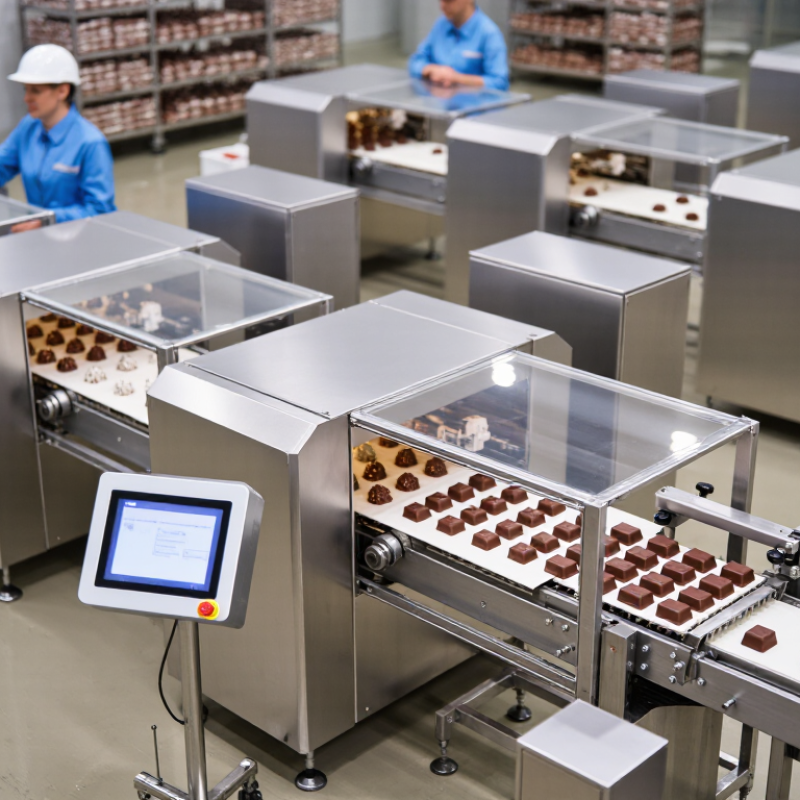
Top 10 Chocolate Wrapping Machine Manufacturers for Buyers

What Chocolate Wrapping Machines Do and Where They Are Used

Chocolate wrapping machines protect finished pieces and prepare them for storage, transport, or display. Depending on the product, a machine may fold foil, apply paper, seal a flow-wrap film, or place chocolates into trays. Sensors and adjustable guides help keep each piece aligned. The exact setup depends on chocolate size, shape, coating, and packaging material. A small round truffle and a flat chocolate bar need different handling.

These machines are used in confectionery factories, seasonal production lines, and smaller workshops with steady order volumes. On a line, wrapped pieces may move directly toward cartoning or case packing. Operators check seals, folds, and film tension during production; even a slight adjustment can reduce torn wrappers or exposed edges. Clean, dry contact surfaces matter, especially when chocolate softens in a warm room.

Not every machine suits every product. Fragile shells may crack under pressure, while sticky coatings can slow feeding. Trials with the actual chocolate and wrapper are useful, though they take time. That detail is easy to overlook. A machine’s rated speed alone does not show how consistently it will wrap a delicate piece through a full shift.

Main Machine Types and Wrapping Technologies

Chocolate wrapping machines differ in how they handle product shape, speed, and packaging material. Horizontal flow wrappers form a sealed film pouch around bars, often using a fin seal underneath and end seals at both sides. They suit steady production, but delicate inclusions can shift if feeding is poorly controlled. Watch the product spacing.

Fold-wrapping machines tuck foil or paper tightly around pralines and molded pieces. Mechanical folders create crisp corners, while servo-driven systems can adjust folds for different sizes. Twist wrapping is common for small, individually portioned chocolates; rotating arms gather the ends of a wrapper. It looks simple, yet wrapper tension and product alignment affect the finish. Small variations show.

Sealing technology matters as much as machine format. Heat-seal systems need compatible films and stable temperature, pressure, and dwell time. Cold-seal materials can protect heat-sensitive chocolate, though they require suitable coating and careful storage. Some lines use intermittent motion for controlled, precise wrapping; continuous motion can support higher output. Buyers should test actual products, including chilled pieces and seasonal size changes. A sample run reveals wrinkles, seal weakness, and awkward changeovers. No setup is perfect, and a fast machine may create more waste if operators cannot adjust it easily.

Top 10 Chocolate Wrapping Machine Manufacturers for Buyers — Main Machine Types and Wrapping Technologies

Indicative operating-speed ranges for common chocolate wrapping machine types (pieces per minute). Actual speeds vary with product size, wrapper material, feeding system, and machine configuration; these ranges are general benchmarks, not specifications for any manufacturer.

Key Factors Buyers Should Assess Before Choosing a Manufacturer

Choosing a chocolate wrapping machine manufacturer starts with the product, not the advertised speed. Share bar dimensions, coating type, and wrapper material before requesting a quotation. Chocolate can soften during long runs, so ask how the machine handles product contact and rejects misshapen pieces. Run a sample using your own bars and film. Small details matter.

Watch the line at realistic speed, not just during a short demonstration. Check wrapper alignment, seal consistency, and how often operators must clear jams. Ask how changeovers work when switching from a slim bar to a thicker one, then time the adjustment. Ask for evidence. A written output test, spare-parts list, and service response plan are more useful than broad promises.

Assess guarding, accessible cleaning points, and operator training, then confirm they suit your facility and workflow. Request references from plants with similar products and shift patterns; one glowing testimonial may hide a poor fit. Compare total cost, including installation, tooling, downtime, and consumables, rather than purchase price alone. It is easy to overvalue a fast machine. If quoted capacity exceeds actual demand, the extra speed may add little value.

Profiles of Ten Chocolate Wrapping Machine Manufacturers

A useful buyer’s comparison should examine what each manufacturer builds best, not just headline speed. Grand View Research estimates the global packaging machinery market reached USD 45.8 billion in 2023, with projected growth through 2030. This is a broad market estimate, not a chocolate-wrapper sales figure. Still, it signals why equipment flexibility matters.

The ten profiles span distinct strengths: high-speed flow wrapping for bars; twist wrapping for bite-size pieces; foil folding for premium formats; compact machines for small batches; servo-driven modular platforms; multi-format line integrators; washdown-focused equipment makers; systems designed for recyclable films; retrofit and service specialists; and custom engineering houses. Speed is not everything. A machine that wraps glossy pralines may struggle with soft centers or dusty production rooms. Buyers should request sample runs using their actual product, film, and target speed.

ICCO’s May 2024 Quarterly Bulletin estimated a 439,000-tonne cocoa deficit for the 2023/24 season. That figure concerns cocoa supply, not packaging machinery, but it highlights cost pressure across chocolate production. A practical evaluation should include changeover time, wrapper waste, seal consistency, operator access, and local spare-parts support. Ask for measured results, not just brochure claims. Small details matter: a film roll change beside a warm enrober can disrupt a shift. I would also question whether a highly customized machine is worth the service complexity.

Top 10 Chocolate Wrapping Machine Manufacturers for Buyers - Profiles of Ten Chocolate Wrapping Machine Manufacturers

Anonymized profiles for comparison. Entries are not ranked; capabilities vary by machine model and configuration. Confirm current specifications and product suitability directly with each manufacturer.
Profile Country Relevant equipment focus Chocolate formats and packaging styles Buyer considerations
Manufacturer 1 Germany High-speed confectionery packaging machinery Chocolate and confectionery products; folding, twist wrapping, and flow-pack applications, depending on model Check product size range, wrapper changeover requirements, and compatibility with the intended packaging material.
Manufacturer 2 Germany Packaging systems for chocolate and confectionery Chocolate bars, tablets, and confectionery; folding and flow-wrapping formats across product lines Ask about line integration, format tooling, and support for the required output rate.
Manufacturer 3 Italy Confectionery processing and packaging equipment Chocolate and other confectionery products; packaging configurations depend on the selected line For integrated projects, confirm the boundary between processing, primary wrapping, and downstream packaging.
Manufacturer 4 Germany Food and confectionery packaging systems Chocolate products packaged using flow-wrap and related automated packaging solutions Evaluate line speed together with product infeed, inspection, and end-of-line requirements.
Manufacturer 5 Italy Confectionery wrapping and packaging machinery Chocolate and confectionery; available wrapping styles depend on the machine and product configuration Request sample-product trials to verify feeding, wrapping quality, and changeover time.
Manufacturer 6 Switzerland Chocolate and confectionery packaging machinery Chocolate products; folding and other wrapping applications offered across relevant equipment ranges Check whether the machine supports the required product dimensions, pack appearance, and film or paper specification.
Manufacturer 7 Italy Horizontal flow-wrapping machinery Chocolate bars and other food products in flow-wrap packs, subject to machine configuration Confirm wrapper style, sealing requirements, and the range of pack sizes needed.
Manufacturer 8 Italy Flexible packaging and flow-wrapping equipment Chocolate and confectionery products in pillow-style and other flexible packs, depending on model Review film handling, sealing performance, product feeding, and integration with existing lines.
Manufacturer 9 United Kingdom Wrapping machinery for confectionery products Chocolate and sweets; wrapping methods and supported formats vary by machine Ask for a demonstration using the actual product and packaging material before selecting a machine.
Manufacturer 10 Italy Automated secondary packaging and case-packing systems Cartoning, multipacking, and case packing for products that may include individually wrapped chocolate Best suited to buyers seeking downstream packaging; verify whether primary chocolate wrapping is included in the project scope.

How to Compare Manufacturers for Production Needs and Budget

Comparing chocolate wrapping machine manufacturers starts with the product, not the brochure. Record bar dimensions, wrapper material, target speed, and daily shift length. Ask for a trial using your actual chocolate and packaging film. A neat sample matters. Check folds, seals, crumbs, and scuffing after the product has cooled.

Compare the full operating cost, not only the purchase price. A cheaper machine may have costly format limits. Request an itemized quote covering installation, operator training, change parts, and recommended spares. Confirm the expected output under your product conditions, rather than relying on a maximum-speed figure. Small details count.

Ask how quickly technicians can respond and which wear parts are stocked locally. Check whether routine cleaning and format changes suit your team’s experience. If possible, speak with a customer running a similar product and shift pattern. One awkward truth: no supplier can remove every production risk. Leave room in the budget for commissioning and early adjustments; forecasts are not always right.