CALL US 770-248-9089

China Top Bagging Machine Manufacturers for Global Buyers

China has become a major sourcing hub for reliable and customizable bagging machine solutions. Manufacturers now serve food, chemicals, agriculture, pet food, and industrial packaging markets worldwide. Their equipment ranges from compact semi-automatic units to fully integrated systems with weighing, filling, sealing, and palletizing functions.

Jim Pittas, president and CEO of PMMI, has said, “Automation is no longer a luxury; it is a necessity.” This view reflects current buyer expectations. A modern bagging machine must improve output without sacrificing weighing accuracy, seal strength, or operator safety. During factory evaluations, buyers should inspect stainless-steel contact parts, pneumatic components, control panels, and actual product trials. Small details matter. A dusty workshop or unclear wiring can reveal future service problems.

This guide examines China’s leading bagging machine manufacturers for global buyers. It considers manufacturing experience, technical expertise, quality control, certifications, customization ability, export support, and after-sales service. It also looks beyond attractive prices. A lower quotation may hide costly spare parts, limited training, or slow remote assistance.

No supplier is perfect. That matters. Even experienced manufacturers may need more testing for fragile products, irregular granules, or high-moisture materials. Buyers should request sample runs, performance data, installation guidance, and transparent warranty terms before making a decision. The strongest supplier is not always the largest one. It is the company that understands your product, communicates clearly, and supports the bagging machine after delivery.
China Top Bagging Machine Manufacturers for Global Buyers

What Bagging Machines Are and Which Industries Use Them

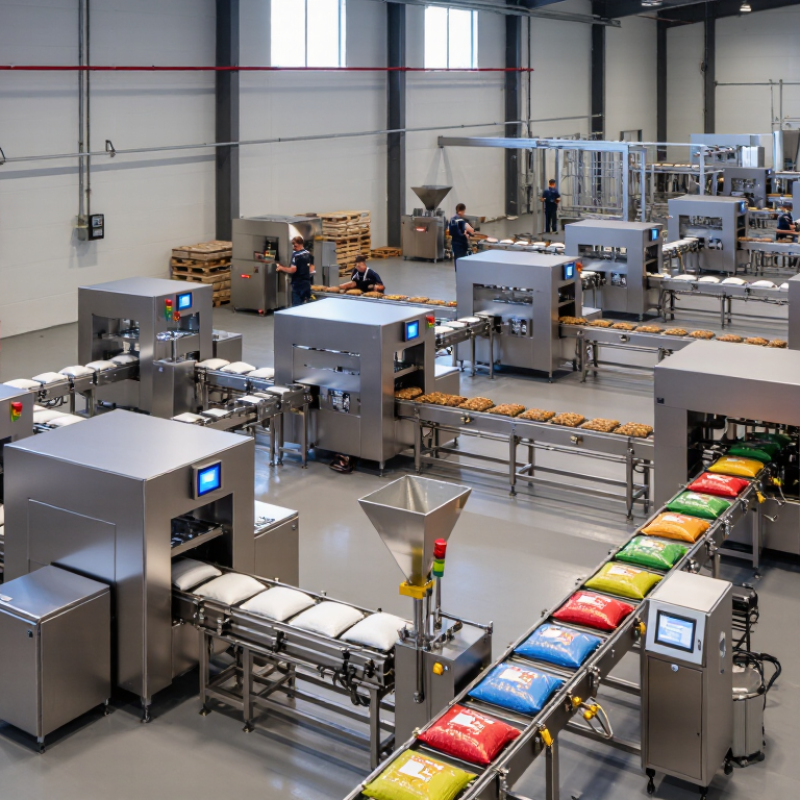
A bagging machine fills, weighs, seals, and sometimes labels products inside pre-made bags or continuous packaging film. Its feeding system controls how material enters the bag. Load cells then check the target weight. A sealing unit closes the package with heat, stitching, or pressure. Some machines also remove excess air or print batch information.

The right design depends on the product. Granules need accurate flow control. Fine powder requires dust reduction and stable feeding. Liquid products need clean pumps and leak-resistant seals. Plant-floor experience shows that small details matter, including bag storage, conveyor height, and operator access. Reality is less tidy. Humidity can affect powder flow, while irregular bags may slow production.

Food processors use bagging machines for rice, flour, grains, snacks, and pet food. Agricultural facilities package seeds, animal feed, and soil additives. Construction suppliers handle cement, sand, mortar, and other dry materials. Mineral processors often pack pellets or powdered materials. Pharmaceutical facilities may use specialized systems under strict hygiene controls.

Global buyers comparing Chinese manufacturers should request material tests, weighing records, sealing samples, and maintenance instructions. Ask how the machine handles product changes and cleaning requirements. Production speed should not hide poor accuracy. A slower, stable line may create less waste. Destination-market electrical, safety, labeling, and packaging rules also need verification before shipment.

China Top Bagging Machine Manufacturers for Global Buyers

What bagging machines are and which industries use them

Bagging machines automatically dose, fill, close, and sometimes palletize bags. The chart shows typical product-weight ranges for major bagging machine categories. FFS, open-mouth, and valve bagging systems are commonly used for food, chemicals, seeds, animal feed, and building materials, while bulk bag machines handle large-volume products such as minerals, fertilizers, grains, and powders. Actual specifications vary by material, bag format, and filling technology.

Key Criteria for Evaluating Chinese Bagging Machine Manufacturers

Selecting a Chinese bagging machine manufacturer requires more than comparing quoted prices. PMMI’s 2024 State of the Industry report valued U.S. packaging machinery shipments at approximately 10 billion dollars in 2023. That scale raises buyer expectations for uptime, service, and documentation. Ask for recent factory acceptance records, electrical schematics, spare-parts lists, and videos showing your actual product being packed.

Evaluate engineering fit through measurable trials. Check bag dimensions, target weight, filling speed, sealing temperature, and dust control. Request a test using your material, not a similar substitute. A reliable supplier should report accuracy at different speeds and explain rejected-bag causes. The ISO Survey 2022 recorded more than one million ISO 9001 certificates worldwide, but certification alone proves little about machine performance. Audit the quality process behind it. Inspect calibration tags, weld consistency, sensor alignment, and software change records.

After-sales capability often decides the real cost. Confirm remote diagnostics, response hours, technician availability, and local-language manuals. Ask how quickly common sensors, heaters, and sealing jaws can ship. The wrong spare part can stop a line for days. I would also request three customer references from comparable industries, while accepting that references may be selective. One overlooked detail is training: operators should practice clearing film jams and correcting weight drift before delivery. A polished demonstration is useful, but repeatable evidence matters more.

China Top Bagging Machine Manufacturers for Global Buyers - Key Criteria for Evaluating Chinese Bagging Machine Manufacturers

Evaluation Dimension Practical Industry Reference Why It Matters to Global Buyers Documents or Tests to Request Suggested Assessment
Application and Product Compatibility The filling system should match the product form: volumetric or auger filling for powders, linear or multihead weighing for many granular products, and counting or liquid systems for other materials. Product density, particle size, moisture, flowability, and dust level directly affect accuracy, speed, and machine stability. Product samples, bulk-density data, particle-size information, moisture range, and a recorded filling trial using the buyer’s actual material. Reject suppliers that quote performance without testing the actual product.
Filling Accuracy Accuracy is application-dependent. A buyer should compare the measured average error and standard deviation at the target weight rather than relying only on a general percentage claim. Accurate filling reduces giveaway, rework, customer complaints, and compliance risk for declared package weights. A test report showing at least 30 consecutive packs, target weight, actual weights, average deviation, maximum deviation, and operating speed. Use the same product, package size, and production speed when comparing offers.
Production Speed Actual output depends on bag size, product behavior, sealing method, film, operator loading, and upstream or downstream equipment. Advertised maximum speed should not be treated as guaranteed sustained output. A realistic cycle rate is more useful than a laboratory maximum when calculating production capacity and payback. A timed acceptance test covering filling, bag opening, sealing, discharge, and fault recovery under normal operating conditions. Compare sustained good-pack output, not only cycles per minute.
Bag and Film Compatibility Machines may be designed for premade bags, roll film, or both. Film thickness, seal layer, coefficient of friction, bag dimensions, and print-mark quality can affect feeding and sealing. Poor compatibility causes film tracking errors, incomplete seals, wrinkles, product leakage, and frequent stoppages. Approved bag-size range, compatible film specifications, seal-temperature range, sample packs, and seal-strength test results. Require testing with the exact packaging material intended for production.
Machine Construction and Hygiene Food and pharmaceutical applications generally require smooth, cleanable product-contact surfaces, minimized product ledges, suitable guarding, and corrosion-resistant construction in exposed areas. Hygienic design supports cleaning, reduces contamination risks, and improves long-term durability. Material declarations, product-contact part list, cleaning procedure, surface-finish information, machine drawings, and photographs of internal areas. Inspect accessibility, drainage, removable parts, and the absence of unnecessary product traps.
Control System and Data Access A modern bagging machine should provide recipe storage, alarm history, parameter access control, production counters, and clearly defined electrical documentation. Good controls shorten changeovers, support troubleshooting, and improve traceability for multiple products or bag sizes. Control-system specification, screen recording, I/O list, wiring diagrams, user levels, backup procedure, and language options. Confirm that the buyer can export or back up recipes and receive editable electrical documentation.
Safety and Risk Controls Important features include guarded moving parts, emergency stops, access-door interlocks where required, clear warning labels, overload protection, and documented risk-control measures. Safety design protects personnel and reduces the chance of shipment delays caused by non-compliant equipment. Risk assessment, safety-circuit description, electrical schematics, operating manual, and a documented factory safety inspection. Have the final machine reviewed against the destination market’s machinery and electrical requirements.
Changeover and Maintainability Tool-free or low-tool changeover, accessible wear parts, standardized fasteners, clear lubrication points, and modular assemblies generally reduce maintenance time. Shorter changeovers and easier maintenance improve equipment availability and reduce dependence on specialist technicians. Recorded changeover demonstration, preventive-maintenance schedule, spare-parts list, recommended stock levels, and service access drawings. Measure changeover time using two representative products and their actual bag formats.
Factory Quality Assurance A capable manufacturer should control incoming components, assembly checks, electrical testing, calibration, software configuration, and final performance inspection. Documented quality controls reduce variation between the approved machine and the delivered machine. Quality plan, inspection records, calibration records for weighing equipment, final-test checklist, and serial-number traceability. Give higher scores to suppliers that provide objective records rather than general quality assurances.
Testing, Acceptance, and Warranty Performance should be defined through measurable acceptance criteria covering output, weight accuracy, seal quality, reject rate, noise where relevant, and successful operation over an agreed test period. Clear acceptance terms prevent disputes about what the machine was expected to achieve. Factory acceptance-test protocol, installation qualification checklist, warranty terms, response-time commitment, and remote-support procedure. Link final payment to documented acceptance results whenever commercially possible.
Export Readiness and Total Cost A complete quotation should include machine configuration, utilities, dimensions, weight, packaging, spare parts, installation, training, shipping terms, and all optional equipment. The purchase price alone does not represent total ownership cost; installation, consumables, downtime, spare parts, and service availability also affect the investment. Detailed commercial quotation, packing list, utility requirements, spare-parts pricing, shipping documents, training plan, and five-year cost estimate. Compare suppliers using total cost of ownership and verified technical performance, not headline price only.

Note: Performance ranges and acceptance criteria should be finalized through product-specific trials, because bagging results vary with the material, package format, environmental conditions, and selected machine configuration.

Leading Chinese Manufacturer Profiles and Product Specialties

China’s bagging machine sector serves food, chemicals, minerals, feed, and household goods. Smithers’ 2024 flexible packaging analysis values the global market at more than USD 290 billion, supporting continued demand for efficient filling and sealing equipment. Chinese manufacturers increasingly build export-ready systems around this demand.

Vertical form-fill-seal specialists focus on rice, grains, powders, and snacks. Their machines often combine multihead weighing, servo-driven film control, nitrogen flushing, and automatic sealing.

Open-mouth bagging specialists target flour, fertilizer, pet food, and granular materials. They commonly offer gross or net weighing, dust extraction, sewing, and heat sealing.

For heavy sacks, robotic palletizing and stretch wrapping reduce repetitive handling. Specific integration matters.

PMMI industry research continues to identify automation, labor shortages, and flexible production as major packaging priorities. Buyers should therefore test speed, accuracy, changeover time, and spare-parts access before approval. A catalogue number is not enough. Ask for factory trials using your actual material, bag size, and target weight. Some suppliers advertise impressive output figures, yet performance may drop with dusty or irregular products. That gap deserves honest attention. Experienced exporters usually provide electrical documentation, remote diagnostics, operator training, and installation records. Certification remains important, but local compliance checks still apply in each destination market.

How to Compare Automation, Customization, Quality, and Service

China Top Bagging Machine Manufacturers for Global Buyers

Comparing Chinese bagging machine manufacturers requires more than reading a price sheet. Watch a live test using your material, target weight, and actual bag film. A fast demonstration can hide unstable sealing. Ask for speed data from a continuous run, not one successful cycle. Good automation usually includes servo dosing, automatic bag clamping, clear alarms, and recipe storage. The control panel should show errors in your operators’ language. Simple matters.

Customization should solve a measured production problem. Request drawings for the hopper, filling nozzle, dust extraction, and conveyor height. Confirm product contact materials, cleaning access, and changeover time. A machine designed for fine powder may struggle with sticky granules. This detail is often missed. Ask whether the supplier will test your samples before final payment. Keep records of accuracy, speed, rejected bags, and air pressure.

Quality depends on process, not polished photographs. Check welds, guarding, electrical labels, spare-part lists, and inspection records. Ask how the manufacturer controls critical parts and documents calibration. A reliable supplier explains limits instead of promising perfect results. Service deserves equal scrutiny. Clarify installation support, response hours, video training, warranty exclusions, and spare-part delivery. I have seen buyers choose a lower quote, then pay more for delays and redesigns. That decision is hard to reverse. Compare the complete operating cost, and leave room for honest doubt.

Export Purchasing Steps, Compliance Checks, and Supplier Verification

China Top Bagging Machine Manufacturers for Global Buyers

For global buyers, selecting a bagging machine starts with evidence, not catalogue photos. Request the model number, bag range, output speed, power rating, and destination voltage. Include Incoterms 2020, delivery time, spare-parts pricing, and warranty response times. The World Bank’s Logistics Performance Index 2023 covered 139 economies and assessed customs, tracking, and delivery reliability. These details affect the final landed cost.

Ask for a risk assessment, user manual, wiring drawings, and factory test records before payment. For European delivery, verify applicable machinery, EMC, and electrical-safety requirements. Regulation (EU) 2023/1230 will apply from 20 January 2027. IEC 60204-1 and ISO 12100 references can strengthen the technical file. Food-related applications also need suitable material declarations. A certificate alone is insufficient.

Request a live video test using your actual bag size and product weight. Record filling accuracy, sealing temperature, dust control, and emergency-stop performance. Compare the serial number on the machine with the inspection report. Verify the supplier’s legal entity, export history, bank-account ownership, and after-sales engineers. The WTO World Trade Statistical Review 2024 reported a 0.8% decline in merchandise trade volume during 2023, so delivery assumptions deserve careful checking. I still recheck freight quotes. Small omissions become expensive. A polished brochure is not proof.