
Top Beverage Matcha Powder Suppliers for Global Buyers?
Global buyers searching for Beverage Matcha Powder suppliers need more than a vivid green sample. Color can catch attention, but flavor, solubility, and consistency determine how a powder performs in a latte, bottled drink, or café menu. A sample that tastes smooth with milk may turn bitter in a lightly sweetened beverage. Small tests matter.
This guide explores suppliers serving international beverage brands, cafés, and manufacturers. It looks at practical checks buyers can make: matcha grade and intended use, origin and harvest information, batch specifications, food-safety documentation, packaging, minimum order quantities, and production capacity. Ask for current product data and representative samples. Where available, review certificates of analysis and confirm what each document actually covers. Claims about color, sourcing, or certifications should be verifiable, not just attractive on a sales page.
Price deserves attention, but the lowest quote may not reflect freight, storage, or changes between batches. Ask how the supplier manages traceability and quality checks. Then test the powder in your own recipe. Details matter. No single supplier fits every buyer, and a strong first sample does not guarantee a dependable long-term partnership. That is easy to overlook. Comparing several qualified suppliers, recording results, and clarifying expectations can help buyers make a more informed choice.
What Makes Matcha Powder Suitable for Beverages
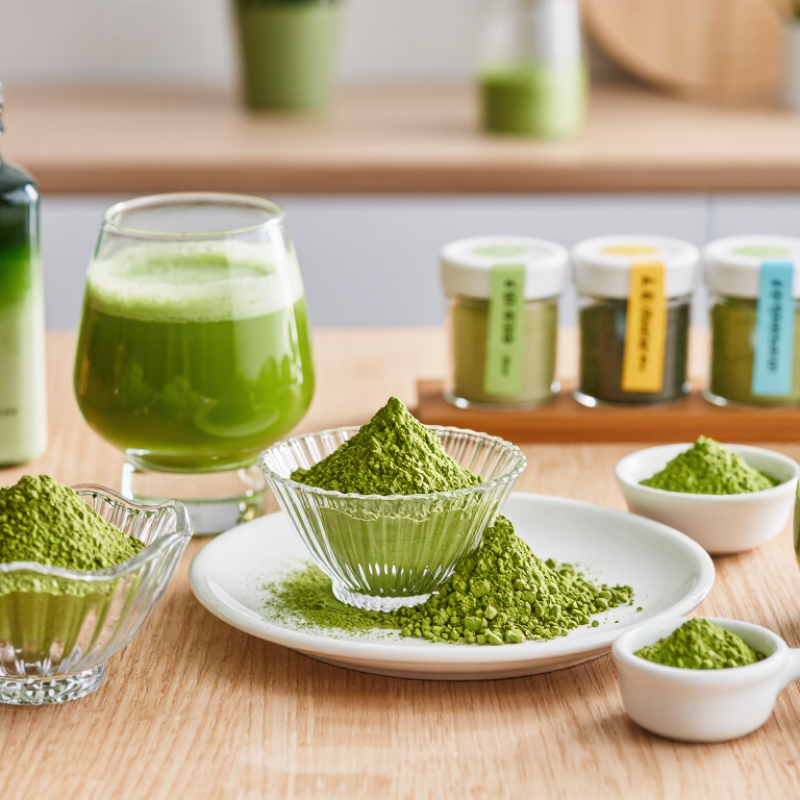
Matcha powder for beverages should disperse evenly, taste balanced, and retain a fresh green appearance. Fine particles help create a smoother mouthfeel in lattes and bottled drinks, though matcha does not fully dissolve; it remains suspended. In an iced latte, poorly dispersed powder can form small green clumps near the glass. Flavor matters just as much. A pleasant vegetal note should not become harsh or overly bitter when mixed with milk, water, or sweeteners. A vivid green is useful, but it is not a complete quality test.
Tips: Ask suppliers for a representative sample and lot-specific test documents. Check particle size, moisture, and relevant food-safety results, then test the powder in your actual recipe. Stir it into cold liquid, too. Performance can change.
For global buyers, request clear specifications and consistent batch records before placing a large order. Compare aroma, color, and sediment after mixing—not only the dry powder’s appearance. Packaging that limits exposure to light, air, and moisture can help preserve quality during storage. Still, supplier claims alone are not enough; your own tasting and preparation trials matter. Even experienced buyers can overvalue color at first. A powder that looks bright may still taste sharp or separate quickly in a drink.
How Matcha Is Produced and Graded for Commercial Use
Commercial matcha begins with tea plants shaded for several weeks before harvest. Reduced light encourages chlorophyll retention and changes the leaves’ amino-acid balance, shaping their color and taste. After picking, leaves are steamed to limit oxidation, then dried and stripped of stems and veins. The resulting leaf material, called tencha, is milled into fine powder. Stone mills can produce it slowly and evenly. Slow milling matters.
Commercial grades do not follow one universal global scale. Suppliers may use terms such as ceremonial or culinary, but buyers should confirm what each term means. Assess particle fineness, green color, aroma, bitterness, and how the powder disperses in water or a recipe. A vivid color helps, but it does not prove quality. Appearance can mislead.
Reliable purchasing also depends on lot-level records. Ask for harvest season, origin, processing details, and a current certificate of analysis. Review moisture and microbiological results, as well as pesticide residue and heavy metal testing where relevant to destination requirements. For bakery, beverage mixes, or food service, test a sample in the actual formulation; heat and sugar can expose harsh notes. Small batches reveal surprises. Record target color, flavor, particle size, and acceptable batch variation before repeat orders.
Key Matcha-Producing Regions and Their Supplier Strengths
Top Beverage Matcha Powder Suppliers for Global Buyers?
Japan’s matcha regions offer distinct strengths. Uji, in Kyoto, is known for long tea-growing traditions and carefully managed shade cultivation. Shizuoka combines a large tea industry with established processing expertise. Kagoshima’s warmer climate supports substantial production and can offer buyers more volume flexibility. Flavor still varies by farm, harvest, and milling method.
China’s Zhejiang province has a deep green-tea supply base and broad production capacity. Some suppliers can support larger, consistent orders, though “matcha” specifications may differ. Ask whether leaves are shade-grown, when they were harvested, and how finely they were milled. A bright color helps, but it is not proof of quality. Request a recent sample and documentation for the specific lot. Details matter. Even careful checks cannot remove every seasonal variation.
Tips: Compare samples in the same drink, not only as dry powder. Check aroma, bitterness, color after mixing, and sediment. Confirm packaging protects the powder from light and moisture. If a supplier’s answers are vague, pause. A low price can be tempting, but it may reflect a different grade or process.
Key Matcha-Producing Regions and Their Supplier Strengths
A qualitative comparison of regional sourcing profiles in Japan.
Uji is widely associated with matcha heritage, Nishio with matcha specialization, and Shizuoka and Kagoshima with broad tea-growing and processing bases. Ratings are qualitative sourcing signals on a 1–5 scale—not measured production, export volume, or market-share data.
How Global Buyers Can Evaluate Matcha Powder Suppliers
Evaluating a matcha supplier starts with a clear product specification. “Ceremonial” and “culinary” are not universally standardized grades, so ask what each term means to that supplier. Request the tea’s origin, harvest period, intended use, processing details, and lot-specific certificate of analysis. Check color, aroma, particle size, moisture, and test results for microbial contaminants, pesticide residues, and heavy metals. Ask how samples are stored and shipped; heat and humidity can dull the vivid green powder.
Use official data as context, not as proof of a supplier’s quality. Japan’s Ministry of Agriculture, Forestry and Fisheries reported 2023 green tea exports of 7,579 tonnes, worth ¥29.2 billion. These figures cover green tea broadly, not matcha alone, but they show why buyers should verify product-level claims. ISO 20715:2023 provides a framework for classifying tea types. It does not validate a seller’s grade labels or replace independent testing.
Ask for traceability from harvest lot to packed shipment, plus the laboratory’s name, test date, and methods. Compare recent reports across multiple lots, not just a polished sample. Small details matter. A certificate may look complete yet omit the tested lot number. Request a replacement document when records do not match. Supplier visits can help assess storage and handling, but distance makes that difficult. In that case, retain sealed samples and agree on written acceptance criteria before ordering.
Top Beverage Matcha Powder Suppliers for Global Buyers? — How Global Buyers Can Evaluate Matcha Powder Suppliers
Use this weighted due-diligence matrix to compare prospective suppliers. Request documents for the specific production site, product, and batch being quoted; requirements vary by destination market and buyer specification.
| Evaluation Area | What Buyers Should Verify | Evidence or Practical Benchmark | Suggested Weight | Supplier Score (1–5) |
|---|---|---|---|---|
| Food safety management | Whether the manufacturing site operates a documented food-safety management system, with hazard controls, sanitation procedures, and traceable records. | Request a current site certificate and scope. Examples of relevant schemes include FSSC 22000 and BRCGS; confirm the certificate’s validity and that its scope covers the product and site. | 20% | _____ |
| Traceability and origin | Whether the supplier can trace each lot to its production site and provide meaningful information about tea origin, harvest, and processing. | Request lot-linked records, country or region of origin, harvest information where available, and a written recall or traceability procedure. Test traceability using a sample lot. | 15% | _____ |
| Laboratory testing and regulatory compliance | Whether test results cover the hazards relevant to the product and destination market, and whether the results apply to the quoted lot or a clearly defined sampling program. | Review a recent, lot-linked certificate of analysis from a competent laboratory. Confirm pesticide residues against the destination market’s applicable maximum residue limits; assess microbiological, heavy-metal, and other tests through a documented risk assessment. | 15% | _____ |
| Sensory and beverage performance | Whether the powder meets the buyer’s requirements for color, aroma, taste, bitterness, astringency, and dispersion in the intended drink. | Approve a retained reference sample and evaluate production samples using the same water, dosage, preparation method, and beverage application. Do not rely on color alone as proof of quality. | 12% | _____ |
| Processing transparency | Whether the supplier can explain the product’s tea-leaf processing and milling method, and identify any blending or processing steps that affect the buyer’s specification. | Request a process description and product specification. Matcha is powdered tea made from processed tea leaves; terms such as “ceremonial” and “culinary” do not have one universally harmonized international grading standard. | 10% | _____ |
| Capacity and supply continuity | Whether available volume, production planning, and contingency arrangements fit the buyer’s forecast and seasonal needs. | Request written capacity and lead-time commitments for the proposed order, plus an explanation of how shortages or changes in crop availability are communicated. | 8% | _____ |
| Packaging and shelf-life controls | Whether packaging protects the powder from light, moisture, oxygen, and contamination during storage and transport. | Review packaging material specifications, closure and seal controls, storage instructions, and shelf-life substantiation. Check that lot identification is legible on each relevant unit. | 6% | _____ |
| Export and logistics readiness | Whether the supplier can prepare the documentation and shipping arrangements required for the destination and agreed trade terms. | Confirm export documentation, shipment responsibilities, and the named place or port under the agreed Incoterms® 2020 rule. Check import requirements with the relevant destination authorities or importer. | 6% | _____ |
| Commercial clarity | Whether the quotation defines product specification, quantity, packaging, currency, payment terms, validity period, and any additional charges. | Compare like-for-like written quotations. Record sample and production pricing separately where applicable, and document the agreed procedure for handling nonconforming goods. | 5% | _____ |
| Environmental and ethical documentation | Whether claims about farming practices, labor, or environmental performance are specific, documented, and relevant to the supplied product. | Request the scope and validity of any applicable audit or certification, and verify claims against supporting records. Treat unverified marketing statements as claims, not evidence. | 3% | _____ |
| Total | Suggested weighting for a general beverage-matcha supplier review | 100% | _____ | |
Scoring guide: 1 = evidence missing or major gaps; 2 = limited evidence; 3 = meets the buyer’s documented requirements; 4 = strong, verified controls; 5 = consistently verified performance with clear supporting records. Set product-specific limits and destination-market requirements before approving a supplier.
Sourcing, Quality, and Import Considerations for Buyers
Global buyers should assess matcha by intended use, not color alone. A vivid green sample may look appealing, but it cannot confirm freshness or traceability. Grand View Research estimated the global matcha tea market at USD 3.5 billion in 2022, with projected growth through 2030. Such forecasts indicate interest, not guaranteed demand for every grade. Small details matter.
Ask suppliers for harvest and milling dates, origin records, batch identification, and a certificate of analysis. Review pesticide-residue, heavy-metal, and microbiological results against the destination market’s requirements. For café drinks, test the powder in water and milk; a pleasant aroma in the bag may disappear in a finished latte. Compare samples from separate production lots. Not always consistent.
Import planning needs equal care. Confirm product specifications, tariff classification, required documents, and food-safety rules with a qualified customs broker for each destination. Request moisture-protective packaging, clear storage guidance, and a realistic remaining shelf life on arrival. A low quotation can hide extra testing, freight, or spoilage costs. I would also question vague claims such as “ceremonial grade”: buyers need measurable criteria, not just elegant wording.