10 Best NPK Compound Fertilizer Suppliers Worldwide
Npk Compound Fertilizer can deliver nitrogen, phosphorus, and potassium in one measured blend. Yet a familiar 15-15-15 grade is not automatically right for every field. Soil tests, crop stage, rainfall, and application method all matter. Justus von Liebig, a foundational agricultural chemist, is associated with the principle commonly summarized this way: “A crop’s growth is limited by the nutrient in shortest supply.” That idea remains practical: balanced-looking numbers cannot replace local evidence.
Choosing a supplier takes more than comparing prices. This guide examines ten worldwide suppliers through product range, manufacturing consistency, technical documentation, distribution reach, and customer support. Useful details include clear nutrient guarantees, batch traceability, granule uniformity, and guidance for storage and application. For water-soluble products, solubility data can matter; for field blends, particle size and handling can affect even spreading. Small differences count.
Still, a supplier’s published specifications do not prove performance in every soil or climate. That is easy to overlook. Buyers should verify current product documents and assess recommendations with qualified local agronomists. A lower-cost bag may suit one operation, while another needs tighter nutrient control or dependable delivery during a narrow planting window. The ten companies below offer a starting point for comparison, not a substitute for field trials, soil analysis, or careful purchasing checks.
Understanding NPK Compound Fertilizers and Their Uses
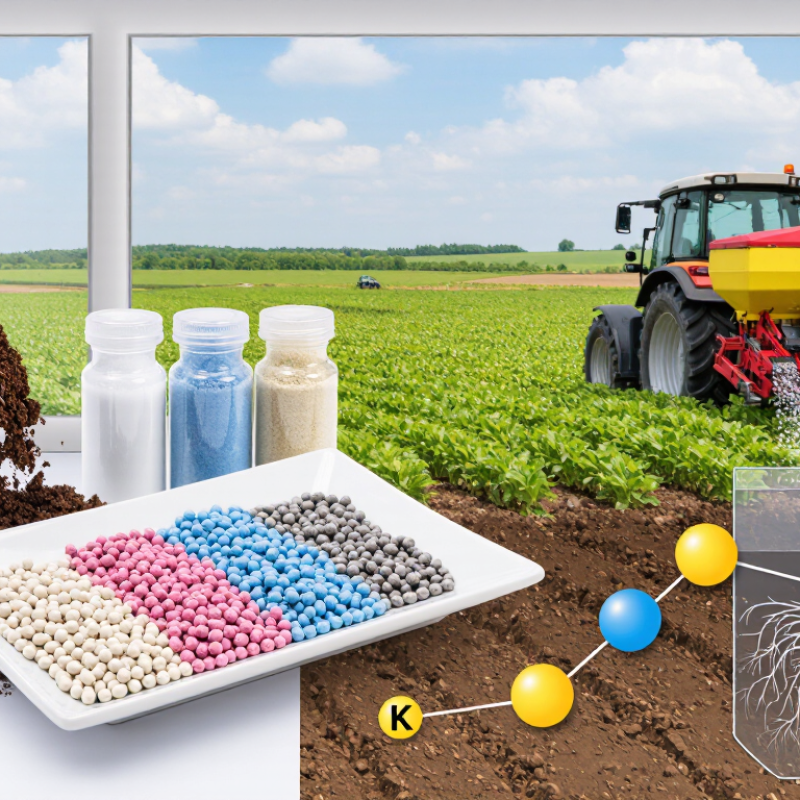
NPK compound fertilizers supply nitrogen, phosphorus, and potassium in one product. The three numbers on a bag usually show nutrient percentages as N–P₂O₅–K₂O, not the total weight of each raw element. A 15-15-15 grade, for example, contains equal labeled proportions of these nutrients. FAO’s World Fertilizer Trends and Outlook to 2026 projected global fertilizer use at about 199 million tonnes of nutrients in 2026. That scale matters. It also makes efficient, crop-specific use essential.
Nitrogen supports leafy growth, phosphorus contributes to root development and energy transfer, and potassium helps regulate water movement and plant stress responses. A grower might choose a balanced grade for a crop with broad nutrient needs, or a formulation richer in one nutrient when soil tests and crop requirements justify it. Granules can be applied before planting, while water-soluble products may suit fertigation systems. The right choice depends on crop, soil, climate, and application timing.
A product label cannot diagnose a field. Soil testing, local extension guidance, and records of previous applications help prevent nutrient shortages and excesses. FAO’s report presents global demand estimates, but those figures do not prescribe a rate for an individual farm. Even a familiar blend may be a poor fit. I would treat fertilizer selection as a measured adjustment, not a fixed recipe, and check crop response during the season.
Understanding NPK Compound Fertilizers and Their Uses
NPK grades show the percentage by weight of nitrogen (N), phosphate (P₂O₅), and potash (K₂O). These examples illustrate common grade formulations; choose a fertilizer grade based on soil-test results and crop requirements.
How to Evaluate NPK Fertilizer Suppliers
How to Evaluate NPK Fertilizer Suppliers
Evaluate a supplier by checking product evidence, not just a polished brochure. Request the guaranteed NPK analysis and confirm whether nutrients are stated as elemental values or oxide equivalents. Ask for a recent batch certificate showing nutrient levels, moisture, and relevant contaminant results. Then compare the certificate with the product label. Ask for evidence. A document is useful only if it matches the material delivered.
Discuss how the fertilizer behaves in your actual conditions. Granule size, solubility, and storage stability can affect spreading and handling. Ask how the supplier controls batch consistency and traceability, and whether it can provide representative samples for testing. Small details matter. Check packaging for clear labeling and protection from moisture; a damp bag can turn a good specification into a frustrating field problem. Also verify production capacity, delivery schedules, and technical support. A low quote may exclude freight or hide inconsistent quality. Compare the full delivered cost, not only the price per tonne. No checklist replaces a local field trial, and results can vary with soil and crop needs. I would treat confident promises cautiously, especially when supporting data is thin.
Leading NPK Compound Fertilizer Suppliers Worldwide
Leading NPK compound fertilizer suppliers worldwide serve farms with different soils, crops, and growing seasons. Their value is not measured by product range alone. Reliable suppliers can explain nutrient ratios, granule size, and how formulations suit specific field conditions. They should also provide clear product specifications and recent batch test results. Ask for evidence.
A practical comparison starts with consistency. Check whether nitrogen, phosphorus, and potassium levels match the stated grade across batches. Granules should be reasonably uniform, flow well through spreading equipment, and resist excessive dust or caking during storage. Packaging matters, too: intact, labeled bags help protect fertilizer from moisture and make traceability easier. Details matter.
Strong suppliers offer responsive technical support, realistic delivery schedules, and clear communication about minimum orders and shipping options. Local soil tests and crop needs should guide product selection; a popular formulation is not automatically suitable for every field. Buyers can request trial quantities or compare samples before committing to larger orders. Still, supplier comparisons are imperfect: climate, transport, and application practices can change results. A careful review of product data, service, and logistics gives buyers a more grounded basis for choosing a long-term NPK partner.
Comparing Suppliers by Products, Capacity, and Markets
A useful comparison of NPK compound fertilizer suppliers starts with the product range, not a headline ranking. Some offer balanced grades for general field use, while others focus on crop-specific formulas or customized nutrient ratios. Check whether the supplier provides clear nutrient analysis, granule-size information, and batch documentation. These details matter when bags arrive at a farm or port. Small differences can affect spreading.
Capacity tells a different story. A large annual output may support steady shipments, but it does not guarantee short lead times or consistent specifications. Ask about monthly production, storage, packaging options, and typical delivery windows. Then compare those answers with the supplier’s export markets and experience handling local soil and crop needs. A supplier serving several regions may understand varied requirements, yet distance can add cost and delay. Not always obvious.
Market reach is useful evidence, but it should not replace direct checks. Request recent product specifications and clarify how quality is monitored between batches. Compare minimum order quantities and after-sales support, too. These practical details can separate a suitable partner from an impressive brochure. Even careful comparisons leave gaps; delivery performance can change with the season, and a buyer may need to verify claims independently.
Key Factors in Choosing an NPK Fertilizer Supplier
Choosing an NPK supplier starts with the crop, soil, and application method—not a product catalogue. A grower managing sandy soil may need different nutrient timing from one working with heavy clay. Share recent soil-test results and ask whether the proposed NPK ratio fits the crop’s growth stage. Small details matter. Granule size, dust levels, and solubility can affect spreading and performance in the field.
Check how the supplier verifies product quality. Request a recent certificate of analysis showing nutrient content, moisture, and other relevant specifications. Ask how batches are sampled and stored, and whether the supplier can explain differences between the label and the test results. A polished specification sheet is useful, but it cannot replace a small field trial. That takes time. It may also reveal that the first choice was not the best one.
Reliable delivery and practical support deserve equal attention. Confirm packaging, shipment schedules, minimum order quantities, and procedures for handling damaged or delayed goods. Ask whether technical staff can discuss application rates without promising guaranteed yields. Clear answers are a good sign; vague claims deserve follow-up questions. Compare suppliers using the same criteria, then keep records of product batches and field results. Even careful comparisons leave some uncertainty. Growing conditions change, and supplier service can vary from season to season.