Why Choose Pure Matcha Powder for Your Business?
Pure Matcha Powder can give a business a distinctive ingredient, but quality needs more than a vivid green color. Buyers should examine origin, harvest, milling, taste, and batch consistency. A fine powder should feel silky between the fingers and blend smoothly into a drink. Small details matter. A grassy aroma may suit a latte, while a sweeter, less astringent profile can work better in straight tea or desserts.
Market figures suggest rising interest, though they do not measure matcha alone. Japan’s Ministry of Agriculture, Forestry and Fisheries reported that Japanese green-tea exports reached 7,579 tonnes in 2023, a record at the time. That category includes green teas beyond matcha, so it should not be presented as matcha sales. Still, it signals growing international demand for Japanese tea products. For a business, demand is only one part of the decision. Reliable sourcing, clear specifications, and sample testing matter just as much.
Tea scholar Okakura Kakuzō wrote, “Tea began as a medicine and grew into a beverage.” His observation is not a modern market forecast, but it reflects tea’s long history of changing with consumer habits. Pure Matcha Powder may suit cafés, bakeries, and specialty retailers seeking a versatile tea ingredient. Yet not every powder fits every use. Ask suppliers for harvest and origin details, compare samples in your actual recipes, and check how flavor holds up in milk, water, or baking. A careful trial beats a confident guess.
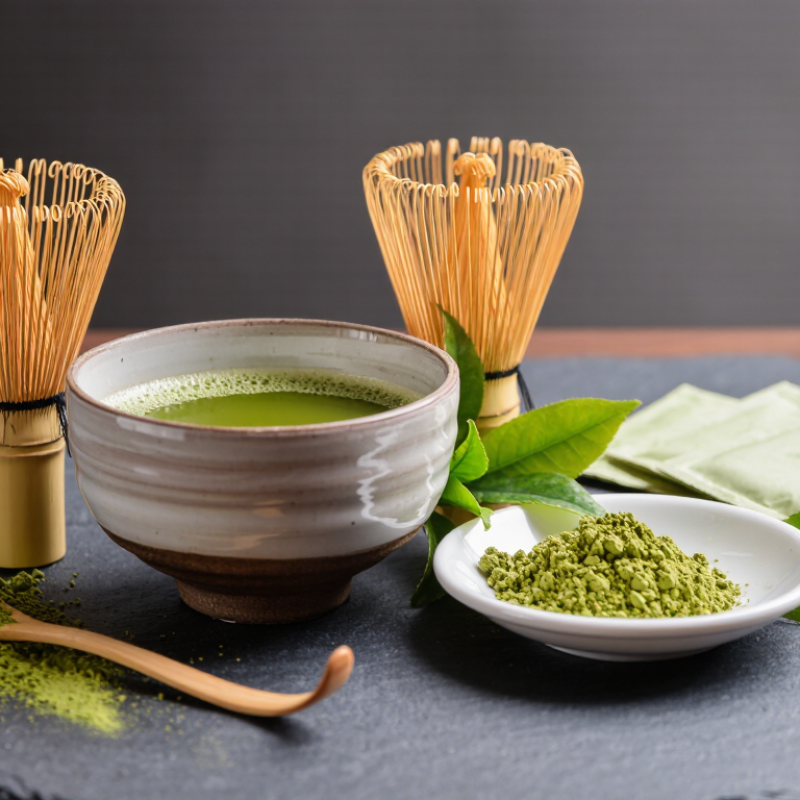
Pure Matcha Defined: Shade-Grown Tencha Milled as Whole-Leaf Powder
Pure matcha begins with tencha, not ordinary steeping tea. Growers shade the tea plants before harvest, limiting direct sunlight and encouraging a deeper green leaf. After picking, leaves are steamed and dried without rolling. Stems and veins are removed, leaving leaf material that is slowly milled into fine powder. The whole leaf goes into the cup. That matters.
Japan’s Ministry of Agriculture, Forestry and Fisheries reported 5,336 tonnes of tencha production in its 2023 crop statistics. This figure reflects a growing agricultural category, not a guarantee of quality in every batch. For business buyers, ask suppliers about harvest year, origin, shade period, and milling method. Then inspect the powder: fine texture, a fresh vegetal aroma, and a vivid green color can offer useful clues. Color alone is not proof.
Pure means the ingredient is matcha, without added sugar, milk powder, or flavoring. That makes it easier to build consistent recipes, from whisked drinks to bakery fillings. Yet “whole-leaf” does not automatically mean better taste; cultivar, harvest timing, storage, and preparation all matter. A small sample test is practical. Check how the powder disperses in water and how its flavor holds up in your actual recipe. One detail is easy to miss: matcha can lose freshness quickly when exposed to air, light, heat, or moisture. Keep it sealed and cool.
How Cultivation and Milling Shape Matcha’s Commercial Quality
Why Choose Pure Matcha Powder for Your Business?
How Cultivation and Milling Shape Matcha’s Commercial Quality
Commercial matcha quality starts in the field. Before harvest, shading reduces direct sunlight and supports the development of vivid green color and a softer, less astringent taste. After picking, removing stems and veins helps create a finer, more consistent powder. For buyers, these choices affect appearance, flavor, and performance in drinks and recipes. A bright color helps, but it is not proof of quality.
Milling matters just as much. Slow stone milling limits heat and helps produce the fine texture customers expect; coarse powder can feel gritty and disperse poorly. Japan’s Ministry of Agriculture, Forestry and Fisheries reported that tencha production rose from 1,430 tonnes in 2010 to 4,176 tonnes in 2020. Tencha is the leaf material used to make matcha. The growth points to a changing supply landscape, though production volume alone says little about a particular lot’s taste or consistency. That distinction is easy to miss.
Tips: Ask suppliers for harvest and milling details, then test a small sample. Whisk it with water and check for grit, aroma, and lingering bitterness. Keep records by lot. Color is useful, not decisive.
Composition Data: Studies Report 19–44 mg of Caffeine per Gram
For a business choosing pure matcha powder, caffeine data can help set realistic serving expectations. Studies report roughly 19–44 mg of caffeine per gram, a broad range rather than a fixed specification. At one gram, the difference may be noticeable to customers who drink matcha regularly. That range matters. But it does not predict every cup precisely.
Caffeine levels can vary with cultivar, growing conditions, harvest timing, and how the leaves are processed. A fine, vivid-green powder may look consistent while its composition differs between batches. It is tempting to select one published figure and build product messaging around it. That can be misleading. Ask suppliers for batch-specific laboratory results, and check whether the reported amount refers to dry powder or a prepared serving.
For product development, weigh the powder consistently and document the recipe. A small change in dose changes caffeine per cup; water temperature and whisking do not erase that difference. Compare results across incoming batches before making nutrition or energy claims. The imperfect part is that published studies may use different samples and methods, so their figures are not directly interchangeable. Clear records and careful wording make the data more useful for purchasing, menu design, and customer questions.
Why Choose Pure Matcha Powder for Your Business? – Composition Data: Studies Report 19–44 mg of Caffeine per Gram | Composition dimension | Reported data | Practical interpretation |
| Caffeine per gram of powder | 19–44 mg/g reported in studies | Caffeine content varies with the tea material and analytical method; use product-specific testing for precise labeling. |
| Caffeine in a 1 g serving | 19–44 mg (calculated from the reported per-gram range) | A useful comparison point for recipes using approximately 1 g of powder. |
| Caffeine in a 2 g serving | 38–88 mg (calculated from the reported per-gram range) | Calculated estimate only; the actual amount depends on the powder’s measured caffeine content. |
| Tea catechins, including EGCG | Naturally occurring tea polyphenols; amounts vary by tea material and processing. | Do not assume a fixed catechin amount without an appropriate product analysis. |
| L-theanine | A naturally occurring amino acid in tea; concentration varies. | Specific content should be confirmed through product testing before making quantitative claims. |
| Whole-leaf format | Matcha is powdered green tea leaf consumed as a suspension rather than steeped and removed. | The serving includes the powdered leaf; composition depends on the product and serving size. |
Note: Serving estimates are arithmetic conversions of the stated 19–44 mg/g range, not guarantees for any specific product.
Market Signal: Japan Exported 7,579 Tonnes of Green Tea in 2023
Why Choose Pure Matcha Powder for Your Business?
Market Signal: Japan Exported 7,579 Tonnes of Green Tea in 2023
Japan’s reported 7,579 tonnes of green tea exports in 2023 offers a useful market signal. It suggests overseas interest in Japanese tea, but it does not show how much was matcha. Green tea includes multiple products and formats. Treat the figure as context, not a matcha sales forecast. For a business considering pure matcha powder, that distinction matters.
Pure matcha gives you a focused ingredient for drinks, baking, and seasonal menus. Its color, aroma, and bitterness can vary by harvest and processing. Ask suppliers for origin, ingredient details, and batch information, then test samples in your actual recipes. A bright green powder may look appealing, but taste and performance matter more. Small differences show up in a latte.
Tips: Test a sample in both hot and iced drinks. Record the amount used, whisking time, color, and flavor. Check consistency across batches before changing your menu. Be ready to adjust; one test is rarely enough.
Business Evaluation: Origin, Testing, Traceability, and Supply Consistency
For a business buyer, pure matcha powder is not judged by color alone. Start with origin records: growing region, harvest period, and milling location. These details help explain flavor shifts between lots. Ask whether leaves were shade-grown, steamed soon after picking, and stone-milled. Request records, not just a sales description. Small details matter.
For testing, request recent certificates tied to the specific lot, including microbiological and contaminant screening. Check that methods and lab dates are shown. A document without a matching lot number is weak evidence. Traceability should connect the finished pouch to milling and raw-leaf batches. Test the powder in your own drink or recipe, too. A vivid green sample may still taste harsh in oat milk. Review supply consistency across seasons: lead times, order minimums, and notice periods for crop variation. Keep a retained sample and compare deliveries by aroma, color, and how the powder feels between your fingers. No supplier file is perfect. Gaps happen. Record them, ask direct questions, and decide which risks your business can absorb before committing.
Why Choose Pure Matcha Powder for Your Business?
Business Evaluation: Origin, Testing, Traceability, and Supply Consistency
Use these checks to structure supplier due diligence: confirm origin details, review relevant test results, verify batch-level records, and assess supply capability. The bars count suggested checklist items; they are not supplier scores or industry averages.